| |
|
| |
| |
|
| |
|
| |
|
| |
|
| |
|
| |
|
| |
|
| |
Figure from
Leavesley, et al., Rev. of Scientific Instruments 79:023707 (2008) |
| |
|
| |
|
| |
|
| |
|
| |
|
| |
Figure from
Leavesley, et al., Rev. of Scientific Instruments 79:023707 (2008)
|
| |
|
|
Design of Spectral Imaging Systems for Use in Biology and Medicine
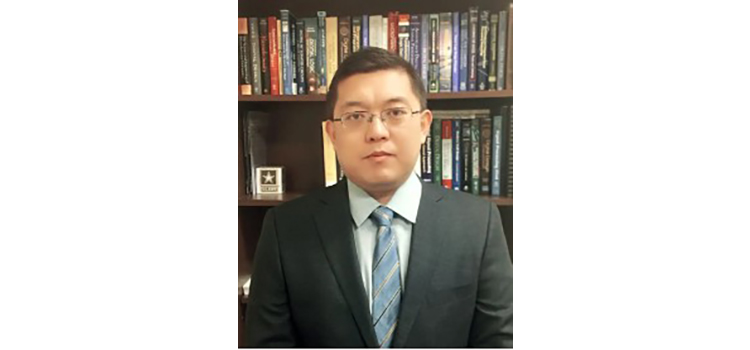
Faculty Member: Dr. Silas Leavesley
Spectral imaging refers to the collection of image data at different wavelengths throughout the ultraviolet, visible, and near-infrared spectrum. A simple example of spectral imaging would be to collect an image through an optical filter, change the filtering wavelength and collect another image, and repeat this process until many images are collected. The resulting image set, sometimes referred to as a “spectral cube” is then analyzed to highlight certain wavelength-dependent features present in the image set.
Spectral imaging methods have been employed for decades in the remote sensing field by government, military, and private sectors. Examples include monitoring of coral reef viability, military reconnaissance, and assessment of crop growth. Because of the varied uses for spectral imaging, the equipment, techniques, and analysis methods have been extensively developed in the remote sensing fields.
This research in biomedical spectral imaging makes use of many of the developments in remote sensing, and applies them to specific biological and medical problems. For example, instead of using spectral image information to locate a tank or a military production facility, spectral absorption or fluorescence properties are used to identify chemicals, molecules, and tissues of interest. For dermal or superficial tissues, spectral imaging can be implemented in vivo. Spectral imaging may also be combined with other imaging or exploratory methods, such as endoscopy, for deep tissue inspection.
This work, to date, has focused on the application of hyperspectral methods (the collection of image data at over 20 wavelengths) in small animal fluorescence imaging. An acousto-optic tunable filter (AOTF) was used as the wavelength filtering component of the imager. Hyperspectral images of fluorescence emission in vivo were collected by varying either the excitation or emission wavelengths, while imaging at each wavelength. Spectral images sets were analyzed using principal component analysis (PCA), several classification routines, or linear unmixing (spectral deconvolution). Through this setup, it was shown that several different fluorophores of interest can be clearly separated from the background signal (generally reflection + autofluorescence components).
Future work in this research will focus on applications in pathological detection in vivo. Endoscopic and superficial imaging methods may both be designed to include hyperspectral imaging capabilities. Specific features of interest will include inflammatory response, blood-oxygen saturation, and cancer detection. Detection of other biomarkers, as well as contrast agents may also be possible. This research necessitates the combination of system design and optimization elements, analysis and modeling techniques, and biological validation and in vivo testing. A multidisciplinary approach emphasizing fundamentals in engineering, biology, and medicine is used.
Publications:
1. Silas Leavesley, Yana Jiang, Valery Patsekin, Bartek Rajwa, J. Paul Robinson. An excitation wavelength–scanning spectral imaging system for preclinical imaging. Review of Scientific Instruments 79:023707 (2008)
2. Wamiq Ahmed, Silas Leavesley, Bartek Rajwa, Muhammad Ayyaz, Arif Ghafoor, J. Paul Robinson. State of the art in information extraction and quantitative analysis for multi-modality biomolecular imaging. Proc. of IEEE 96:3 512-531 (2008)
|
|