University of South Alabama
Home Index Search Directories Faq


 GUIDE TO INTERNATIONAL
EXCHANGE VISITORS/SCHOLARS
ORIENTATION


OFFICE OF ENROLLMENT SERVICES
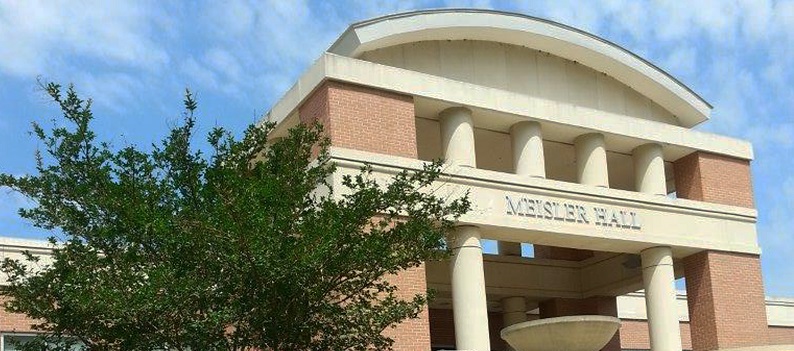
2400 MEISLER HALL
MOBILE, AL 36688
TELEPHONE: 251/460-6494
FAX: 251/460-7023

TABLE OF CONTENTS

Alabama Driver's License

Immigration Regulations

Alcohol and Smoking

Immigration Status

American Culture and Customs

Information About Mobile

Appointments

J-1 Scholar Immigration Issues

Attractions/Recreation

Motor Vehicle Titles

Automobile Insurance

NAFTA (TN) Immigration Issues

Automobiles

Parking on Campus

Banking

Personal Safety/Security

Bicycle Regulations

Purchasing a Car

Churches, Synagogues and Places of Worship

Restaurants and Dining

Civil Laws, Courts and Lawyers

Schools (grades 1-12)

Climate and Weather

Social Security Numbers

Concepts of the United States Legal System

Stores and Shopping

Criminal Cases

Taxes

Duration of Status

Time

Enforcement of Laws

Tipping

Freedom of Speech and Religion

Transportation

Gestures and Nonverbal Communication

Travel Outside the United States

Greetings

U.S. Postal Service

H-1B Temporary Worker Immigration Issues

USA Identification Cards

Housing

Use of Names

Hygiene

Visa

U.S. Citizenship and Immigration Services

Work Schedules

LIVING IN MOBILE

Mobile is the oldest city in the State of Alabama. Exploration in the Mobile River area began in 1519 when the Spanish Admiral Alonzo Alvarez de Pineda entered and charted the area now known as Mobile Bay. The old fort, now known as Fort Morgan, guarding Mobile Bay, was first fortified by the Spanish in 1559. Settled in 1711 by the French, the bay area has had a tradition rich in culture and vital in the affairs of the nation from its formative years to the present.

Trade and shipping are vital to the economy of the area. Millions of tons of shipping are handled annually through the Port of Mobile, which is rated among the top ports in the country. More than fifteen million tons of shipping are carried yearly on the Tombigbee-Black Warrior waterway system with its modern locks and dams. The intracoastal waterway crossing the southern end of the state, is connected at Mobile Bay with both inland and ocean shipping. Railroad and airlines serve the Bay area. Diversified farming, woodland crops, and seafood and fisheries are major factors in the area’s economy.

HOUSING

Most commercial apartments have, at minimum, a kitchen, living room, bath, and one, two, or three bedrooms. Kitchens usually contain a sink, refrigerator, and stove. Most apartment complexes have central laundry facilities for use by its tenants. Unfurnished apartments have the kitchen basics but no other furniture. Most traditional commercial apartments are unfurnished but it is possible to find furnished apartments. Used furniture may be purchased from several civic and charitable organizations at reasonable prices. New furniture may be rented from several local agencies, which specialize in furniture rental.

Prices for apartments vary depending on location and amenities. Rent for an unfurnished one-bedroom apartment in this area starts around $450 per month and goes up depending on the number of bedrooms, location, etc. Though you pay rent on a month-to-month basis, you will find that most apartments require you to sign a six-month to one-year lease which is a contract binding you to pay the rent for your apartment the length of time specified. When you sign a lease, you should be prepared to pay the rent for the time indicated in the contract or find someone to "sublet" or take over the lease when you leave. Some apartments do not permit subleasing.

Water often is the one utility include in the rent price. Other utilities, such as electricity and gas, often are not included in the rent fee, and payments must be made directly to the respective companies. To obtain telephone service, you must contact the telephone company directly. There is a basic monthly fee that permits unlimited local calls. Long distance calls are charged by the minute.

SOCIAL SECURITY NUMBERS

Before the University of South Alabama can issue a paycheck to anyone, you must apply for a social security number. The local Social Security Office is located at 550 Government Street which is located in downtown Mobile. Office Hours are Monday through Friday from 8:30 a.m. – 3:30 p.m. The following documents will be required in order to process an application for a social security number:

Fill out the application for a social security number (will be provided by the social security office).
Provide passport, visa, and I-94 card.
Provide either the IAP-66/DS-2019, H, O, or TN approval notice
Provide a letter of employment.

BANKING

Banks offer a variety of professional services, including checking and savings accounts, certificates of deposit (CDs), automatic teller machines (ATMs), electronic banking, credit and debit cards, investment services, and estate planning. When selecting a bank, it is important to determine which of these services are needed.

Banks and automated teller machines (ATMs) are available throughout Mobile. It is advisable to obtain a checking account, as it is dangerous to carry large sums of cash. Shop around for the best interest rates and conditions of banking. Individuals should understand all terms and agreements and receive adequate instructions on how to use the banking services. Refer to the local yellow pages for a complete listing of the various banks located throughout the Mobile Area.

Banks require certain information before they will open an account. Individuals will probably be asked to provide photo identification, some personal data, a mailing address, and money to deposit. Banks also will request a Social Security Number to be used to report earnings to the federal tax authority, the Internal Revenue Service.

A checking account safeguards an individual’s money while allowing for easy payment of expenses. Some banks require their customers to maintain a minimum balance of funds in their checking account. Virtually all checking accounts may be accessed using ATM card. The card is issued by the bank and may be used together with a personal identification number (PIN) to withdraw cash and make deposits at special banking machines. To avoid being fined, do not write a check or withdraw more money than is available in the account. When writing checks, leave no areas blank.

A savings account is used to safeguard money for a prolonged period. A low rate of interest is paid on the balance. Certificates of Deposit (CD) pay higher interest than savings accounts; however, the individual must leave the money untouched for a specific period. The longer the money is left in the deposit, the higher the rate of interest paid.

Many banks offer a credit card with a charging limit. Credit cards are very convenient, but individuals should use them with caution. The amount charged to the card must be repaid, often at a high interest rate. Credit cards are best reserved for emergencies.

Coins (cents) denominations are: penny=1 cent; nickel=5 cents; dime=10 cents; half-dollar=50 cents; one dollar=100 cents=$1. Paper currency (dollars) denominations are: $1, $2 (seldom used), $5, $10, $20, $50, and $100. Denominations above $100 are no longer printed, but some of the larger denominations still remain in the hands of private citizens. All currency in general circulation is the same size and color, which can be confusing at first.

TAXES

Depending upon your activities and your tax and visa history, you may or may not be required to pay taxes. There are four major categories of taxes: federal tax on income; state tax on income: city and/or county tax on real or personal property; and FICA or Social Security tax – a federal retirement fund contribution based on income. There are other taxes, which relate directly to owning or operating a business, or buying or selling real property (houses, land, etc.)

Tax treaties between the U.S. and other countries exempt some students, researchers and professors from paying U.S. state and federal income taxes. Each treaty has its own restrictions and provisions. The national tax authority in your country or the U.S. embassy or consulate can provide current information on tax treaties. The Payroll Office at the University of South Alabama will determine if you are eligible to claim exemption from income tax withholding based on a treaty.

TRANSPORTATION

Mobile has local public transportation in the form of city buses and taxis. Because taxis are expensive and bus service is limited in some areas and often not available at night, most people find it useful to own an automobile.

If you plan to own or operate an automobile while in the U.S., you will be required to hold a driver’s license and to obtain automobile insurance in order to operate the vehicle in Mobile. After you have found a place to live and have settled in, and received your social security card, you can take the licensing exam and obtain a license. Automobile insurance may be purchased from one of many insurance agencies and costs vary depending on the type of car to be insured, the age and driving experience of the drivers, and the amount of insurance purchased.

ALABAMA DRIVER’S LICENSE

Anyone in a valid nonimmigrant status (J, H, TN, and O, etc.) may apply for an Alabama driver’s license. Written and road exams are offered Monday through Friday. Individuals will be required to take a written exam and a road exam. The written exam is provided in a variety of languages and can be taken as many times as necessary to successfully pass the exam.

Those individuals that do not have an International Driver’s License must have a licensed driver take them to the driver’s license location. The licensed driver must be willing to allow the individual use of his or her car for the road test. The officer will inspect the car. The car must be fully functional (i.e., working turn signals, horn, etc.) before the officer will proceed with the road exam. It is advisable to practice driving this vehicle in a deserted parking lot prior to taking the road exam.

Bring the following items when applying for the Alabama driver’s license. Passport, I-94 card, social security card, the specific immigration documents (i.e., IAP-66, DS-2019, or approval notices for H, O, TN), and a birth certificate is sometimes helpful.

AUTOMOBILES

Cars are readily available in the United States, are inexpensive, and are often the easiest way to get around. However, many people do not take care of all the concerns that must be met when you purchase and operate an automobile. If you are considering such a purchase, read the following information carefully.

PURCHASING A CAR

Before purchasing a car, it is a good idea to talk with someone who knows about automobiles and who can help you find a car, which will be a good purchase for what you pay. There are some special things that you need to look for in such a purchase. The cheapest place to purchase a car is usually from an individual who is selling a car they own. The most expensive way, but also the one with the most guarantees, is to purchase a car from a dealer associated with a major automobile dealership. Remember to include maintenance, gasoline, and automobile insurance when you figure your car budget.

When looking for a car, member these points:

Don’t be talked into a more expensive car than you can afford or want.

Don’t believe advertising talk.

Test-drive the car yourself.

Look for rust and dents. Check the condition of the windshield, windows, tires, head and tail lights, turning signals, windshield wipers and air conditioner/heater.

Get a mechanic’s opinion on the engine, brakes, clutch, transmissions, etc.

When buying from a dealer, try to get a written guarantee that he/she will pay for all necessary repairs within 30 days of purchase.

Compare prices.

AUTOMOBILE INSURANCE

If you drive an automobile you must at least have liability insurance. If you are in an accident and do not have the required insurance, you will be subject to losing your license and to a civil suit to pay for the costs of the damages incurred. Automobile insurance is expensive, but it is necessary. If you can’t afford insurance for the car, you can’t afford the car. There are several types of automobile insurance. Liability is the one that is required; this pays for the damages to the other cars involved if you cause the accident. Collision pays the damages to your car in such a situation.

MOTOR VEHICLE TITLES

Motor vehicle titles may be applied for or transferred through the Mobile County Revenue Department. Positive identification, date of birth, driver’s license number and Social Security number may also be required. Individuals moving from another state have 30 calendar days from date of entry into Alabama to apply for a title and tag without penalty. Proof of Alabama residency is required of all applicants. This may be in the form of an Alabama driver’s license, property tax deed, leases of property or utility bills in your name. More information concerning vehicle titles/registration can be obtained at the following website: www.ador.state.al.us/motorvehicle/.

USA IDENTIFICATION CARDS

Identification Cards (IDs) are available to International Scholars at South Alabama. IDs are needed to use services on campus, including recreation center and library, etc. IDs are issued through Human Resources in the Administration Building, Room 286; office hours are Monday through Friday, 8:00 a.m. – 5:00 p.m.

PARKING ON CAMPUS

If you have a car on campus, you must purchase a parking permit. Permits can be purchased after you obtain your USA Identification Card. Parking permits can be purchased in Student Accounting located in Meisler Hall; office hours are Monday through Friday, 8:00 a.m. – 5:00 p.m.

SCHOOLS

Public school attendance for grades one through twelve (beginning at age six) is available free. Public schools in the U.S. are those supported by taxes paid to the government. These schools are open to all children residing within the school district. The public school that your child attends is determined by where you live. Immunization records are required for registration.

Private schools operated by either secular or religious organizations usually charge tuition and may or may not have admission requirements. Attendance at these schools generally does not depend upon your place of residence.

STORES AND SHOPPING

In the Mobile area, there are stores to cover every need. The local newspaper usually has advertising sections that show sales for the different stores in the area. Individuals are encouraged to check coupons, which can be used for additional discounts off attractions, food products, restaurants, etc.

In the United States, there is an automatic sales tax, which is attached to any purchase that is made. Depending upon the area of Mobile, individuals should expect a tax of 7-10% added to purchase items. This is not built into the cost of the item as it is in some other countries.

Grocery Stores sell all sorts of food such as fresh, frozen and canned fish, poultry, meat, fruit, vegetables and prepared dishes. They also sell staples such as flour, sugar, salt and spices. Bakery goods, dairy products, toiletries (shampoo and toothpaste), paper products (toilet paper, paper towels, paper tissue, paper plates and paper cups), and cigarettes are also available in grocery stores. Self-service is the rule in grocery stores, which means individuals take a cart or basket, select the required items, and present them for payment at a cashier’s counter.

Drugstores are the only stores that are licensed to sell prescription pharmaceutical products. Doctors’ prescriptions can be filled at a drugstore or at the pharmacy located in the Health Services Building on campus. Drugstores also have a large selection of cosmetics, soap, shampoo, toothpaste, periodicals, household medicines, greeting cards, photographic film, etc.

Department stores sell a variety of things: shoes, clothing, appliances, furniture, fabric, dishes, pots and pans, linens, towels and toys. Department stores are also self-service.

Second-hand stores are stores that receive and then sell merchandise that came from or through an intermediary, that is, borrowed, derived, or acquired after being used by another. These are things that are not new, such as books, clothing, etc.

RESTAURANTS AND DINING

There are many types of restaurants, from fast food restaurants, where food is prepared in a few minutes and costs very little, to expensive restaurants. Cafeterias, steak houses, seafood restaurants are other types of popular eatery establishments. Refer to the yellow pages in your local telephone directory for a complete listing and description of restaurants in the Mobile area.

U.S. POSTAL SERVICE

The main post office for the City of Mobile is located downtown Mobile. Mailboxes located throughout the city are blue. These boxes are for domestic and airmail envelopes. The envelope must have sufficient postage. Packages should be mailed through a post office location.

Zip codes are very important in the United States and abroad as well. Use of the zip code facilitates and expedites the processing of mail. Omission of the zip code will delay the movement and arrival of mail. In addition to the U.S. Postal Service, packages and large cartons can be shipped by Federal Express or the United Parcel Service (UPS) to almost every city in the United States.

CHURCHES, SYNAGOGUES AND PLACES OF WORSHIP

Mobile has many churches, temples and places of worship. Foreign students and scholars, who wish to join a church or synagogue, may consult the names and addresses listed in the telephone directory. The listing under "churches" is classified by denomination.

BICYCLE REGULATIONS

Many people enjoy the easy access that bicycles provide. Bicycle riders are subject to the same regulations as motor vehicles. The following guidelines have been established to make bicycling safer for everyone.

Always wear a helmet and brightly-colored, close-fitting clothes.

Obey all traffic rules.

Ride the bicycle near the right-hand edge of the road with the flow of traffic.

Give pedestrians the right-of-way; and respect areas designated for pedestrians only or as access ramps for the disabled.

Carry identification in case of an accident/emergency.

Never carry another person on your bicycle.

Lock the bicycle to authorized bicycle racks.

ATTRACTIONS/RECREATION

Mobile is the birthplace of Mardi Gras. The two-week celebration is the city’s biggest event and features parades and other revelry. Visitors from around the world come to join in the family fun. BayFest, an annual outdoor music fest, attracts thousands to Downtown Mobile each October to enjoy a lively mix of jazz, rock, country music and other musical styles. The Mobile International Festival is an education and cultural event presented by its members representing over 60 countries and emphasizing five areas: cuisine, continuous entertainment on two stages, cultural booths, art gallery, and hands-on-art. Mobile is only an hour’s drive away from some of the most beautiful beaches located along the Gulf of Mexico. Mobile is also the home for the Mobile Baybears, the USS Alabama Battleship Park, Bellingrath Gardens and Home, and the America’s Junior Miss Program. We also offer a good variety of entertainment and activities here on the University of South Alabama campus.

The following international organizations are currently active at the University of South Alabama:

African Student Association Bangladesh Student Association

Caribbean Student Association Chinese Student and Scholar Association

Council of International Student Organization European Student Association

Indian Student Association Japanese Student Association

Malaysian Student Council Pakistan Student Association

Russian Club Singapore Student Association

Sri Lankan Student Association Student Association of the Republic of China

Thailand Student Association Vietnamese Student Association

CLIMATE AND WEATHER

As Mobile is located in the southern part of the United States, the climate here is generally quite mild. Winter temperatures average about 50oF (10oC) and summers average 85oF (30oC). Be prepared, though as we do have extremes in both seasons! You will find winter days in which the temperatures drop below 20oF (-7oC) and summer days above 100oF (40oC). There is also a lot of rain in Mobile-bring an umbrella and other wet-weather clothing.

TIME

The U.S. is divided into six time zones. When it is 12 noon Eastern Standard (the East Coast) it is 1100 a.m. Central, 10:00 a.m. Mountain, 9:00 a.m. Pacific Standard (the West Coast), 8:00 a.m. in the state of Alaska, and 7:00 a.m. in the state of Hawaii. During the summer almost the entire country goes on Daylight Saving Time. All clocks are moved ahead one hour in order to extend the number of daylight hours in the evening.


AMERICAN CULTURE AND CUSTOMS


This is a very exciting, and perhaps anxious time for those who have never traveled or lived in the United States. Moving and leaving behind close friends and family can be very stressful, and immersing oneself in a new culture can be even more so. Many newcomers will be adjusting to a new language, culture and a distinctly different way of live.

The following generalizations on American customs are offered as a guide for adjusting to life in the U.S. There are many regional, ethnic and individual differences within the U.S., so please keep an open mind and learn from each person you meet.

GREETINGS

Americans often greet each other with a "hi" or "how are you." This is not a question, but a statement. During introductions people will often shake hands. Embraces or hugs are generally reserved for greeting family members or very close friends.

USE OF NAMES

First names are readily used in the U.S. It is all right to use the first name with someone of approximately your age and status or with someone younger. If you are unsure, it is appropriate to ask if the person prefers to be called by his or her first name. Similarly, Americans may be unsure how you prefer to be addressed. It is polite to state your preference. Dr., Mr., Mrs., Miss or Ms. Are terms of respect used with the family name when addressing a person. Some American women prefer the form of address Ms. (pronounced Miz). Ms. is used for both married and unmarried women and replaces Miss and Mrs. It is an acceptable form of address if you do not know a woman’s marital status.

APPOINTMENTS

Time is very important to Americans and people are expected to arrive at the precise time an appointment is scheduled.

GESTURES AND NONVERBAL COMMUNICATION

Many Americans move quite frequently while conversing. People generally like to maintain about one arm length of distance between themselves and the person with whom they are speaking. Eye contact is generally direct.

Gestures are often misinterpreted. Two types of gestures are emblems and illustrators. Emblems are gestures that have a relatively precise, clear referent and thus are culturally assigned some meaning. Examples are the American "peace" sign or "victory" symbol—turned around with the palm toward the body; this sign has an extremely different and significantly more vulgar meaning in another country. Illustrators serve to augment verbal meanings, to substitute occasionally for words or phrases, and to provide emphasis. For example, in the U.S. culture the thumbs-up symbol is positive reaction to something while in other cultures it has negative connotations.

Nonverbal communication is perhaps the most difficult aspect of understanding a new culture and may be a major contribution to problems encountered in the hostility stage of culture shock. Nonverbal communication cannot be learned but must be experienced firsthand.

HYGIENE

Americans, as a general rule, are very concerned about hygiene issues. Body odor in particular is a very sensitive issue. Most Americans bathe daily and use an antiperspirant to reduce perspiration and odors. Covering odor with a perfume or cologne will tend to offend Americans. Strong musk and perfumes are just as overwhelming as heavy perspiration.

WORK SCHEDULES

The average workday is from 8:00 a.m. – 5:00 p.m. Monday through Friday. Retail stores usually operate from 10:00 a.m. – 6:00 p.m. or 9:00 p.m. Some retail stores and grocery stores are open 24 hours a day.

TIPPING

When eating in a restaurant it is customary to leave money (a tip) for the waiter or waitress who served you. The amount is generally about 15-20 percent of the total bill. It is paid separately and in addition to the amount for the meal. It is also customary to tip bellmen in hotels and taxi drivers. Do not tip government employees and school officials. These are considered bribes and are punishable by law.

ALCOHOL AND SMOKING

U.S. laws concerning the sale and consumption of alcohol may seem very liberal or very constraining to you, depending on your nationality. Laws governing alcohol can vary from state to state.

Do you smoke? In many parts of the U.S., all public building are designated "smoke free," meaning that you cannot smoke in any part of the building. Other buildings may have spaces designated for smokers. Restaurants may have smoking and non-smoking sections. If you are a guest in someone’s home, room, or apartment, always ask permission before you smoke. Even if you are in your own room, it is polite to ask your guests if anyone objects to your smoking before you reach for a cigarette. Be prepared to see "No Smoking" signs in most offices, classrooms, and stores.

CONCEPTS OF THE UNITED STATES LEGAL SYSTEM

In general, nonimmigrants enjoy the same constitutional protections as U.S. citizens. An international student/scholar can enjoy freedom of speech, freedom of assembly, protection from unreasonable searches and seizures, and the other protections included in the "Bill of Rights" of the U.S. Constitution. An international student/scholar can own property (land and buildings) if they wish to, and they are protected against discrimination on the grounds of race, religion, color and national origin. There are federal, state and often municipal rules protecting all persons from most forms of discrimination.

CIVIL LAWS, COURTS AND LAWYERS

If you have been wronged by another and can prove that you were damaged as a result, you may have the right to sue the wrongdoer in court for monetary damages. The person suing is called the plaintiff, and the person being sued is called the defendant. The fact that you are not a U.S. citizen will not affect your rights.

With the exception of small claims court, you might have the need to utilize the services of a lawyer. Lawyers generally charge for their services in one of three ways: a contingency fee, an hourly fee, and a flat fee. The fee agreement will often depend on the kind of case you have.

One type of court action is which you ordinarily do not need a lawyer is small claims court. Small claims court is designed to provide speedy relief for a person where a relatively small amount of money is involved.

CRIMINAL CASES

An international visitor has even more reason than a U.S. citizen to be concerned about the ramifications of criminal activity. A U.S. citizen who is convicted of a crime may face a fine or imprisonment. The international visitor will suffer these penalties and may be deported as well. If you are arrested or charged with a crime, you or your criminal attorney should consult with an immigration lawyer before pleading guilty to any charges.

An international visitor has the same rights as a U.S. citizen if accused of a crime. The right to be represented by a lawyer, and to be provided with a lawyer to represent you if you cannot afford to hire one; the right to remain silent or not to answer questions asked by a law enforcement officer regarding your possible involvement in criminal activity; and the right not to be searched unless the police officer has a warrant, except in emergency circumstances. If you are accused of having committed a crime, the best advice in most circumstances is to not answer any questions regarding charges until you have had the opportunity to talk to a lawyer.

FREEDOM OF SPEECH AND RELIGION

Internationals have the constitutional right to express their views freely, to join together with others in the expression of those views, and to participate fully in the propagation and publication of ideas, popular or unpopular, so long as those expressions are made in an orderly and peaceful manner. Internationals have the same rights to free speech and are subject to the same limitations of freedom of action as U.S. citizens.

ENFORCEMENT OF LAWS

Laws exist in the U.S. that detail the rights and responsibilities of individuals living and working in the U.S. Each country’s laws are unique to that country. If U.S. federal laws are involved, various federal agencies may become involved in the enforcement of these laws and the prosecution of individuals who have been deemed to have "broken" these laws. If state and/or local laws and regulations are involved, they are enforced by local, county, and/or state police and sheriffs departments. In Alabama, public safety is enforced by the Alabama State Troopers, various County Sheriffs Offices, municipal policy departments, and various police departments/safety offices at large corporations and institutions. The most effective way NOT to be involved in a criminal situation or to be a victim, though, is to be prepared.

PERSONAL SAFETY/SECURITY

Mobile is generally a safe city, but does have its share of crime in all categories. Safety, however, is everyone’s responsibility. Dealing successfully with personal issues of safety and security are keys to a successful experience as an international student/scholar. Someone who has had a crime committed against him/her is termed a "victim". Someone who has seen a crime being committed is a "witness."

IMMIGRATION REGULATIONS

All foreign visitors who have entered the U.S. on nonimmigrant visas are subject to federal regulations that do not affect U.S. citizens or permanent residents. It is extremely important that these individuals are well informed about the specific regulations pertaining to their status. These regulations affect foreign students and scholars and their families in areas such as taxes, employment, study and travel.

The Illegal Immigration Reform and Immigrant Responsibility Act of 1996 (IIRIRA) has placed the burden of responsibility on the foreign national to know the limits of their nonimmigrant status. Listed below are some general requirements for all nonimmigrants:

Nonimmigrants enter the U.S. for a temporary period of time and are restricted to the activity consistent with their visas. The most important documents in your possession are the passport, the Form I-94, and your particular immigration document (IAP-66, DS-2019, H, O, or TN approval notice). These documents should be kept in a safe place where they can be accessed, if needed.

Nonimmigrants must maintain a valid passport for at least six (6) months into the future.

Nonimmigrants cannot hold more than one nonimmigrant status at a time.

Nonimmigrants must be participating in activities that are consistent with the specific immigration status they currently hold.

VISA

A visa is a multicolored stamp placed on one of the passport pages by the U.S. Embassy or Consulate, which gives permission to enter the U.S. at the port-of-entry (POE). The visa is presented along with the appropriate document (i.e., IAP-66, DS-2019, H, O approval notice, etc.) to an immigration officer. At the inspection the immigration officer marks the immigration status on the Form I-94 (Arrival/Departure Record). Once admitted to the U.S., nonimmigrants are not required to maintain a valid visa stamp.

IMMIGRATION STATUS

Immigration Status refers to an individual’s immigration status while in the U.S. Each immigration status has specific conditions and limitations under which a person may remain in the U.S.

DURATION OF STATUS (D/S)

Duration of Status (D/S) is defined by Immigration as that period in which a J-1 exchange visitor is admitted with the "D/S" notation and may remain in the U.S. as long as they maintain J-1 status until the ending date on the form IAP-66/DS-2019 plus 30 days.

TRAVEL OUTSIDE THE UNITED STATES

The Office of Enrollment Services should be notified before making travel arrangements.

U.S. CITIZENSHIP AND IMMIGRATION SERVICES (U.S. CIS)


Immigration has four service centers throughout the U.S. who are responsible for change of status, employment cards, and employment-based immigrant petitions. These service centers are located in Vermont, Texas, California and Nebraska. Depending on what type of petition is being sent will determine which service center will adjudicate the petition. These facilities are not open to the public for walk-in service.

The Atlanta District office is open to the public Monday through Friday, except for federal holidays. The district office is very limited on the types of applications they will process.

Department of Homeland Security
U.S. Citizenship and Immigration Services
Atlanta District Office
77 Forsyth Street SW
Atlanta, GA 30303

J-1 SCHOLAR IMMIGRATION ISSUES

The basic immigration information described below applies specifically to J-1 Scholar status.

To maintain J-1 scholars status, participants must adhere to the following conditions:

Engage only in activities permitted under the program and the category as listed on the IAP-66/DS-2019.

File timely and appropriate transfer and extension notifications.

Refrain from unauthorized employment.

Maintain required health insurance coverage.

The form DS-2019 may be issued to a J-1 scholar initially for the period of the exchange up to a maximum of five years. Permission to stay in the U.S. expires 30 days after the date shown on the DS-2019.

Research Scholars and Professors may participate in occasional lectures and short-term consultations. These lectures and consultations must be directly related to the scholar’s program, must be incidental to the primary program activities, and must not delay completion of the program. To obtain permission to engage in incidental employment, scholars must present the following:

A letter from the person offering the short-term consultation or lecture stating the terms and conditions of the offer, including the duration, number of hours, field or subject, amount of compensation, and description of the activity; and

A letter from the department supervisor recommending this activity and explaining how it would enhance the scholar’s program.

Exchange Visitors requesting a transfer of program from another institution to the University of South Alabama must first have their intended department at the South Alabama forward a letter of employment offer. South Alabama will then request the responsible officer at the current institution to electronically transfer the J-1 to South Alabama. Once the current institution grants the transfer, South Alabama will then issue a new DS-2019 form to the scholar showing South Alabama as the sponsor.


To transfer to another institution from South Alabama, the new institution should contact South Alabama to request a transfer on behalf of the scholar. South Alabama will then electronically transfer the J-1 to the new institution.

The Department of State has mandated through federal regulations that all exchange visitors holding the J-1 visa maintain health insurance coverage for themselves and their dependents. Non-salaried exchange visitors must prove health insurance by enrolling in the insurance program available through the Office of Enrollment Services or by providing documentation of self-insurance. Exchange Visitors who are salaried by South Alabama and are eligible for USA insurance benefits may prove insurance simply by enrolling in the USA insurance program.

Many J-1 Exchange Visitors are bound by the two-year home-country physical presence requirement. The purpose of the requirement is to have the home country benefit from the exchange visitor’s experience and training in the United States.

Dependents of a J-1 Exchange Visitor is classified as a J-2. A J-2 is entitled to employment authorization through U.S. Citizenship and Immigration Services. Steps for a J-2 to apply for work authorization are listed below.

Complete and submit form I-765 (with fee) and prepare a letter stating why the employment is desired, indicating the source and amount of support for the J-1 principal participant, and specifically stating that the income derived from employment will not be used for the support of the J-1 Exchange Visitor.

Photocopy of the I-94 card (front and back)

Photocopy of the DS-2019

2 passport size photographs (must have white background)  

Mail completed packet to U.S. Citizenship and Immigration Services

H-1B TEMPORARY WORKER IMMIGRATION ISSUES

H-1B status is designated for aliens employed in ‘specialty occupations," which require highly specialized knowledge and a bachelor’s degree or its equivalent. H-1B status is valid for a maximum of six years. However, if the employment terminates prior to the H-1B expiration date, the H-1B petition is no longer valid and a notification is submitted to U.S. Citizenship and Immigration Services.

Aliens in H-1B status may only be employed in the U.S. by the firm, organization or institution that files the H-1B petition.

The position being offered must require, at a minimum, a bachelor’s degree. Further, the alien must have, as a minimum, a degree that’s equivalent to a U.S. bachelor’s degree.

The salary for an H-1B must meet the "prevailing wage determination" made by the State Employment Security Agency.

Aliens in H-1B status can remain in the U.S. for up to six years. However, the initial request for H-1B status may not exceed three years.

The processing time for an H-1B petition is approximately three to six months.

NAFTA (TN) ISSUES

In 1993, Congress passed legislation for the North American Free Trade Agreement (NAFTA). The legislation contains immigration provisions for a temporary worker category for Canadian and Mexican professions. This category allows certain Canadian professionals in selected occupations to work in the U.S. if they present a letter of offer from a U.S. employer, proof of their qualifications (usually a copy of their diploma) and proof of their Canadian citizenship at the port of entry. The principal alien is issued a TN status for one year on the I-94 Card. The U.S. CIS officer will endorse the back of the I-94 Card with the alien’s profession and the name of the employer. The alien’s work authorization is specific to that employer only. Dependents of the principal alien are given TD status. Individuals with TD status are not authorized to work in the U.S. The TN/TD status can be renewed indefinitely on a year-to-year basis. An extension may be processed through the U.S. CIS service center or at the border.


University of South Alabama - Mobile Alabama 36688-0002 / 1 (251) 460-6101
For questions or comments Contact Us
Last date changed: August 1, 2007 4:00 PM
http://www.southalabama.edu/enrollmentservices/orientation.html
University of South Alabama