University of South Alabama
Home Index Search Directories Faq


Pre-Arrival Guide

The University of South Alabama would like to welcome you and are delighted that you are becoming a member of our community and we sincerely hope that your studies and research at USA will be beneficial and enjoyable.  This guide is designed to provide you with information both to assist you in preparing for you trip to the United States and to the University of South Alabama in particular, and to give you guidelines on what to do once you arrive.

Visas and Passports

J-1
The J-1 is an "exchange visitor" visa, which is managed under the auspices of the Exchange Visitor Program (EVP) and administered locally by South Alabama, which is a J-1 program sponsor.  The J-1 visa is used primarily by exchange students (non degree-seeking) and by research scholars at South Alabama.  To qualify for USA's J-1 program, you must be "sponsored", in other words funded by:  your home university, South Alabama, a government, an agency, a foundation, an employer, or an international organization authorized to conduct an exchange visitor program.  Research scholars may use personal funds, but still must be sponsored by an academic department at South Alabama.  If you qualify for a J-1 visa, your spouse/dependent(s) will be given a J-2 visa.  Spouses in J-2 status may apply to the Department of Homeland Security for permission to work after their arrival in the U.S.  Do not plan on income from spouse employment since employment authorization is not guaranteed and jobs are sometimes difficult to acquire.

Please note that J-1 visa holders are subject to the "two year home country physical presence requirement" in certain circumstances.  J-1 holders who are subject to this requirement must return to their home country upon completion of their academic program for a period of two years before reentering the United States in H-1, L-1, or permanent residence status.  For example, J-1 holders from countries which have identified specific academic areas as critically needed in the home country (an included in the Exchange Visitor Program "skills list") will be subject.  Also, J-1 holders receiving government funds from either the United States or their home country will be subject.  Other issues related to the J-1 visa will be discussed below.

H-1B
The H-1B nonimmigrant visa may be used to bring a worker temporarily to the United States if the individual will work in a "specialty occupation" or a professional position. The employment may be full-time or part-time, and may be sponsored for periods as short as six months or as long as three years.  Presently, workers may obtain H-1 status for a period of up to three years, with one extension of status for an additional three year period, for a total of six years.  Dependents of H-1B workers may hold H-4 status.  Employment is not authorized for H-4 dependents.  The employment to be fulfilled must require the services of a person in a "specialty occupation."  This means a person who is working in a professional position and who has a minimum of a bachelor's degree or its equivalent.  If the position is one which does not generally require a college degree, then it may not be possible to obtain an H-1B visa for that occupation.  In such circumstances it is generally necessary to provide substantial documentation of past hiring practices for the employer or other employers engaged in similar business.  The individual worker must prove that he/she is qualified for the specialty occupation, and for the specific job offered by the employer.  The individual must be able to show that his/her foreign university degree is equivalent to a U.S. degree, and that the area of academic specialization is relevant to the job to be performed.  If the individual does not possess a college degree, but possesses many years of experience in the occupation, then professional experience may be substituted for academic training under certain conditions. 

How To Get Your Visa

J-1 Visa
You should take your DS-2019, passport and evidence that the $100 SEVIS fee has been paid to the United States Embassy or consulate post with jurisdiction over your home.  There, you will present the information to a visa issuance officer, who will ask you to fill out a preliminary application for the visa.  Supporting documentation may be useful in assisting the officer in processing your application.  Such supporting documentation must include a letter of invitation from the academic department at South Alabama; evidence of a residence in your home country which you do not intend to abandon; evidence of family members in the home country and other proof of strong ties to the home country.

Once you have acquired your J-1 visa, which will be stamped in your passport, you are ready to cross the border of the United States.  Be sure that you have in your possession your DS-2019 (which the visa issuance officer will return to you) and your passport when you travel.  When you arrive in the United States, your documents will be examined and processed by a staff member of the Department of Homeland Security at the port of entry, your passport will be returned to you along with an I-94 card (Arrival/Departure Record) designated "D/S" which means "duration of status."  D/S refers to the time that you are engaged in research at South Alabama as indicated on your DS-2019.  Your copy of the DS-2019 will be returned to you.  These documents are extremely important since they legitimize your presence in the United States, and you should keep them in a safe place.

Canadian citizens do not need visas to enter the United States.  They enter by presenting the DS-2019 at the port of entry to the U.S., along with detailed evidence of financial support and a valid passport.

H-1B Visa
You should take the I-797, copy of the H-1B petition and your passport to the United States Embassy or consulate post with jurisdiction over your home.  There, you will present the information to a visa issuance officer, who will ask you to fill out a preliminary application for the visa.

Once you have acquired your H-1B visa, which will be stamped in your passport, you are ready to cross the border of the United States.  Be sure that you have in your possession your I-797 (which the visa issuance officer will return to you) and your passport when you travel.  When you arrive in the United States, your documents will be examined and processed by a staff member of the Department of Homeland Security at the port of entry, your I-797 form and passport will be returned to you along with an I-94 card (Arrival/Departure Record).  These documents are extremely important since they legitimize your presence in the United States, and you should keep them in a safe place.

Canadian citizens do not need visas to enter the United States.  They enter by presenting the I-797 form, copy of the H-1B petition, and a valid passport at the port of entry to the United States.

Arrival

Most new students/researchers/physicians will find that arriving by air is the easiest way to get to Mobile.  We do have bus service, but this is much slower and more tiring.

Although international airlines do not fly directly to Mobile, the city (airport code MOB) has frequent domestic service.  Airlines that fly into Mobile are Continental, Delta, U.S. Airways, and Northwest with direct service from Atlanta, Birmingham, Dallas, Memphis and Nashville.  Bus service is provided by the Greyhound and Trailways bus systems.

The first thing you should do the next business day after your arrival is to contact your hosting department.

Registration in the Office of Enrollment Services

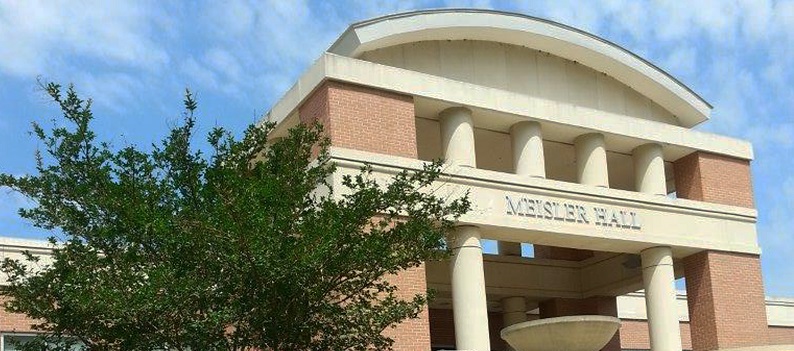
Shortly after your arrival, you must bring your passport and visa documents to the Office of Enrollment Services.  This should be done no later than your first date of hire and before you apply for your Social Security Card.  The Office of Enrollment Services is located in the Meisler Hall Building, Room 2400.

Climate and Weather

As Mobile is located in the southern part of the United States, the climate here is generally quite mild.  Winter temperatures average about 50oF (10oC) and summers average 85oF (30oC).  Be prepared, thought as we do have extremes in both seasons!  You will find winter days in which the temperatures drop below 20oF (-7oC) and summer days above 100oF (40oC).  There is also a lot of rain in Mobile-bring an umbrella and other wet-weather clothing.

Money

It is advisable to have around US$1,000.00 in cash and traveler's checks to help you get settled during the first few days here in Mobile.  It also is advisable to bring a major credit card with you in case of emergencies.  Both Visa and MasterCard are widely accepted in the U.S.

You will find it almost essential to have a checking account in the U.S.  Most shoppers here use checks or credit cards for many purchases and usually carry only enough cash for daily activities.

Coins (cents) denominations are: penny=1 cent; nickel=5 cents; dime=10 cents; half-dollar=50 cents; one dollar=100 cents=$1.  Paper currency (dollars) denominations are $1, $2 (seldom used), $5, $10, $20, $50, and $100.  Denominations above $100 are no longer printed, but some of the larger denominations still remain in the hands of private citizens.  All currency in general circulation is the same size and color, which can be confusing at first.

Housing

Most commercial apartments have, at minimum, a kitchen, living room, bath, and one, two, or three bedrooms.  Kitchens usually contain a sink, refrigerator, and stove.  Most apartment complexes have central laundry facilities for use by its tenants.  Unfurnished apartments have the kitchen basics but no other furniture.  Most traditional commercial apartments are unfurnished but it is possible to find furnished apartments.  Used furniture may be purchased from several civic and charitable organizations at reasonable prices.  New furniture may be rented from several local agencies, which specialize in furniture rental.

Prices for apartments vary depending on location and amenities.  Rent for an unfurnished one-bedroom apartment in this area starts around $450 per month and goes up depending on the number of bedrooms, location, etc.  Though you pay rent on a month-to-month basis, you will find that most apartments require you to sign a six-month to one-year lease which is a contract binding you to pay the rent for your apartment the length of time specified.  When you sign a lease, you should be prepared to pay the rent for the time indicated in the contract or find someone to "sublet" or take over the lease when you leave.  Some apartments do not permit subleasing.

Water often is the one utility in the rent price.  Other utilities, such as electricity and gas, often are not included in the rent fee, and payments must be made directly to the respective companies.  To obtain telephone service, you must contact the telephone company directly.  There is a basic monthly fee that permits unlimited local calls.  Long distance calls are charged by the minute.

Overnight and Short Term Accommodations

There are many fine hotels and motels in the Mobile area.  The lodging choices listed below are suggested because of their close proximity to the USA campus.

Best Inns of America (251) 343-4911            Best Suites of America (251) 343-4949
Best Western (251) 343-9345                      Comfort Inn (251) 666-6604
Days Inn (251) 344-3410                             Drury Inn (251) 344-7700
Econo Lodge (251) 479-5333                       Family Inn (251) 344-5500
Fairfield Inn by Marriott (251) 316-0029         Hampton Inn (251) 344-4942
Holiday Inn (251) 344-8030                          La Quinta Inn (251) 343-4051
Motel 6 (251) 343-8448                               Ramada Inn Resort (251) 342-3220
Red Roof Inn (251) 476-2004                       Residence Inn by Marriott (251) 304-0570

Transportation

Mobile has local public transportation in the form of city buses and taxis.  Because taxis are expensive and bus service is limited in some areas and often not available at night, most people find it useful to own an automobile.

If you plan to own or operate an automobile while in the U.S., you will be required to hold a driver's license and to obtain automobile insurance in order to operate the vehicle in Mobile.  After you have found a place to live and have settled in, and receive your social security card, you can take the licensing exam and obtain a license.  Automobile insurance may be purchased from one of many insurance agencies and costs vary depending on the type of car to be insured, the age and driving experience of the drivers, and the amount of insurance purchased.

Taxes

Depending upon your activities and your tax and visa history, you may or may not be required to pay taxes.  There are four major categories of taxes: federal tax on income; state tax on income; city and/or county tax on real or personal property; and FICA or Social Security tax - a federal retirement fund contribution based on income.  There are other taxes, which relate directly to owning or operating a business, or buying or selling real property (houses, land, etc.)

Tax treaties between the U.S. and other countries exempt some students, researchers and professors from paying U.S. state and federal income taxes.  Each treaty has its own restrictions and provisions.  The national tax authority in your country or the U.S. embassy or consulate can provide current information on tax treaties.  The Payroll Office at the University of South Alabama will determine if you are eligible to claim exemption from income tax withholding based on a treaty.

Schools

If you plan to enroll your child/children in school, be sure to bring their immunization records.  Public school attendance for grades one through twelve (beginning at age six) is available free.  Public schools in the U.S. are those supported by taxes paid to the government.  These schools are open to all children residing within the school district.  The public school that your child attends is determined by where you live.

Private schools operated by either secular or religious organizations usually charge tuition and may or may not have admission requirements.  Attendance at these schools generally does not depend upon your place of residence.

Time

The U.S. is divided into six time zones.  When it is 12 noon Eastern Standard (the East Coast) it is 11:00 a.m. Central, 10:00 a.m. Mountain, 9:00 a.m. Pacific Standard (the West Coast), 8:00 a.m. in the state of Alaska, and 7:00 a.m. in the state of Hawaii.  During the summer almost the entire country goes on Daylight Saving Time.  All clocks are moved ahead one hour in order to extend the number of daylight hours in the evening.


University of South Alabama - Mobile Alabama 36688-0002 / 1 (251) 460-6101
For questions or comments Contact Us
Last date changed: August 1, 2007 4:00 PM
http://www.southalabama.edu/enrollmentservices/prearrival.html
University of South Alabama