
AN 100-Introduction to Cultural Anthropology
AN 101-Introduction to Archaeology and Physical Anthropology
AN 290-Globalization and Rural Peoples: from Colonialism to Neoimperialism
AN 342-Applied Anthropology
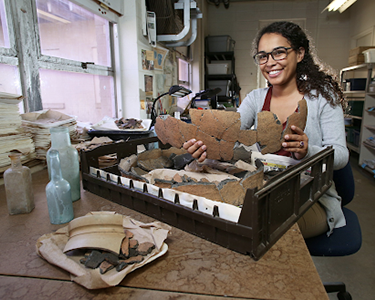
Since 2002 I have been working at the Center for Archaeological Studies, a.k.a. the archaeology lab, on campus at South. I have ongoing responsibilities in collections management, records maintenance, and policy compliance, but I am increasingly involved in historical research, including oral history collecting and National Register nominations. In May of 2006, I began an oral history project that involves area high school students in videotaped interviews that will become part of our permanent museum exhibit in the new Archaeology Museum on campus. In the time that I have been working at the lab, I completed research for my master's thesis. In my research, I looked at whether civic decision-making is influenced by changes in federal policy. I specifically examined a case where human remains were removed from an archaeological site in Washington state both in 1975 and in 1999, despite the fact that federal policy drastically expanded its protection of Native American human remains and funerary objects in that timespan. I focused on whether the change in policy had an obvious impact on discussions within city council meetings. I concluded that, unfortunately, it did not have a great impact, and recommended ways that individual organizations can better implement federal cultural resource management policy.
My concerns with both the ecological state of our world and the survival of different ways of life led me to the study of anthropology. In our current world system, both ecological and cultural diversity are at risk. Western economic practices and the tendency of our leaders to coerce other peoples to embrace Western lifeways and values can be seen as causes of our presentday crisis. During my undergraduate studies at the University of Nebraska at Lincoln, I became increasingly interested in indigenous peoples, since these peoples tend to feel the greatest effects from Western hegemony due to their vastly different lifeways and worldviews. My first anthropology professor, Robert K. Hitchcock,now chair of anthropology at Michigan State University, incited in me a further concern for the human rights of these native peoples. Susan Miller, now in the American Indian Studies department at Arizona State University, instilled in me the significance of the sovereign status of indigenous peoples and how this status has often been abused by colonizing governments. While getting my master's degree at Western Washington University in Bellingham, I refined my knowledge of anthropological theory and methods and how I can apply this knowledge for cultural justice.
As a teacher of anthropology, I endeavor to give to my students insight into global economic and political processes and in general guide students toward an understanding of human cultural diversity so that they may take this into consideration as they go through life in our diverse world. I hope to continue increasing the variety of course offerings in the anthropology program at South by developing courses that reflect my own interests and provide anthropology majors with vital experience that will help broaden students' understanding of the discipline.
For up-to-date information on issues in Indian Country, visit the National Congress of American Indians.
To listen to contemporary and traditional native music, visit the American Indian Radio on Satellite.
To meet a major influence in native self-determination, visit John Trudell's website.