What is Radiologic Technology?
How long does it take to become a radiographer?

May I pursue a B.S. degree after I complete the Radiologic Technology Certificate Program?

How long does it take to complete the bachelor's degree?
Will credits earned in the certificate program transfer to the bachelor's program?
Is the B.S. degree in Radiologic Sciences required to become a radiographer?
Are there areas of specialization for radiographers?
What is the difference between a radiologist and a radiographer?
Will I get a job when I graduate?
What is the annual income of program graduates?
Must I attend a college or university in order to become a radiographer?
Should I attend a college-based program rather than a hospital-based program?
If I choose a hospital-based program, will I be able to pursue a B.S. degree at USA?
How do I apply for admission to the radiography certificate program?
How can I be sure that I will be admitted to the radiography certificate program?
Is the ACT examination a requirement for application to the Department of Radiologic Sciences?
Is there a minimum ACT score?
What if I have not taken the ACT examination?
Does the ACT requirement apply to me if I am transferring from a Junior or another Senior College?
What is the purpose of the personal interview?
How should I prepare for the personal interview?
When are the personal interviews conducted?
Why must I visit a Department of Radiology?
What is the best time to schedule a visit to a Department of Radiology?
I live out of town. Must I travel to the Mobile area to visit a Department of Radiology?
When is the last day I may schedule a visit to the hospital?
Are there technical/core performance standards for admission to, progression in and completion of the programs offered by the Department of Radiologic Sciences?
Are junior college transfer students accepted into the radiography certificate program?
Are recent high school graduates and those who have been out of high school for several years accepted into the radiography certificate program?
Will all my classes be conducted on the main campus?
The program in radiography requires that each student attend classes on a full-time basis during the Fall, Spring, and Summer Semesters. If accepted into this program, will I be allowed a vacation?
How does the Admissions Committee decide who will be accepted and who will be declined?
How much will it cost to complete the program?
I live out of state, will I have to pay out-of-state tuition?
Are there scholarship and/or loan programs available to students enrolled in this program?
Is Medical Insurance required to enter the program?
If I become pregnant, seriously ill, or injured, will I be able to return to classes and graduate in a timely manner?
Must I complete all of the non-radiography courses in the order outlined on the model curriculum?
Where can I find additional information about radiography and specialized areas related to radiography?
If I have additional questions not answered here, whom should I contact?

TOP

What is Radiologic Technology?
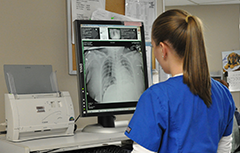
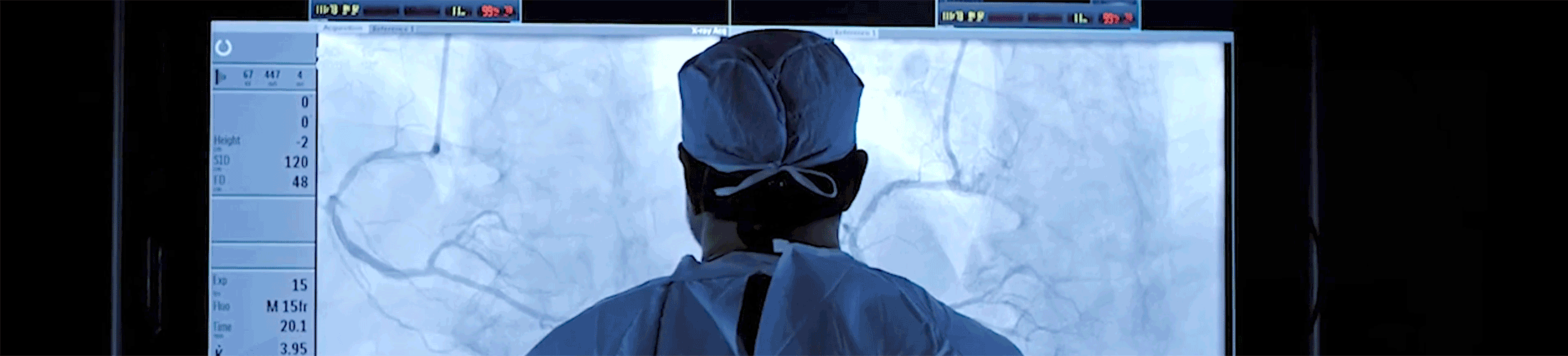
Radiologic Technology is the art and science of applying x-ray or gamma radiation in the treatment and diagnosis of patient disease or injury. Radiologic Technology is a profession which includes those individuals who perform radiographic procedures, nuclear medicine procedures, and radiation therapy procedures. Individuals performing these procedures are referred to as Radiographers, Nuclear Medicine Technologists, and Radiation Therapists. The Department of Radiologic Sciences prepares students to become Radiographers, formerly referred to as radiologic technologists, who perform and assist physicians in performing x-ray examinations in order to determine the presence of disease or injury. Radiographers utilize sophisticated x-ray equipment in recording the hidden structures of the body on radiographic imaging systems. The types of x-ray examinations vary considerably and include radiography of the organs and glands of the abdomen and chest, specialized studies of veins and arteries found throughout the body, and radiography of the entire bony components of the human skeleton. Additional information concerning the duties of a Radiographer will be obtained during an observation visit to the Department of Radiology at a hospital designated by the University of South Alabama, Department of Radiologic Sciences. This aspect of the admission requirements is discussed later.

X-ray examinations require the application of numerous scientific principles and an interest and desire to care for the sick and injured. Radiographers, like other health professionals, must not only be dedicated to the care of the sick and injured, but must also be actively involved in continuing education throughout their professional career in order to maintain professional competency and to keep abreast of the ever-advancing technological changes taking place in medical science.    

TOP

How long does it take to become a radiographer?

The time required to complete the certificate program in radiologic technology at the University of South Alabama, Department of Radiologic Sciences is 24 months. The program is fully accredited by:

The Joint Review Committee on Education in Radiologic Technology
20 North Wacker Drive, Suite 2850
Chicago, Illinois 60606-3182
312-704-5300

Students attend four regular semesters and two summer sessions. Upon completion of the prescribed courses, students are awarded a certificate of completion, and are eligible take the American Registry of Radiologic Technologists Examination for national licensure as Radiographers.         

TOP

May I pursue a B.S. degree after I complete the Radiologic Technology Certificate Program?

YES. Students graduating from the certificate program may continue their education and earn a B.S. degree in Radiologic Sciences through the Department of Radiologic Sciences.         

TOP

How long does it take to complete the bachelor's degree?
The Degree of Bachelor of Science in Radiologic Sciences requires three or four additional semesters beyond the certificate program. The time required to complete the degree requirements may vary depending on whether one is enrolled on a full-time basis, and whether one has previously completed various non-radiologic science courses required in the B.S. program. Courses required to complete the degree program are listed in the model curriculum.         

TOP

Will credits earned in the certificate program transfer to the bachelor's program?
All of the credits earned in the certificate program will transfer to the B.S. in Radiologic Sciences degree program.         

TOP

Is the B.S. degree in Radiologic Sciences required to become a radiographer?
No. The minimum requirement is the completion of a twenty-four month accredited program. However, completion of the bachelor's program will enhance one's opportunities to pursue employment in the following areas:
  • State and County Health Departments in Radiologic Health and Safety.
  • Sales representatives with radiology-related commercial companies.
  • Teaching positions in educational institutions as instructors in radiologic sciences.
  • Management positions in radiology departments.
  • Advanced imaging specialists in radiology departments.

TOP

Are there areas of specialization for radiographers?
There are several areas of specialization in radiography from which to choose, including vascular radiography, tomography, computerized tomography, pediatric radiography, magnetic resonance imaging, mammography and ultrasound. Students are introduced to vascular radiography, computerized radiography, tomography, mammography, and pediatric radiography in the certificate program. The B.S. program provides in-depth training in the areas of computerized tomography (CT), magnetic resonance imaging (MRI), mammography, radiation therapy, ultrasound, and vascular radiography. Advanced certification in these areas is now offered through the American Registry of Radiologic Technologists.

TOP

What is the difference between a radiologist and a radiographer?
A radiologist is a Medical Doctor who has specialized in radiology. The radiologist is concerned with diagnosis and treatment of diseases. To become a radiologist, one must spend four years in pre-medical education, four years in medical school, and usually four additional years as an intern/resident in radiology.

A radiographer performs the technical aspects of radiology and acts as a physician's (radiologist) assistant. The radiographer does not diagnose illnesses as demonstrated on radiographic images. The length of education is usually two years in a post secondary school. However, many radiographers pursue the baccalaureate degree and higher degrees in order to better prepare themselves for advancement in those areas previously mentioned. The Department of Radiologic Sciences prepares students to become radiographers. The length of the program is twenty-four months, and graduates are awarded a certificate. As previously noted, graduates of this program may also continue their education at the University of South Alabama and earn a Bachelor of Science Degree in Radiologic Sciences.

TOP

Will I get a job when I graduate?
Employment opportunities for radiographers are abundant at the present time. However, even though our program graduates have not experienced significant problems in finding jobs, it is conceivable that one could experience difficulty in the future.

TOP

What is the annual income of program graduates?
Beginning salaries for entry level radiographers (certificate program graduates) are currently estimated to be $32,000 to $35,000 annually. One's salary should also increase as experience is acquired. However, whether or not one receives higher salaries depends on the individual, and his/her desire to develop new expertise as a radiographer.

TOP

Must I attend a college or university in order to become a radiographer?
No. Hospital-based schools conduct twenty-four month programs which lead to certification in radiography as does the program at the University of South Alabama. Regardless of who conducts the program (hospital, university, or college-based), graduates qualify to take the American Registry of Radiologic Technologists examination for licensure as a radiographer, providing the program in question is approved by the Joint Review Committee on Education in Radiologic Technology or a college/university regional accrediting agency.

TOP

Should I attend a college-based program rather than a hospital-based program?
There is no simple answer to this question because we feel that students should thoroughly investigate both types of programs, and choose the school which fulfills the needs of the individual. Generally speaking, hospital-based programs require far less tuition when compared to college-based programs, and this is an important factor to consider. It should also be stated that hospital-based programs generally offer quality educational programs. In contrast, college-based programs require various foundation courses which may be transferred to degree-granting institutions. This is an important consideration if one plans to continue their education beyond a two-year program. Regardless of whether a program is hospital or college-based, we recommend that students consider the mission and goals of a program in determining which program to attend. Simply stated, our mission is to educate men and women who want to become Registered Radiographers and who wish to prepare for that career in a college setting. Many individuals do not desire, nor do they need, what has come to be called "the college life."         

TOP

If I choose a hospital-based program, will I be able to pursue a B.S. degree at USA?
While USA does not accept hospital-based credits, other institutions may.

TOP

How do I apply for admission to the radiography certificate program?
The application process begins when the student submits a Department of Radiologic Sciences application form, which is available online. Steps to admission are also outlined online.

The completed departmental application form may be faxed to (251) 445-9347 or mailed to:

Admissions Committee
Department of Radiologic Sciences
HAHN 3015
307 N. University Blvd.
Mobile, AL, 36688-0002.

Application deadline is May 1st of each year.

Applicants should realize that acceptance to the University does not guarantee admission to the radiography certificate program.
While three reference forms must be submitted by May 1st, they do not have to accompany the completed application form. Reference forms are available online and should be returned directly to the Department of Radiologic Sciences by the person completing the reference. Health records are also required for admission; however, applicants should not forward this information until they have been officially notified they have been accepted into the program. Students accepted must forward health records prior to the beginning of the Fall Semester.

TOP

How can I be sure that I will be admitted to the radiography certificate program?
No one can be guaranteed admission into this program until the Admissions Committee has considered all of the applicants. However, your admission can be enhanced by completing the requirements for admission on time as well as making sure you have a good background in science and math, or that you have completed some or all of the non-radiography courses. The steps to admission are outlined online.

TOP

Is the ACT examination a requirement for application to the Department of Radiologic Sciences?
Yes. Although the University waives this requirement for transfer and adult students, the ACT is required for the Department of Radiologic Sciences, regardless of transfer status, age, or length of time out of school. ACT scores are part of the application requirement, so should be received by the May 1st application deadline.

TOP

Is there a minimum ACT score?
The Department of Radiologic Sciences does not have a minimum ACT requirement for application to or acceptance in the program; the ACT is simply one of several factors in the decision-making process. If individual scores for Math, English and Natural Science on the ACT are below 18, it is strongly advised that the test be retaken.

TOP

What if I have not taken the ACT examination?
Applicants who have not completed the ACT requirement must do so in order to be considered eligible for admission to the Department of Radiologic Sciences. In cases where the applicant takes the ACT just prior to the Department of Radiologic Sciences' application deadline, admission will be delayed contingent upon receipt of the test results. However, if the ACT results are not received prior to the Admission Committee's final decision, applicants will be denied admission to the program.

TOP

Does the ACT requirement apply to me if I am transferring from a Junior or another Senior College?
Yes. All applicants, regardless of their past academic background, must meet the ACT requirement.

TOP

What is the purpose of the personal interview?
The personal interview allows members of the Admissions Committee to meet each applicant and acquire additional information beyond the academic related data derived from transcripts and personal references. The interview period is also utilized to measure the applicant's verbal and written communication skills, which are considered extremely important in view of the fact that students must communicate with patients, physicians, and other allied health professionals during the course of their education and throughout their professional career. Applicants must first be accepted into the University before they are granted an interview and subsequently considered for admission into the Department of Radiologic Sciences. However, acceptance into the University does not guarantee admission into the Department of Radiologic Sciences as enrollment is limited and depends on the number of clinical openings available.

TOP

How should I prepare for the personal interview?
There are no special preparations, nor is it recommended that one attempt to prepare for this interview as though it were an examination. The questions are general in nature and it is suggested that the applicant simply be himself/herself. Each applicant will be interviewed by members of the Admissions Committee. The interview is conducted in a round-table fashion to provide a more relaxed environment. The purpose of the interview is to obtain additional information beyond that provided by one's transcript, test scores, etc. In short, the interview is nothing more than a step or phase in the admission procedure, and applicants should not view this step in a fearful or intimidating manner. The interview process will last approximately 45 minutes and applicants should plan their arrival and departure accordingly.

TOP

When are the personal interviews conducted?
Although the deadline for submission of departmental application is May 1st, interviews will generally begin during the month of March and continue through the month of May. Interviews scheduled during the month of March and April are intended to expedite the interview process for those who apply prior to the published application deadline. Applicants will be allowed to choose from a list of scheduled interview dates with their preference as to the date and time of the interview. Interviews cannot be scheduled until applications have been received by the Department of Radiologic Sciences. Therefore, applicants are urged to contact the secretary of the Department of Radiologic Sciences in order to insure this information has been received. This can be accomplished by calling (251) 445-9346. Applicants will be contacted approximately two weeks before interviews begin, and appointments will be made at that time. Final decisions regarding admission are made in late May to early June, and applicants are notified in writing.

TOP

Why must I visit a Department of Radiology?
The purpose of requiring applicants to visit the Department of Radiology is to enable applicants to see several types of x-ray examinations, as well as to allow one an opportunity to develop a better understanding of the duties and responsibilities of the radiographer. It is also hoped that visiting a Department of Radiology will assist the student in making decisions regarding his/her career goals.

TOP

What is the best time to schedule a visit to a Department of Radiology?
If your application is on file in the Department of Radiologic Sciences, you will receive a letter or be contacted by phone or email asking that you call the department to schedule observation and interview appointments. The observation site will be determined by the Admissions Committee, and observation and interview appointments MUST be scheduled through the Department of Radiologic Sciences at (251) 445-9346. Observations will be held in a hospital Radiology Department from 8 a.m. to 12 noon on week days only. An observation form is available online to document completion of this step of the application process. Applicants should download, read and sign the form, then take it to the hospital on observation day, and have it completed by a radiology employee. The form should then be mailed, faxed or delivered to the Department of Radiology Sciences prior to, or at time of interview with the Admissions Committee.

TOP

I live out of town. Must I travel to the Mobile area to visit a Department of Radiology?
No. Call the Department of Radiologic Sciences at (251) 445-9346 to let us know of your plans, then you may arrange to visit a hospital closer to home. However, you must have the Chief Radiographer or Department Director complete an observation form. Prior to the observation, the applicant is responsible for verifying that most of the procedures listed on the observation form will be available during the actual observation time. Observations must be conducted from 8 am until noon on a weekday (Monday - Friday).

TOP

When is the last day I may schedule a visit to the hospital?
All applicants must fulfill the period of observation within a hospital Department of Radiology prior to reporting for their personal interview. Therefore, the last day to schedule a visit to the hospital will be determined by the date scheduled for the personal interview. However, applicants are urged to complete this step to admission as soon as possible.

TOP

Are there technical/core performance standards for admission to, progression in and completion of the programs offered by the Department of Radiologic Sciences?
Yes. Core performance standards are fundamental tasks and skills that are required for successful completion of the program. They have been outlined and are available upon request.

TOP

Are junior college transfer students accepted into the radiography certificate program?
Yes. Junior and senior college students transfer into the certificate program each year. Most, if not all, of the freshman courses taken at other institutions are transferable, which greatly reduces the course load during the first year. However, completion of non-radiography courses at other institutions does not reduce the time necessary to complete the certificate program in radiography. We are pleased with the success experienced by transfer students in our program and we welcome their applications. Students desiring to transfer from other radiography programs are considered on a case-by-case basis. In addition, transfer students should understand that the maximum number of credits accepted for transfer from a junior college is 64 semester hours.

TOP

Are recent high school graduates and those who have been out of high school for several years accepted into the radiography certificate program?
Yes. Even though many of the applicants have completed some or all of the non-radiology college level courses, recent high school graduates and others are accepted. However, we strongly recommend to the recent high school graduate that he/she apply for admission to the Summer Semester (the semester prior to the beginning of the Fall term) and enroll in two courses such as English (EH 101), Computer Sciences (CIS 110/150), Speech (CA 110), or Mathematics (MA 112). The completion of two courses (6 semester hours) prior to the beginning of the Fall Semester will greatly reduce your course load throughout the first year, as well as allow you the opportunity to devote more study time to biology and radiography courses. You should select two of the above courses. Those who have not previously attended college and have been out of high school for several years are strongly encouraged to consider the same recommendations. Those applicants interested in enrolling for the Summer Semester must apply for admission to the University far in advance of the Summer Semester for enrollment purposes. For further information concerning summer school enrollment, contact the Academic Advisor for the College of Allied Health Professions, at (251) 445-9260.

TOP

Will all my classes be conducted on the main campus?
No. All of the lecture and lab classes will be conducted on campus in the new Health Sciences Building at 307 N.University Blvd. Additionally, the Department of Radiologic Sciences is affiliated with seven hospitals in the Mobile area, and students rotate through these hospitals in order to fulfill the clinical component of the curriculum. The clinical education centers (hospital affiliates) are the University of South Alabama Medical Center, University of South Alabama Children’s & Women’s Hospital, Providence Hospital, Mobile Infirmary Medical Center, Infirmary West, Thomas Hospital and Springhill Medical Center. The clinical education centers are throughout Mobile and student schedules are arranged in order to avoid unnecessary travel. However, applicants should consider the travel requirement at the same time other financial considerations are made, i.e., tuition, books, uniforms, etc.

TOP

The program in radiography requires that each student attend classes on a full-time basis during the Fall, Spring, and Summer Semesters. If accepted into this program, will I be allowed a vacation?
As a student at the University of South Alabama, radiography students do not attend classes during the break periods between semesters. Moreover, students are dismissed from classes on all holidays observed by the University. Additional information concerning attendance policies arising from student illness and other reasons for absenteeism may be obtained by calling (251) 445-9346.

TOP

How does the Admissions Committee decide who will be accepted and who will be declined?
The Admissions Committee evaluates all candidates according to the following criteria:
  1. ACT or SAT scores.
  2. Transcript review.
  3. Written communication skills.
  4. Results of the personal interview.

The above criteria or categories have been assigned various point values. The above categories (criteria) are totaled, and those students receiving the highest scores are admitted. However, regardless of the total score, all applicants who have previously completed college-level courses must have a minimum GPA of 2.0 (C average) and an ACT score in order to be admitted. It is therefore easy to see that one's past academic performance is of paramount importance.

TOP

How much will it cost to complete the program?
The following information represents estimates for costs associated with completing the Certificate Program:
  1. Tuition: Tuition is currently set at $162.00 per semester hour*. Therefore, total tuition expenses for the radiography certificate program are approximately $14,904.
  2. Books: Approximately $1,300.
  3. Uniforms: $250 This estimate includes shoes, uniforms, hosiery, etc.
  4. Housing: Student housing is available to all students enrolled in the Department of Radiologic Sciences. However, due to the various types of housing available to students, it is suggested that students contact the Department of Housing for information at the following address:

    Department of Housing, Delta Commons
    Mobile, Alabama 36688-0002
    (251) 460-6185

    *The University reserves the right to change fees, as deemed necessary by the Board of Trustees, without prior notice.


  5. Professional Liability Insurance: Students accepted into the Department of Radiologic Sciences are required to purchase Professional Liability Insurance. The cost of this insurance is approximately $50.00 per year. Professional Liability Insurance is required as a protective measure in the event a student becomes entangled in a legal suit involving patient care activities within the clinical setting. Information for obtaining liability insurance will be provided through the Department of Radiologic Sciences and the student must provide proof of coverage.

TOP

I live out of state, will I have to pay out-of-state tuition?
Students living in Escambia and Santa Rosa Counties in Florida and those living in George, Green, Harrison, Jackson, Perry and Stone Counties of Mississippi do not pay out-of-state tuition. Other students will have to pay out-of-state tuition.

NOTE: Students completing their radiography education in Mississippi, who do not live in one of the counties mentioned above, should be aware that due to the establishment of a B.S. program at the University of Mississippi Medical Center, you may have to pay out-of-state tuition. You are encouraged to check with the Mississippi Academic Common Market to check on your status relative to out-of-state tuition and attendance at the University of South Alabama.

TOP

Are there scholarship and/or loan programs available to students enrolled in this program?
Yes. The University of South Alabama offers financial aid assistance through various grant and loan programs. University and privately funded scholarship programs are also available. Inquiries regarding financial aid should be addressed to

Office of Financial Aid
Meisler Hall
Suite 1200
University of South Alabama
Mobile, AL 36688-0002
(251) 460-6231

TOP

Is Medical Insurance required to enter the program?
Yes. Proof of medical insurance coverage is required of all students who are selected for admission to the program and should be submitted only when requested in the letter of admission. The reason for this requirement is that accidents occurring in the clinical setting, such as an accidental needle stick, require immediate medical attention. In such cases, the student must be prepared to pay for the required services. Therefore, it is necessary for students to carry personal medical insurance.

TOP

If I become pregnant, seriously ill, or injured, will I be able to return to classes and graduate in a timely manner?
Various policies have been developed which address absenteeism arising from student pregnancy, illness, or injury. These policies are discussed in the departmental student handbook (Student Reference Manual) under the general headings of withdrawal and leave of absence. Specific policies of interest to the student applicant are outlined below.

A. Withdrawal Due To Medical-Related Reasons: Students may withdraw from the program due to medical-related reasons. Following the period of recovery, students will be allowed to re-enter the program and complete their education providing they withdraw from the program in good academic standing. It is the responsibility of the student to notify the appropriate instructors of their intent to withdraw. Plans relative to the student's return to the program will be formulated on a case-by-case basis.

    1. The following policies apply to instances of student pregnancy:

    1. Students have the option of notifying the faculty of a suspected and/or confirmed pregnancy. Notification can be achieved by voluntarily completing a Declared Pregnancy Worker Form, which is available in the office of the Department of Radiologic Sciences.
    2. Student options relative to pregnancy are:
      • The student may withdraw from the program and re-enter at a later date as is the case with withdrawal due to other medical-related reasons.

      • Students may withdraw from clinical education courses and continue with the didactic component of the curriculum. A student selecting this option will be allowed to complete clinical education courses only during the semester in which the clinical course is offered.

      • The student may continue in both the didactic and clinical components of the curriculum providing their radiation exposure does not exceed accepted standards as published in the University of South Alabama Radiation Safety Manual. The manual states that "during the entire gestation period, the maximum permissible dose equivalent to the fetus from occupational exposure of the expectant mother should not exceed 5 mSv (0.5Rem)." If the allowable dosage is exceeded, the student will be advised to withdraw from the clinical phase of the program for the remainder of the gestation period. It must be understood that students electing to remain in clinical education courses will be expected to complete/fulfill the course requirements of clinical education courses in which they are enrolled.

    2. Policies relative to withdrawal due to major illness/injury:

    1. The student must provide a written communique from his/her physician which explains the estimated time of recovery and the limits, if any, placed upon the student's activity.
    2. The appropriate faculty member (course master) must be notified and the physician's communique presented in a timely fashion.
    3. The course master in consult with the departmental chairperson will formulate plans concerning the student's re-entry to the program and the student will be notified accordingly.

    3. Summary Statement

    1. It is important to note that this program emphasizes the relationship and/or the interdependence which exists between didactic and clinical instruction. Thus, students may be required to audit/repeat some didactic courses if one's clinical performance upon their return to the clinical setting reveals a need to do so. The latter aspect of this policy would, of course, depend upon the length/period of withdrawal.
    2. Withdrawal from the program due to a medical leave of absence (illness or pregnancy) will not allow the student to return to the program once a semester is underway. This means that students must re-enter the program at the beginning of a given semester.


B. Leave of Absence Policy: Leave of absence refers to a situation in which a student is allowed to be absent for a period of time without having to withdraw from the program. A leave of absence generally suggests a more short-term departure than that of withdrawal. A leave of absence may be granted in cases of family medical emergencies, serious personal and/or family-related problems, and similar situations considered serious enough by the faculty to warrant such consideration. Students must consult with departmental faculty in order to receive permission to take a leave of absence. Following faculty discussions relative to the situation at hand, the student will be notified of the faculty's decision and plans regarding the student's absence, as well as his/her return will be handled on a case-by-case basis.

TOP

Must I complete all of the non-radiography courses in the order outlined on the model curriculum?
No. However, students must complete Human Anatomy and Physiology I and II (BMD 114 & 115) prior to beginning the Fall term of their second year.

TOP

Where can I find additional information about radiography and specialized areas related to radiography?
The U.S. Department of Labor, Bureau of Labor Statistics provides a great deal of information on occupations in radiography. In addition, the American Society of Radiologic Technologists' (A.S.R.T.) web site can also provide information under the headings of About our Profession and Career Center. Some other sites that may have additional information are listed on the LINKS tab to the left.

TOP

If I have additional questions not answered here, whom should I contact?
You should contact any faculty member of the Department of Radiologic Sciences. They will be glad to answer any questions you might have. You can contact our faculty by going to the faculty page and clicking on the name beneath the photo of the faculty member you would like to contact.

TOP

 
Home ] [ FAQ ]Faculty ] Programs ] [Student Activities ] [ Links] [ ContactUs ]