|
| The
College of Engineering offers
programs leading to degrees of
Master of Science in Chemical,
Electrical and Mechanical
Engineering. |
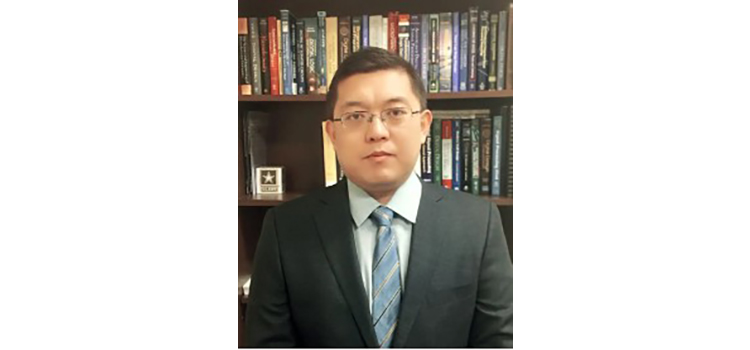
| Dr.
Anh-Vu Phan is the Director of
the Mechanical Engineering
program and will be your
advisor. |
| The
programs comprise course work
and directed theoretical and
experimental inquiry in thesis
or project research. A program
option requiring only course
work is also available. The
course work only option, while
available to all graduate
students, is particularly
attractive to full time employed
engineers that are interested in
augmenting and enhancing their
engineering skills as part time
students. Courses are available
in the evening to accommodate
employed students. |
| The
following criteria supplement
the Graduate School criteria |
| 1. |
Regular
Admission |
| |
a) |
B.S.
degree in engineering in
a relevant field, from
an ABET accredited
program. |
| |
b) |
For
those students not
holding a B.S. degree in
engineering from an ABET
accredited program: a
B.S. degree in
engineering in a
relevant field and a
minimum combined score
of 900 on the verbal and
quantitative sections of
the Graduate Record
Exam. |
| 2. |
Provisional
Admissions |
| |
a) |
B.S.
degree in engineering
from an ABET accredited
program or a minimum
combined score of 900 on
the verbal and
quantitative sections of
the Graduate Record
Examination is required.
Applicants for Chemical
Engineering may
substitute an American
Chemical Society
accredited B.S. degree
in chemistry in place of
the B.S. degree from an
ABET accredited program. |
| |
b) |
A
B.S. in engineering or
in a field acceptable to
the departmental
Graduate Admissions
Committee is required.
Depending on the
student's background
additional undergraduate
preparatory courses may
be required. These
courses will not count
toward the Master's
degree. |
| |
c) |
A
minimum grade-point
average of 2.5 on all
undergraduate work
(A=4.0) including a
minimum grade-point
average of 2.5 over the
last 64 course hours of
undergraduate work or, a
minimum grade-point
average of 2.75 over the
last 64 course hours of
undergraduate work is
required. |
| 3. |
Non-degree
Admission |
|
a) |
Non-degree
admissions are accepted
in accordance with
Graduate School
requirements. |
|
| Each
applicant will be reviewed by
the Admissions Committee of the
appropriate department which may
reserve the right to evaluate
additional credentials, such as,
but not limited to, course work
taken, letter of recommendation,
etc. |
| At
the beginning of the first
semester, international
students, except those who have
earned a bachelor's or graduate
degree at an accredited United
States institution of higher
learning, are given a foreign
language test by the University.
Students with deficiencies in
English skills are assessed by
the test, will be required to
take and successfully complete a
special English Communication
ESL course tailored to
Engineering. This course will be
in addition to other
requirements for the degree. |
| The
above are minimum requirements
for admission. |
| |
| CHANGE
OF STATUS FROM PROVISIONAL TO
REGULAR STANDING WITHIN THE
MASTER'S PROGRAMS |
| The
following requirements are in
addition to the Graduate School
requirements for change of
status: |
| |
Students
required to complete
additional undergraduate
course work in partial
fulfillment of the
requirements to advance
from Provisional
Admission to Regular
Admission must obtain a
minimum grade-point
average of at least 3.00
on the total of all such
required courses with a
grade of at least C in
each course. |
|
| |
| DEGREE
REQUIREMENTS FOR A MASTERS
DEGREE |
| Each
student will have a graduate
advisory committee and a faculty
advisor. The student's program
of study must be approved by the
advisory committee and all
courses taken must have the
approval of the student's
faculty advisor. |
| Three
plans of study are offered. The
thesis option includes 6 hours
of credit for the thesis. The
project option includes 3 hours
of credit for the project. The
thesis differs from the project
in that the thesis is usually
oriented toward original
engineering research whereas the
project is usually oriented
toward engineering applications.
The following minimum
distribution requirements must
be met for each of the three
options: |
| |
| Thesis
Option: 30 semester hours
credit required for degree (24
hours course work required). |
- 15 to 18 semester hours
course work in engineering
- 6 to 9 semester hours
course work in supporting
areas
- 6 semester hours of thesis
credit
|
|
| Project
Option: 33 semester hours
credit required for degree (30
hours course work required).
Electrical Engineering requires
36 semester hours credit for
this option. |
- 18 to 21 semester hours
course work in engineering
- 9 to 12 semester hours
course work in supporting
areas
- 3 semester hours of
project credit
|
| Course
Work Option: 33 semester
hours credit required for degree
(33 hours course work required).
Electrical Engineering requires
36 semester hours credit for
this option. |
- 21 to 24 semester hours
course work in engineering
- 9 to 12 semester hours
course work in supporting
areas
|
| Supporting
areas include mathematics,
natural sciences, basic medical
sciences, computer sciences,
statistics, business, as well as
engineering. |
| A
maximum of six hours of directed
study may be counted toward the
degree. A maximum of six hours
of thesis may be counted toward
the degree. |
| Students
must complete satisfactorily a
comprehensive examination.
Students failing this
examination may try a second
time not sooner than 12 weeks
after the first attempt.
Students failing the second time
will be academically dismissed
from the program. |
| The
thesis or project candidate must
present a satisfactory oral
defense of the written report.
Should the student present an
unsatisfactory defense, a second
attempt will be allowed not
sooner than 12 weeks after the
first attempt. A second
unsatisfactory defense will
result in dismissal from the
program. |
|
http://www.southalabama.edu/bulletin/graduate.htm
|