 |

|
|
Although the 1997 hurricane season was one of
the weakest on record, the Mobile area experienced
its most unusual tropical cyclone. Most of the
hurricanes that have caused significant damage
in Mobile developed over the Atlantic, Caribbean,
or the southern Gulf of Mexico. These storms were
usually tracked for many days before reaching
the Gulf Coast with considerable strength and
forward motion. However, Hurricane Danny was quite
different. Rather than forming in the deep tropics,
Danny developed near the Gulf Coast from a non-tropical
system. Furthermore, as the storm approached the
coast, it slowed to a crawl. Then, after making
landfall, it stalled for hours over Mobile Bay
followed by a slow, meandering departure.
|
 |

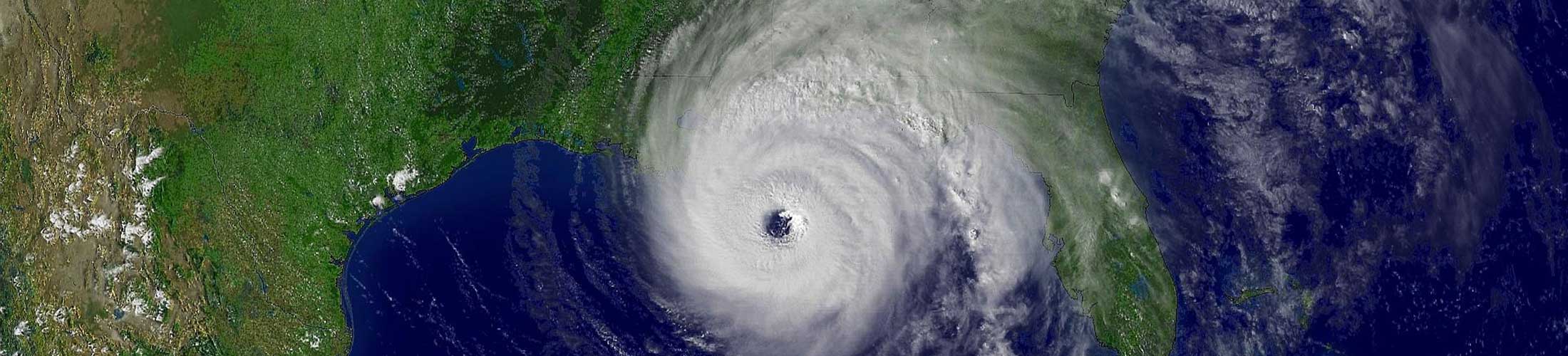
Hurricane
Danny - Click for larger view |
|
Danny
actually formed from an upper air disturbance
that drifted southward from the Great Lakes to
the Gulf of Mexico in mid July. A large area of
thunderstorms then formed south of Louisiana gradually
assuming tropical characteristics. On the 17th
of July, the system intensified and became Tropical
Storm Danny.
Tracking
northeastward toward southeast Louisiana, Danny
strengthened to a minimal hurricane on the 18th
just before crossing the Mississippi River southeast
of New Orleans. A wind gust of 95 mph was recorded
at Grand Isle, Louisiana where considerable damage
occurred to marine facilities.
With
Hurricane Danny in the Alabama coastal waters
on the night of Friday July 18, 1997 there was
a sizeable difference in forecast paths between
the "Official" National Hurricane Center
and the Coastal Weather Research Center. Hurricane
Danny actually moved into Mobile Bay 8 hours later.
You may
see an example of the Blackwell
Over-surface Hurricane Wind (BLOHW) Model
as it demonstrates the two
different forecast paths.
|
|

The
Sands at Romar Beach condominium suffered
wind damage from Hurricane Danny.
Click for larger view
|
 |
Following
a slow, erratic path across the Chandeleur Islands,
Danny turned northward reaching the Fort Morgan
Peninsula on the 19th. Danny entered Mobile Bay
where it stalled and, in an unusual move, achieved
its lowest barometric pressure.
|
|
|
Although
the storm was small, it packed strong wind gusts
that reached 80 mph over the Fort Morgan Peninsula,
Bon Secour Bay, and Dauphin Island. In fact, a
gust of 101 mph was recorded at the Dauphin Island
Sea Lab. Wind gusts of 70-75 mph were felt over
Gulf Shores, Mullet Point, and the western shore
of Mobile Bay south of Dog River.
|
 |

Hurricane
force winds and high tides forced this fishing
boat into a Dauphin Island yard.
Click for larger view
|
|

Rainfall
totals of 25"-30" caused severe flooding
along
the Fowl River in south Mobile County.
Click for larger view
|
 |
Danny's
legacy was rain, not wind. Once the storm stalled
over Mobile Bay, the storm's circular configuration
changed radically resulting in the creation of
an enormous rain "pocket" on the western
side of the system. This area of torrential rain
remained nearly stationary for seven to nine hours
resulting in incredible rainfall totals over Dauphin
Island and southeast Mobile County. The Dauphin
Island Sea Lab recorded 36.71" of rain for
the storm with 25.98" in seven hours. Doppler
radar in Mobile estimated more than 43"
over southwest Mobile Bay!
|
|
|
During
the evening of July 19th, Danny's eye moved into
Baldwin County around Weeks Bay. This resulted
in an eastward shift of the major rainfall center.
Torrential rains pounded western Baldwin County
through the night and into the morning of July
20th. Rainfall totals of 20"-25" fell
over Baldwin County causing record flooding on
the Fish River with considerable damage to homes,
bridges, and roads across the county.
|
 |

Heavy
rains on the eastern shore of Mobile Bay
caused severe erosion to this property in Daphne.
Click for larger view
|
|

On
July 19, while Hurricane Danny was producing torrential
rains over Mobile County, near hurricane force
winds
were pushing Mobile Bay waters away from the Montrose
shoreline.
Click for larger view
|
 |
After
flooding the coastal counties, Danny was not through!
The storm drifted northwest reaching Choctaw County
late on the 20th where it dumped 12"-15"
of rain causing severe flooding. Additional heavy
rains spread northward through western Alabama as
Danny drifted inland. Amazingly, Danny maintained
its circulation across northern Alabama, northern
Georgia and the Carolinas and then strengthened
again as it entered the western Atlantic. Gale force
winds were recorded along the Virginia coast and
as far north as Nantucket Island, Massachusetts.
|
|
|
|
|
|

|
 |
University
of South Alabama
- Mobile, AL 36688-0002 / (251) 460-6101
For comments or questions about our Web site, please Contact
Us
Last date changed:
May 30, 2002 4:55 PM
URL: http://www.southalabama.edu/meteorology/hurricanedanny.html
|
|
|
|