Department of Pharmacology
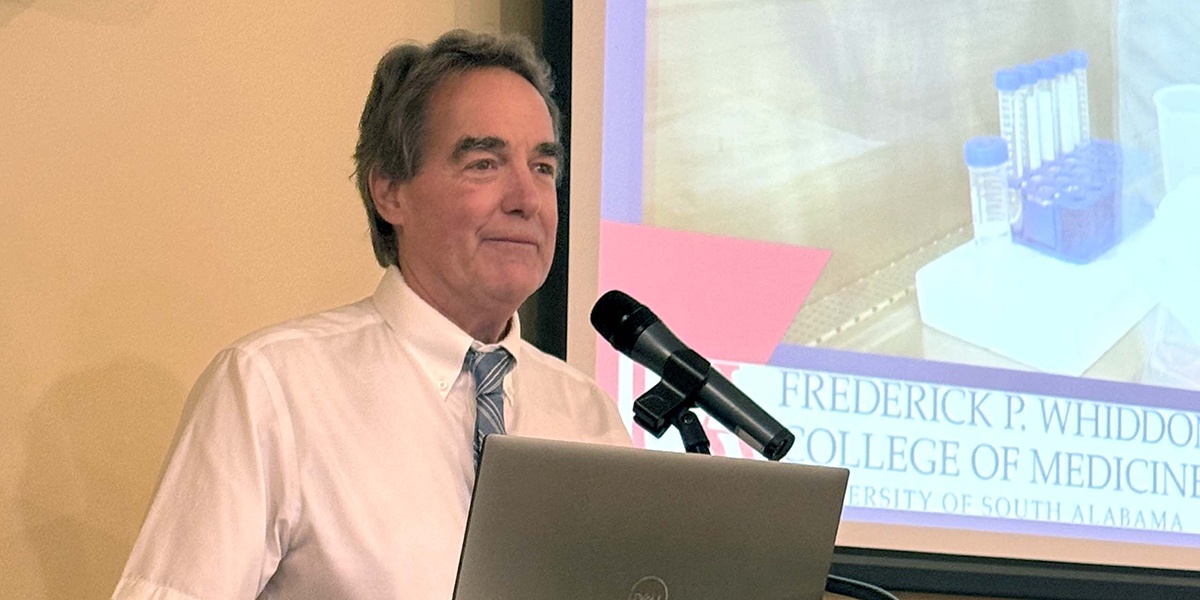
Dr. Troy Stevens
FACULTY
COURSES
GRADUATE INFORMATION
UNDERGRADUATES


HOME USA HOME COLLEGE OF MEDICINE HEALTH SYSTEM MAPS
College of Medicine
  Students
 
 
Other faculty members
Dr. Mark Gillespie
Dr. Mikhail Alexeyev
Dr. Abu-Bakr Al-Mehdi
Dr. June Ayling
Dr. Michael Chinkers
Dr. Jack W. Olson
Dr. Jonathan G. Scammell
Dr. Stephen W. Schaffer
Dr. Troy Stevens
Dr. Samuel J. Strada
Dr. Richard M. Whitehurst, Jr.
Dr. Troy Stevens
Associate Professor
Ph.D., Colorado State University
Postdoctoral, University of Colorado
National/International Activities: Member of the Editorial Board of the American Journal of Physiology, Lung Cell and Molecular Physiology. Chair of the Nominating and Steering Committee and member of the Planning and Program Committees for the Pulmonary Circulation Assembly of the American Thoracic Society; member of the Program Committee for the American Physiological Society; Ad Hoc Member for Lung Biology and Pathology Study Section, Respiratory and Applied Physiology Study Section, Experimental Cardiovascular Sciences Study Section and Program Project Grants for NHLBI.
 
July, 2002: Center for Lung Biology Established

Dr. Troy Stevens was named director of the new Center for Lung Biology in July, 2002.

more details...


Research
Publications

 
Research

Lungs provide a mechanism for oxygen to access blood. Diffusion of oxygen from lung alveoli into capillary blood requires a thin blood-gas barrier consisting of only alveolar epithelial cells and capillary endothelial cells. Lung inflammation disrupts the endothelial cell barrier and allows fluid, molecules and white blood cells to leak into the interstitium between endothelial cells and epithelial cells, thus decreasing blood oxygenation. The focus of our laboratory is to identify cellular mechanisms promoting endothelial cell disruption during lung inflammation so that we can hopefully develop pharmacologic agents useful in the treatment of inflammatory lung disorders.

Lung endothelial cells normally form a continuous sheet in which each cell contacts two or three neighboring cells. In response to inflammatory agents like circulating neurohumoral mediators, oxidants, cytokines, and bacterial components, endothelial cells lose close contact with their neighbors and form transient gaps in the sheet. It is this gap that allows accumulation of fluid, macromolecules, and white blood cells in the interstitium.

Intracellular second messengers convey the message between circulating inflammatory mediators and the cell response, e.g. inter-cellular gaps. Cytosolic calcium and cyclic AMP are two important signals that control the endothelial cell barrier. While stimulation of calcium entry across the cell membrane promotes inter-cellular gap formation, increased cyclic AMP decreases activity of adenylyl cyclase--the enzyme that synthesizes cyclic AMP. Thus, increased calcium entry and decreased cyclic AMP promote inter-cellular gap formation during lung inflammation. Our ongoing studies aim to identify the calcium channel that is activated during inflammation to decrease cyclic AMP and promote inter-endothelial cell gap formation. Inflammatory substances make endothelial cells pull apart, but the mechanism is unknown. Endothelial cells tightly contact one another.

Hypothesis
Gap Between Cells-Cell Contact
 
Publications

1. Steven T, Nakahashi Y, Cornfield D, McMurtry I, Cooper D, and Rodman D. Calcium inhibitable adenylyl cyclase modulates pulmonary artery endothelial cell cAMP content and barrier function. Proc. Natl. Acad. Sci. USA 92:2696-2700 (1995).

2. Dempsey E, Stevens T, Durmowitz A, and Stenmark K. Mechanisms of hypoxia-induced change in contraction, growth, and matrix synthetic properties of pulmonary vascular cells. In: Lung Biology Series-Tissue Oxygen Deprivation: Developmental, Molecular and Integrated Function (Eds. Haddad G and Lister G), Marcel Dekker, Inc, New York (1996).

3. Abman S and Stevens T. Oxygen and perinatal pulmonary vasoregulation: Implications for the pathophysiology and treatment of neonatal pulmonary hypertension. In: Lung Biology Series-Tissue Oxygen Deprivation: Developmental, Molecular and Integrated Function (Eds. Haddad G and Lister G), Marcel Dekker, Inc, New York (1996).

4. T. Stevens, B. Fouty, L. Hepler, D. Richardson, G. Brough, I.F. McMurtry, and D.M. Rodman. Cytosolic Ca2+ and Adenylyl Cyclase Responses in Phenotypically Distinct Pulmonary Endothelial Cells. Am. J. Physiol. 272:51-59 (1997).

5. Chetham P, Brough G, Mons N, Cooper D, and Stevens T. Ca2+ inhibitable adenylyl cyclase and pulmonary microvascular permability. Am. J. Physiol. 273:L22-L30 (1997).

6. P.M. Chetham, W.D. Sefton, J. Bridges, T. Stevens, and I.F. McMurtry. Inhaled Nitric Oxide Ischemia/Reperfusion Induced Pulmonary Microvascular Dysfunction. Anesthesiology 86:895-902 (1997).

7. P.M. Chetham, H.A. Guldemeester, N. Mons, G.H. Brough, J.P. Bridges, W.J. Thompson, D.F. Cooper, and T. Stevens. Calcium Inhibitable Adenylyl Cyclase and Puomonary Microvascular Permeability. J Applied Physiol. 273:22-30 (1997)

8. 8. D.M. Shasby, T. Stevens, D. Ries, A. Moy, J. Kamath, A. Kamath, and S. Shasby. Thrombin Inhibits Myosin Light Chain Dephosphorylation in Endothelial Cells. Am. J. Physiol. 272:311-319 (1997)

9. J.J. Kelly, T.M. Moore, P. Babal, A.H. Diwan, T. Stevens, and W.J. Thompson. Pulmonary Microvascular and Macrovascular Endothelial Cells: Differential Regulation of Calcium and Permeability. Am. J. Physiol. 274:810-819(1998)

10. J. Weil, T. Stevens, C. Pickett, K. Tasumi, M. Dickinson, C. Jacoby, and D. Rodman. Strain-associated Differences in Hypotoxic Chemosensitivity of the Carotid Body in Rats. Am. J. Physiol. 274:767-774 (1998)

11. P. Chetham, P. Babal, J. Bridges, T. Moore and T. Stevens. Segmental Regulation of Pulmonary Vascular Permeability by Store Operated Calcium Entry. Am. J. Physiol. 276:L41-L50 (1999).

12. H. Guldemeester, K.R. Stenmark, G.H. Brough and T. Stevens. Mechanisms Regulating cAMP-Mediated Growth of Bovine Neonatal Pulmonary Artery Smooth Muscle Cells. Am. J. Physiol. 277:L1010-1017 (1999).

13. J. Haynes, B. Obiako, P. Babal, G. Brough and T. Stevens. 5’-(N-ethylcarboxamldo)-Adenosine Rapidly Desensitizes the A2 Adenosine Receptor in Lung Circulation. Am. J. Physiol. 276:H1877-H1883 (1999).

14. T. Moore, P. Chetham, J. Kelly, and T. Stevens. Signal Transduction and Regulation of Endothelial Cell Function. Interaction Between Calcium and Cyclic AMP. Am. J. Physiol. 275:L203-L222 (1998).

15. T. Moore, G. Brough, P. Babal, J. Kelly, M. Li, and T. Stevens. Activation of Store Operated Calcium Entry Regulates Pulmonary Endothelial Shape in Cells Expressing Trp-1. Am. J. Physiol. 275:L574-L582 (1998).

16. T. Stevens, J. Creighton and W. Thompson. Distinct Mechanisms Regulate Rat Pulmonary Macro- and Microvascular Endothelial Cell Cyclic AMP. Implications for Control of Barrier Function. Am. J. Physiol. 277:L119-126 (1999).

17. J. Parker, M. Townsley, and T. Stevens. Calcium Dependence of Mechanical Injury in Lung Capillaries. J. Appl. Physiol. 86:775-776 (1999).

18. S. Wu, T. M. Moore, G.H. Brough, M. Chinkers, M. Li, and T. Stevens. Cyclic Nucleotide Gated Channels Mediate Membrane Depolarization Following Activation of Store Operated Calcium Entry. J. Biol. Chem. 275:18887-18896 (2000).

19. G.H. Brough, S. Wu, D. Cioffi, T.M. Moore, M. Li, N. Dean, and T. Stevens. Contribution of Endogenously Expressed Trp1 to a Ca2+ Entry Pathway. FASEB J. 15:1727-1738 (2001).

20. T. Moore, N. Norwood, J. Creighton, P. Babal, G. Brough, D. Shasby, and T. Stevens. Receptor-Dependent Activation of Store-operated Calcium Entry Increases Endothelial Cell Permeability. Am. J. Physiol. 279:L691-L699 (2000).

21. N. Norwood, T.M. Moore, D. Dean, R. Bhattacharjee, J. Creighton, P. Babal, and T. Stevens. Store-operated Calcium Entry and Endothelial Cell Permeability. Am. J. Physiol. 279:L815-L824 (2000).

22. T. Stevens, J.G.N. Garcia, D.M. Shasby, J. Bhattacharya, and A.B. Malik. Mechanisms Regulating Endothelial Cell Barrier Function. Am. J. Physiol. 279:L419-L422 (2000).

23. T. Stevens. Is There a Role for Store-Operated Calcium Entry in Vasoconstriction? Am. J. Physiol. Lung Cell Mol. Physiol. 280:L866-L869 (2001).

24. T. Stevens. Regulation of Endothelial Cell Function by the Coordination Between Calcium and cAMP Signals. Physiol. Soc., King’s College, London, England (2000).

25. T. Stevens. Calcium, cAMP and Endothelial Barrier Regulation. Symp., Molecular Regulation of Vascular Permeability, Johns Hopkins University, Baltimore, MD (2001).

26. T. Stevens. Regulation of Endothelial Cell Adhesion by Calcium and cAMP Signal Transduction. Institute for Environmental Medicine, University of Pennsylvania, Philadelphia, PA (2001).

27. 42.S. Wu, J. Singerman, M Li, G.H. Brough, S.R. Goodman, and T. Stevens. Essential Control of an Endothelial Cell ISOC by the Spectrin Membrane Skeleton. J. Cell Biol. 154(6):1225-1234 (2001).

28. D. Cioffi, T.M. Moore, J. Schaak, J. Creighton, D.M.F. Cooper, and T. Stevens. Dominant regulation of Inter-Endothelial Cell Gap Formation by the Calcium-Inhibited Type 6 Adenylyl Cyclase. J. Cell. Biol. 157:1267-1278 (2002).

39. T. Stevens. Pulmonary Vasoconstriction Induced by Gq Agonists. Is There a Role for Store Operated Calcium Entry? Am. J. Physiol. 280:L866-L869 (2001).

40. T. Stevens. Bronchial Endothelial Cell Phenotypes and the Form:Function Relationship. Am. J. Physiol. 283:L518-L519 (2002).

41. T. Stevens, B. Rosenberg, W. Aird, T. Quertermous, J.G.N. Garcia, R. Hebbel, R. Tuder, and S. Garfinkel. Endothelial Cell Phenotypes in Heart, Lung and Blood Diseases. Am. J. Physiol. 281:C1422-C1433 (2001).


University of South Alabama - Mobile Alabama 36688-0002 (251) 460-6101
For questions or comments
Contact Us
Last date changed: October 13, 2003
http://www.southalabama.edu/com/pharmacology/stevens.html
Copyright © University of South Alabama