
Dr. Julie Estis Highlights Strategic Role of Facilities Planning at ALAPPA Conference
Posted on June 11, 2026 by Michelle Hale
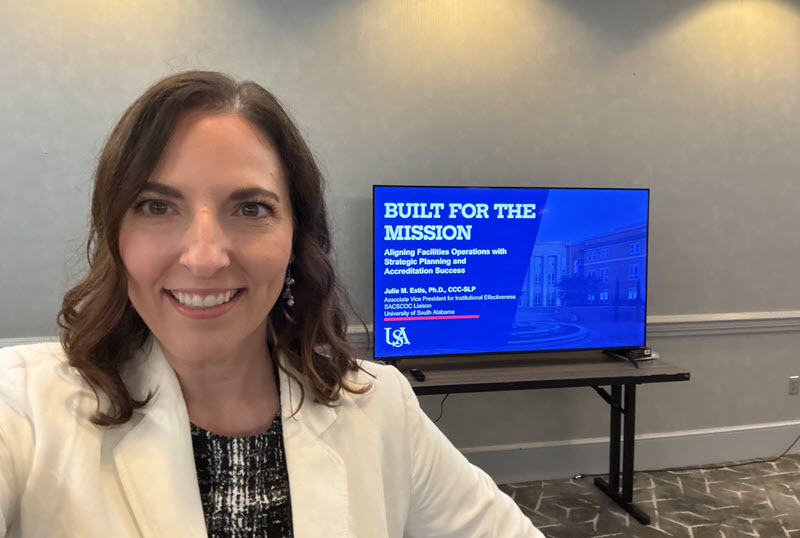
Dr. Julie Estis Highlights Strategic Role of Facilities Planning at ALAPPA Conference
Dr. Julie Estis, associate vice president for Institutional Effectiveness, delivered two presentations at the Alabama Chapter of APPA Conference which took place from June 8 - 11, 2026, in Birmingham, Alabama. Dr. Estis highlighted how strategic planning, accreditation and campus facilities can work together to advance institutional success.
In her solo presentation, "Built for the Mission: Aligning Facilities Operations with Strategic Planning and Accreditation Success," Dr. Estis encouraged facilities professionals to view themselves as strategic partners in achieving institutional goals. She demonstrated how data such as classroom utilization, deferred maintenance and capital planning can support accreditation requirements while advancing continuous improvement and institutional planning. Dr. Estis expanded on those themes in a second presentation, "Beyond the Benchmark: Planning to Align Facilities with University Strategy," alongside Jack Sawyer and Christian Rodriguez of Eskew Dumez Ripple. The session highlighted the University of South Alabama's campus master planning process, showing how strategic planning, stakeholder engagement and facilities data are shaping a long-term vision for campus development.
By integrating the master planning process into the university's Institutional Planning and Assessment Committee, South brought together faculty, administrators, students and community members to ensure campus improvements align with strategic priorities. The planning process combined building condition assessments, classroom utilization studies and stakeholder feedback to identify opportunities to improve learning spaces, strengthen research capacity, enhance campus connectivity and preserve the university's natural landscape.
Across both presentations, Dr. Estis emphasized that facilities planning should be fully integrated with institutional effectiveness, strategic planning and accreditation efforts. By aligning physical infrastructure with institutional priorities, she said universities can better support student success, research excellence and community engagement while strengthening their position for future accreditation.