
Master Plan
Posted on June 15, 2026 by Steve Millburg

It's a lovely spring day at the University of South Alabama in 2037. Students throng the heart of campus near the Student Center. They soak up the sun, chase Frisbees and study.
Food trucks and coffee carts do brisk business. An outdoor class meets by Three Mile Creek, which is now deep enough for kayaking. Students cross a bridge toward their internship at USA Technology and Research Park.
That’s one vision for how the University could evolve as it implements its 2027-37 master plan, which is now taking shape.
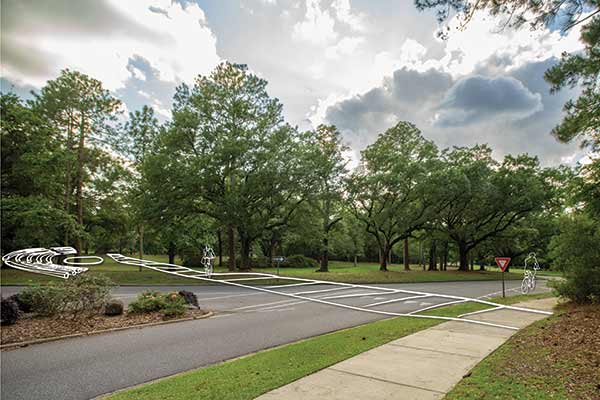
The campus could feel like a cluster of neighborhoods, each with their own identity and energy. Wide, smooth pathways would connect them all, friendly to bicycles and electric scooters as well as pedestrians.
“I think this is fully reenvisioning campus,” says Dr. Steven Scyphers ’12, professor of marine science and sociology, the University’s chief sustainability officer and a member of the master plan committee. “And why is that important? I think probably the short answer is that the ambition for growth and ambition for the future of the University are just accelerating so fast, we need to make sure that the natural and built environment on campus is ready to match.”
The plan, expected to be completed by fall, is a building and design guide for the next 10 years. It’s a document of potential and possibilities, not a fixed blueprint. Many of the ideas need funding sources; priorities could change. But it does give a glimpse into South’s campus of the future.
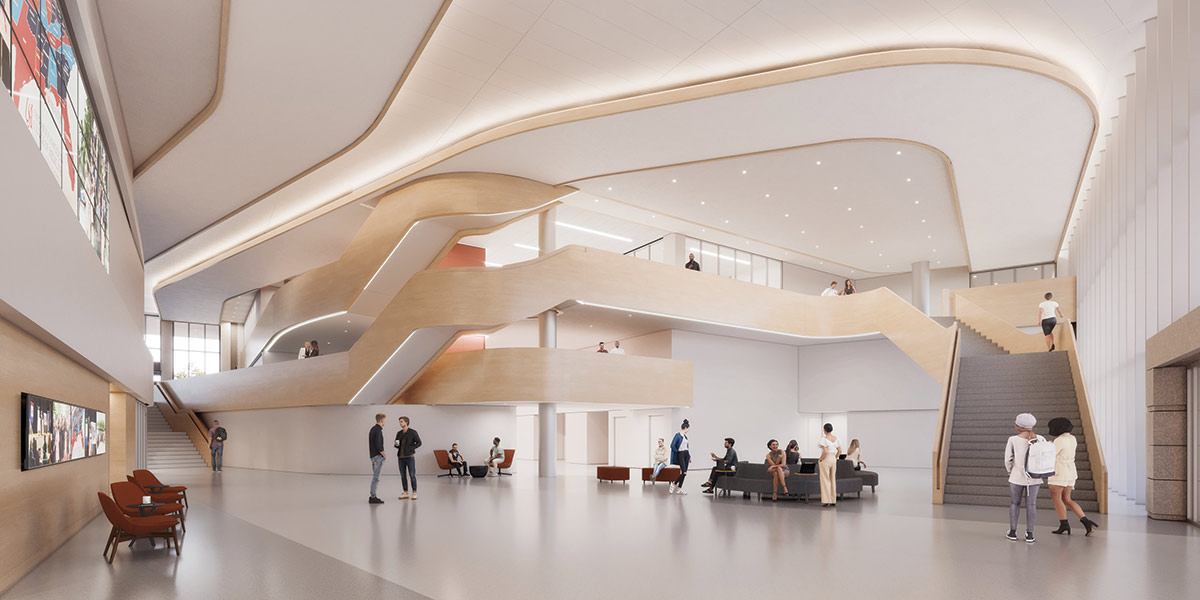
Some proposals already have significant momentum behind them, including a new College of Education and Professional Studies building, supported by the Where Bold Begins comprehensive campaign (Page 10), closer to the heart of campus. Other ideas include:
An outdoor classroom constructed along Three Mile Creek, which would hold more water through stormwater management.
A new central green space between Marx Library and the Student Center, with improved access across the ravine to the west.
A pedestrian corridor that would link SouthPaw Village and the dining hall to the rest of the campus residential core. From there, it would cross the traffic circle to reach the chemistry and humanities buildings, pass through the Student Center’s new central green and ultimately connect to the east side of campus.
Repurposing of underutilized buildings for laboratories and other facilities that will support South’s drive to reach the top tier of research universities.
Better defined campus districts for campus life, academics, research and sports.
“The neighborhoods exist,” says Christian Rodriguez, a consultant with EskewDumezRipple, a firm that is working with the master plan committee. He cited the medical district around the new Whiddon College of Medicine and the business-engineering zone anchored by the Mitchell College of Business and Shelby Hall.
For the campus as a whole, Rodriguez says, “Think about creating a core of vibrant academic activity with a perimeter of sports, performing arts and other amenity-type programs where everyone comes together.” If the 2037 campus achieves the vision in the final planning document, its success will be rooted in a decision made at the start: to bring a diversity of interests — from budget and facilities to sustainability and institutional effectiveness — into the same room.
On a recent spring afternoon, the committee trekked the route of a proposed pedestrian artery. The walk offered a perspective missed by car and called to mind a practice attributed to the University’s first president, Dr. Frederick P. Whiddon. He was said to have placed sidewalks where the grass had been worn down by student foot traffic.
Today’s planners are extending that student-centered philosophy. Except that this group is not only watching where students walk today. They’re also engineering the landscape of tomorrow.
Part of the master plan committee’s efforts included soliciting feedback from campus constituents. Here are some of their visions for campus in 2037:
"We have a beautiful campus with lots of nice open green space, and I hope we can continue to preserve and enhance that asset. Since our climate is a selling point, we need to make being outdoors on campus as enjoyable as possible.
A state-of-the-art facility for tours and recruitment events to welcome and engage new and future students.
I would love to see some of the pathways between Humanities and the Marx Library reopen, and more benches and better lighting around green spaces.
I hope to see intentional investments that better support both students and employees. This includes expanded and modernized spaces where students can gather, collaborate and build community.
I hope the physical changes to campus reflect a deepening of our mission as we solidify our standing as a premier research university."
-
The Art of Medicine
Dr. Jeffery S. La Rochelle, the new dean of the Frederick P. Whiddon C...
June 17, 2026 -
Base Camp
South to scale up support with new military services home....
June 17, 2026 -
Flagship Futures
One of the newest scholarship programs at the University of South Alab...
June 17, 2026 -
Estuary of Innovation
The Frederick P. Whiddon College of Medicine building, opening in spri...
June 17, 2026