South Mesonet Expansion Begins In Montgomery
Posted on April 20, 2026
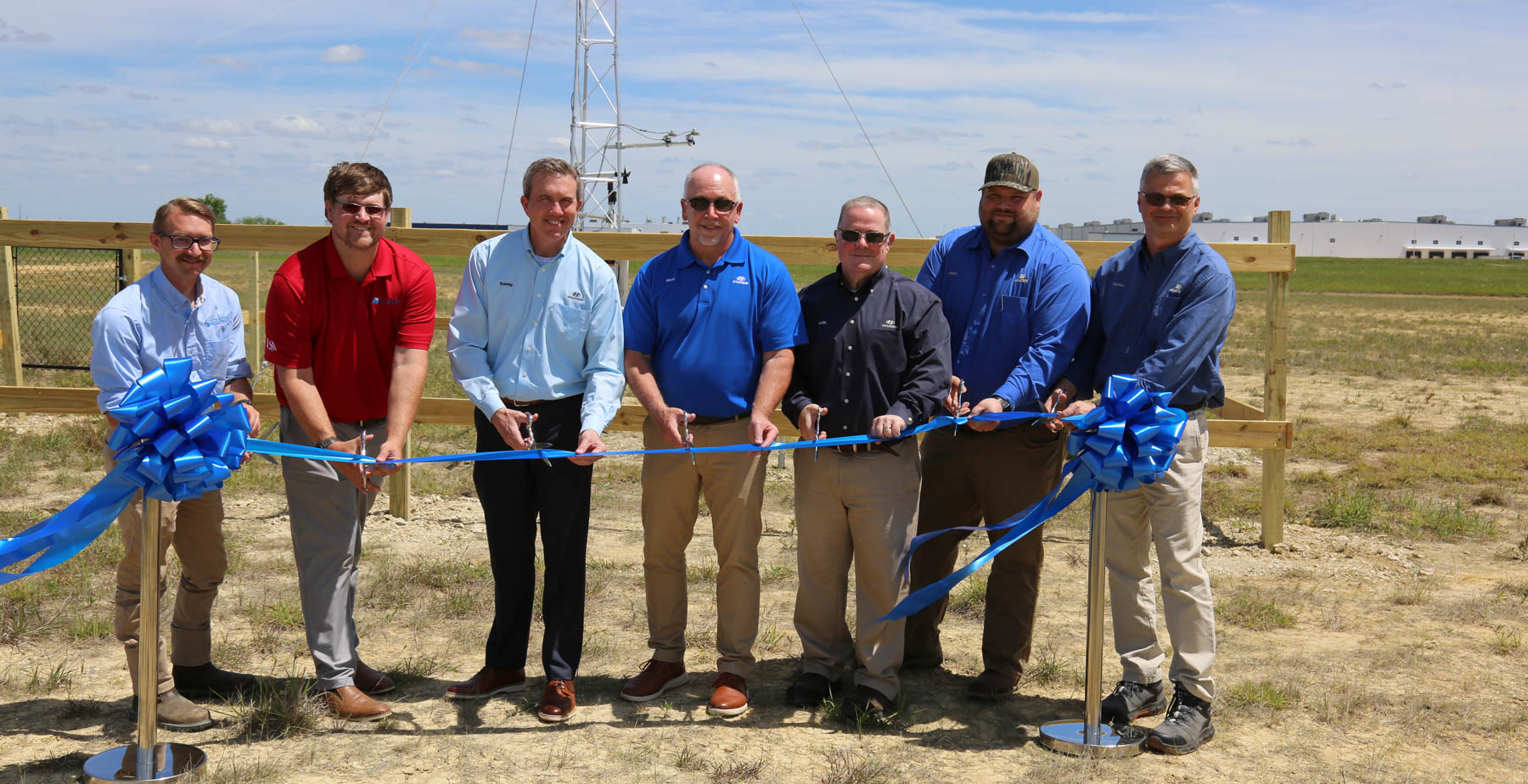
A partnership between the University of South Alabama and Hyundai Motor Manufacturing Alabama is the first step in expanding the South Alabama Mesonet to improve weather forecasting and severe storm warnings across the state.
A ribbon-cutting ceremony was held April 13 at the Hyundai plant in Montgomery.
A $3 million grant from the National Oceanic and Atmospheric Administration is funding expansion of the ground-based weather monitoring system, from 26 to 46 stations, connecting areas previously covered only by satellite.
"I am tremendously excited about the installation of our first weather station of the Mesonet expansion project,” said Dr. Sytske Kimball, professor of meteorology at USA. “I would like to thank Hyundai for their willingness to work with us to identify a suitable site and to also provide sponsorship for continued operation and maintenance of their weather station.”
Kimball launched the South Alabama Mesonet in 2004 with the long-term vision of expanding it into a comprehensive statewide system. The installation of a station at Hyundai Motor Manufacturing Alabama marks a significant milestone, bringing that vision closer to reality.
“Safety and preparedness are closely connected,” said Hyundai Motor Manufacturing Alabama Chief Safety Officer Stephen Tunnell. “By providing the location for this University of South Alabama Mesonet weather station, we’re not only strengthening our ability to respond proactively to severe weather but helping advance weather science that we hope will help save lives and property in communities through the state of Alabama.”
When the project is complete, 28 of Alabama’s 67 counties will be covered by the Mesonet. The stations collect 24 atmospheric and soil parameters every minute, including temperature, relative humidity, wind speed, precipitation, soil temperature and moisture.
The information is used by a wide range of sectors, including agriculture, aviation, energy and forestry. The data are integrated into weather models and can help the National Weather Service issue more accurate severe weather and tornado alerts.
“The more weather stations we have in Alabama, the better we can protect life and property and ensure the continued success of Alabama's economy," Kimball said.