Research Project Counts Amberjack Populations
Posted on June 2, 2026
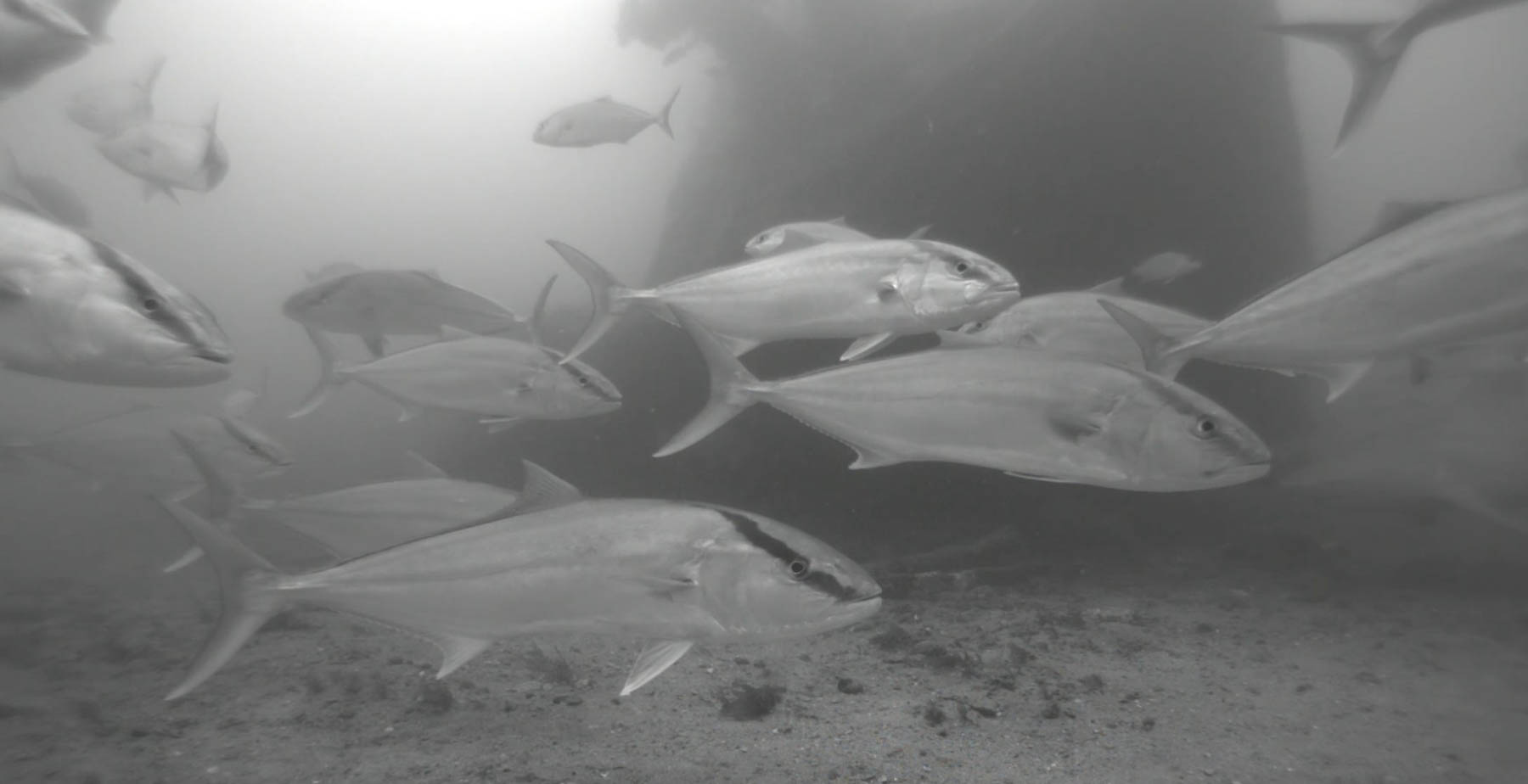
A multi-year research project to estimate the number of greater amberjack in the U.S. South Atlantic and Gulf of America has provided new insight into the species. The Greater Amberjack Count was led by Dr. Sean P. Powers, fisheries ecology professor and director of the Stokes School of Marine and Environmental Sciences at the University of South Alabama.
In 2020, recognizing a lack of biological and ecological information about greater amberjack, Congress appropriated $5 million to NOAA Fisheries and $5 million to the National Sea Grant College Program to fund the Greater Amberjack Count. With matching funds from institutions, the project totaled $11.7 million. A team of 20 scientists from more than a dozen institutions, along with two NOAA Fisheries collaborators, contributed to the study.
Similar to the Great Red Snapper Count and the South Atlantic Red Snapper Research Program, the Greater Amberjack Count sought to estimate the number of greater amberjack in the U.S. South Atlantic and Gulf of America. According to NOAA Fisheries, greater amberjack in the Gulf of America are overfished despite a decades-long rebuilding effort. In contrast, the U.S. South Atlantic stock is not overfished.
The research team conducted underwater video and active acoustic surveys to estimate the abundance of greater amberjack. The data suggest that the abundance estimates from the project are consistent in scale with the recent assessments.
“Strong partnerships between federal agencies and academic institutions create a powerful bridge connecting innovative research, community needs and actionable solutions that create real-world impacts,” said Amanda McCarty, performing the duties of the director of the National Sea Grant College Program. “That spirit of partnership is central to what Sea Grant brought to this project.”
The Greater Amberjack Count also examined movement, migration and basin-scale connectivity of greater amberjack using dart and acoustic tags as well as population genomics. In addition, it investigated the efficacy of new tools like advanced acoustics and environmental DNA for greater amberjack stock assessments.
Tagging data revealed that the U.S. South Atlantic, eastern Gulf of America, and western Gulf of America may best be managed as separate stocks. The project also demonstrated the potential applicability of emerging technology to marine fisheries assessments.
"We certainly look forward to working with our colleagues at NOAA Fisheries to leverage the study’s findings to improve the current assessment approaches. The release of the project report isn't the finish line, incorporating the results to the largest extent possible and improving science and management is our shared goal,” said Dr. Powers.
”I share Dr. Powers’ opinion that continuing our strong collaborations to best incorporate the data and products from this study is crucial. We at NOAA Fisheries remain committed to advancing science and management for this species,” said Dr. John Walter, deputy director for science and council services at NOAA’s Southeast Fisheries Science Center.
For more information about the Greater Amberjack Count, including a copy of the final report, please visit the project website.