BMS graduate students join research labs
Posted on September 3, 2026
At the end of their first year of studies, students in the Basic Medical Sciences Graduate Program choose a major professor who will mentor them throughout the program. This selection also determines the students’ program track affiliation. At the beginning of their second year, they join the labs with which they “matched,” and this lab home is where they will conduct research for their dissertation through graduation.
This week, meet five of our BMS graduate students who recently joined labs:
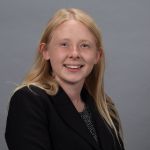 Makala Cox
Hometown: Riverside, Iowa
Education: B.S. in Biomedical sciences, University of South Alabama
BMS track and faculty mentor: Biomedical Engineering and Bioinformatics, Dr. Glen Borchert
Research focus: Interkingdom communication between human cells and bacteria
Why did you join this lab? The lab environment was incredibly welcoming, and I was drawn to Dr. Borchert’s enthusiasm
and his commitment to pursuing innovative ideas. I also love how dynamic the lab is.
Every day brings something different, which makes the work very exciting!
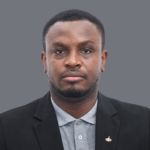 Allen N.A. Okine
Hometown: Accra, Ghana
Education: B.Sc. in Agriculture, University of Cape Coast; DVM, University of Ghana; MPhil in
Chemical Pathology, University of Ghana
BMS track and faculty mentor: Infectious Disease and Host Defense, Dr. Kevin Macaluso
Research focus: My research interests focus on understanding the molecular mechanisms underlying
virulence and infectivity of Rickettsia, particularly the roles of surface proteins
in the infection of arthropod vectors and the hosts on which they feed. I am interested
in using genetically modified Rickettsia mutants and molecular and microbiological
approaches to investigate how these factors influence bacterial growth, infectivity,
and pathogenesis.
Why did you join this lab? During my laboratory rotation, I had the opportunity to work in Dr. Macaluso’s lab,
where I really enjoyed the collaborative and supportive lab environment. I was also
drawn to the lab’s research on vector-borne diseases and Rickettsiology, which closely
aligns with my long-term research interests and career goals.
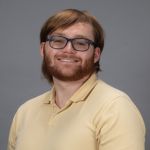 Thomas Floyd
Hometown: Gordo, Alabama
Education: B.S. in Chemistry, University of Alabama
BMS track and faculty mentor: Neuroscience, Dr. John Soltys
Research focus: ALS / Lou Gehrig’s disease
Why did you join this lab? This is one of the preeminent neuroscience labs at USA, and my lab members are awesome.
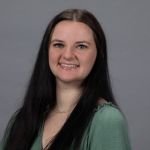 Katlyn Bouler
Hometown: Mobile, Alabama
Education: B.S. in Biology, University of South Alabama; B.S. in Biomedical Sciences, University
of South Alabama
BMS track and faculty mentor: Cancer Biology, Dr. Kevin Lee
Research focus: Anti-tumor immunity suppression in cervical cancer cells
Why did you join this lab? Cancer research related to women’s health has always been a passion of mine and
was my first choice when beginning my research journey. This passion, combined with
the opportunity to work alongside the exceptional team in the Gynecologic Oncology
group, makes joining this lab an ideal fit for me.
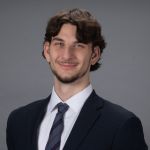 Ethan Yates
Hometown: Columbia, Tennessee
Education: B.S. in Natural Sciences, Concentration in Cell and Molecular Biology, Pensacola Christian
College
BMS track and faculty mentor: Cardiovascular Lung Biology, Dr. Jamie Meegan
Research focus: My research focus is understanding the role of the LOX-1 receptor
in pulmonary microvascular endothelial cells.
Why did you join this lab? I chose this lab because the mentor-mentee relationship is really important for having
a successful Ph.D., and Dr. Meegan has been so helpful along the way. I also find
the lab's focus fascinating, as endothelial cells are crucial for maintaining the
vascular barrier between the blood and surrounding tissues. Disruption of endothelial
function can have significant consequences for vascular homeostasis and can contribute
to the development and progression of vascular diseases.