What Happens When Powerful Collaboration Hits the Shores?
Posted on September 4, 2026
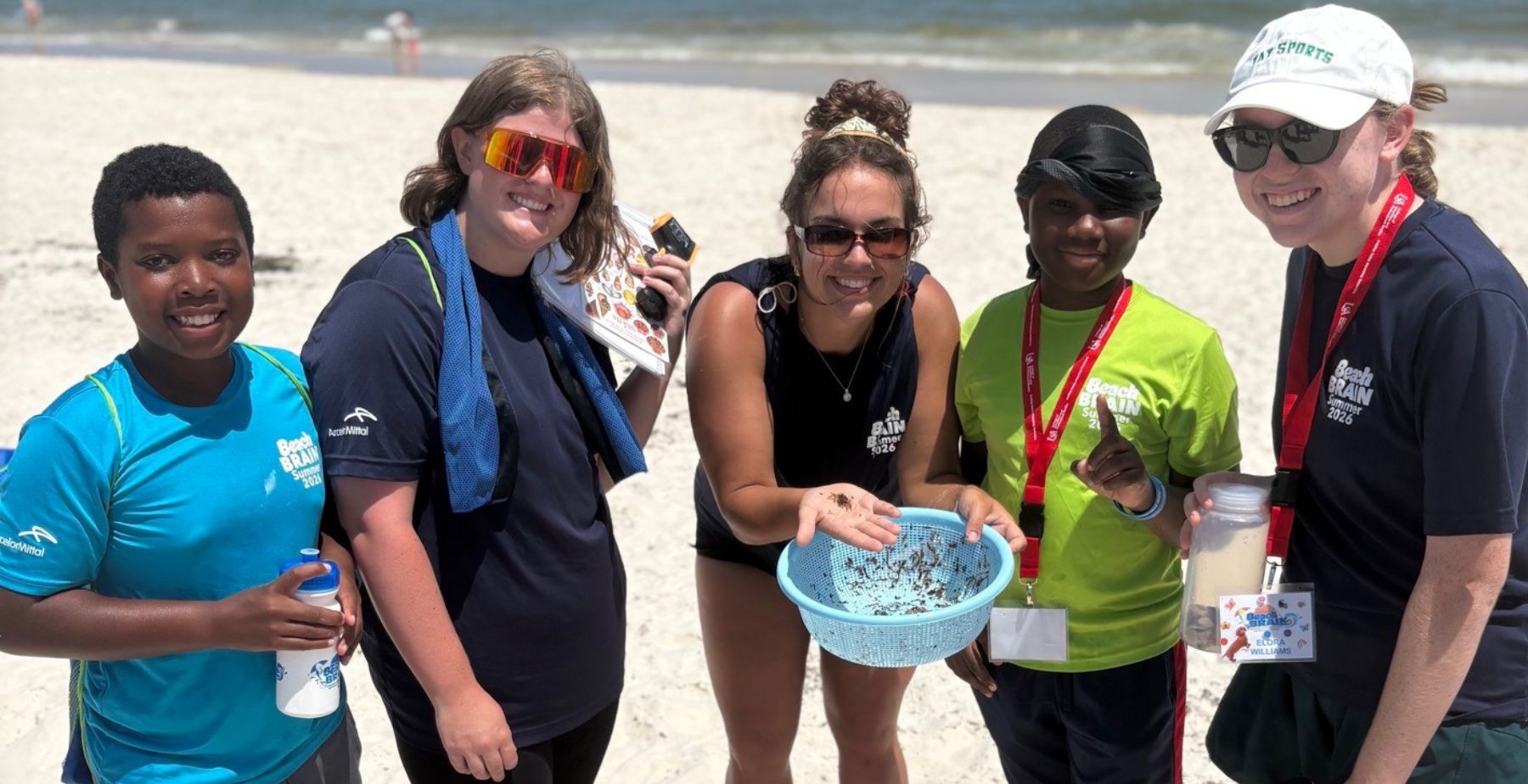
This past June, fifth and sixth-grade students at Gulf Shores Elementary School left the classroom for the shores. Alongside marine science majors earning a minor in the UTeach program, the students participated in the Beach Brain camp, learning math and science through fun, engaging activities.
The College of Education and Professional Studies (CEPS) invited Dr. Molly Miller and Dr. Amy Sprinkle, assistant professors at the Stokes School of Marine and Environmental Sciences, to assist with the afternoon portion of the summer day camp. Campers spent their mornings at Gulf Shores Elementary, where CEPS teacher candidates led math and science lessons. In the afternoons, the campers transitioned to Gulf Shores beaches, including Lake Shelby, the pier and the pavilion area, where three marine sciences majors and UTeach minors, Emma Pritchett, Addison Cannedy, and Lexi Young, led the sessions. Dr. Miller and Dr. Sprinkle worked directly with these marine sciences students to design the structured beach-based activities, providing on-site feedback and instructional assistance.
Drawing on their strong scientific knowledge developed through their marine science coursework and UTeach teaching experiences, the students guided the fifth- and sixth-graders through engaging, hands-on activities that connected classroom concepts to the local environment directly on the beach. Their leadership provided the campers with meaningful opportunities to explore marine science while also giving other preservice teachers within CEPS valuable first-hand experience teaching science in an authentic outdoor setting.
For Emma Pritchett, a senior marine sciences major, the experience was impactful and transformative.“The Beach Brain summer camp was a highlight of my entire undergraduate career at South!” Pritchett says the camp experience reassured her that outdoor science outreach and education was the career path she intends to pursue.
“My time at Beach Brain gave me many opportunities to expand my knowledge of people and their place in the environment,” she explained. “I got to communicate ideas across a range of individuals, like professors, high school students and elementary students.”
For Pritchett, it was rewarding seeing the students tackle tough issues, and realizing they can make a positive impact on the environment. “Beach Brain solidified my goals and my confidence that people need learning and need inquiry; they need hands-on instruction and need to think bigger,” Pritchett said.