Faculty Learning Community to explore medical humanities
Posted on September 8, 2026
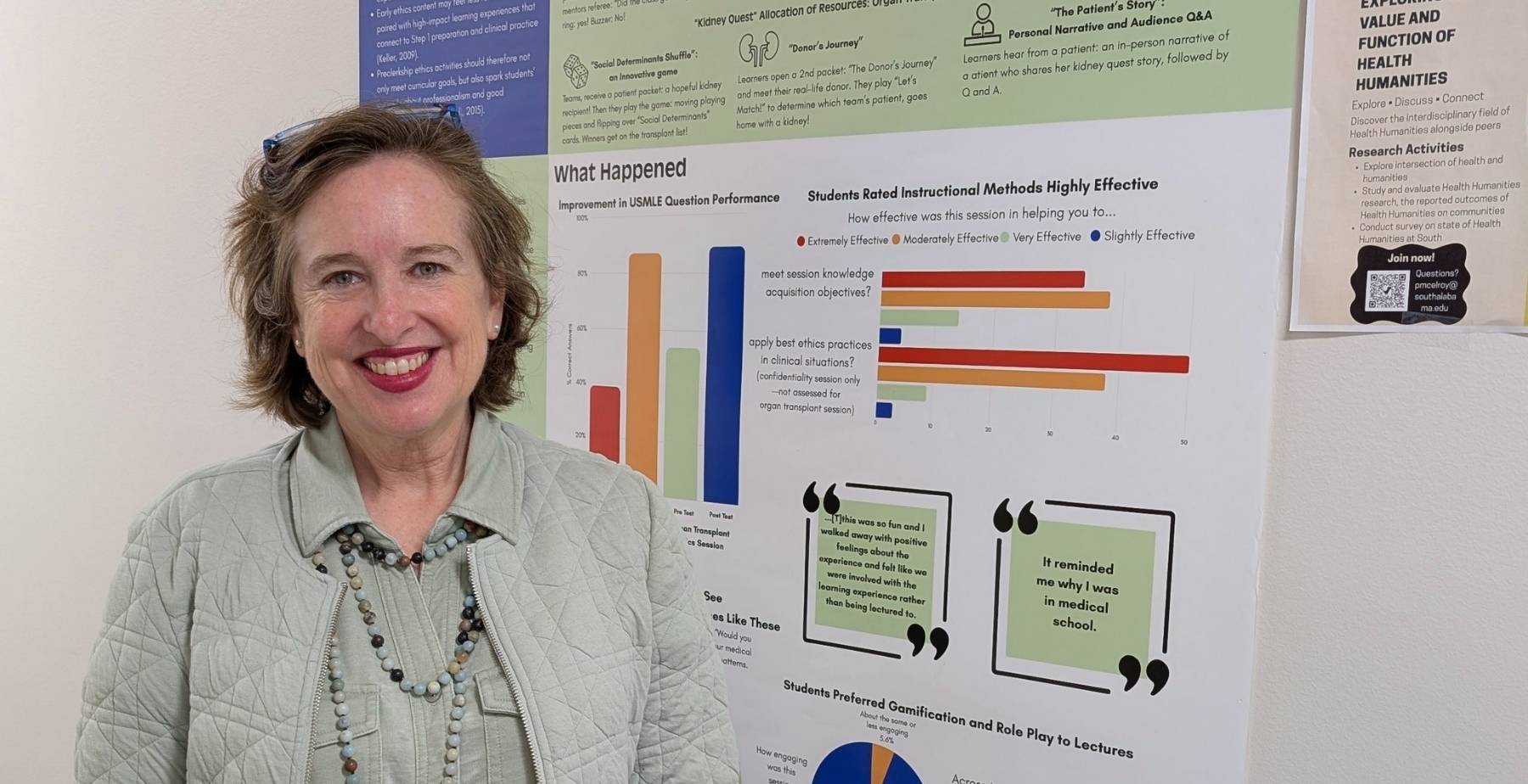
Peyton McElroy, Ph.D., an assistant professor in the Division of Medical Education at the Whiddon College of Medicine, is launching a new Faculty Learning Community this fall focused on health humanities.
McElroy, who teaches medical ethics and humanities, will pilot and facilitate “Sick, Well and Human: Exploring the Value and Function of the Health Humanities.” The health humanities examine the human condition at its intersection with health, illness and healing, including the culture of medicine and questions of embodiment, selfhood and social relationships.
A Faculty Learning Community (FLC) is a cross-disciplinary, small group of scholars who are interested in investigating and sharing resources on a particular theme in higher education. As a structured community of practice, each FLC sets shared, topic-specific goals for the academic year.
The “Sick, Well and Human” FLC will consider questions such as:
- What does the body of literature suggest is the value of the “health humanities” to health sciences students, faculty and healthcare workers, and what kinds of evidence is produced as part of this research?
- What are some innovative ways people have been using health humanities to arrive at various learning outcomes across academic disciplines?
- What are some innovative ways faculty, staff and students here at the University of South Alabama have been using health humanities?
- How will the health humanities be particularly useful for our communities in an age of artificial intelligence and geopolitical changes we currently face?
McElroy hopes the FLC will bring together interdisciplinary perspectives that can strengthen discussion, research and output. Faculty from all disciplines are invited to participate.
Interested in joining? Complete the interest form.
Questions? Contact Dr. McElroy at pmcelroy@southalabama.edu.