Taking Shape in the Studio
Posted on September 29, 2026
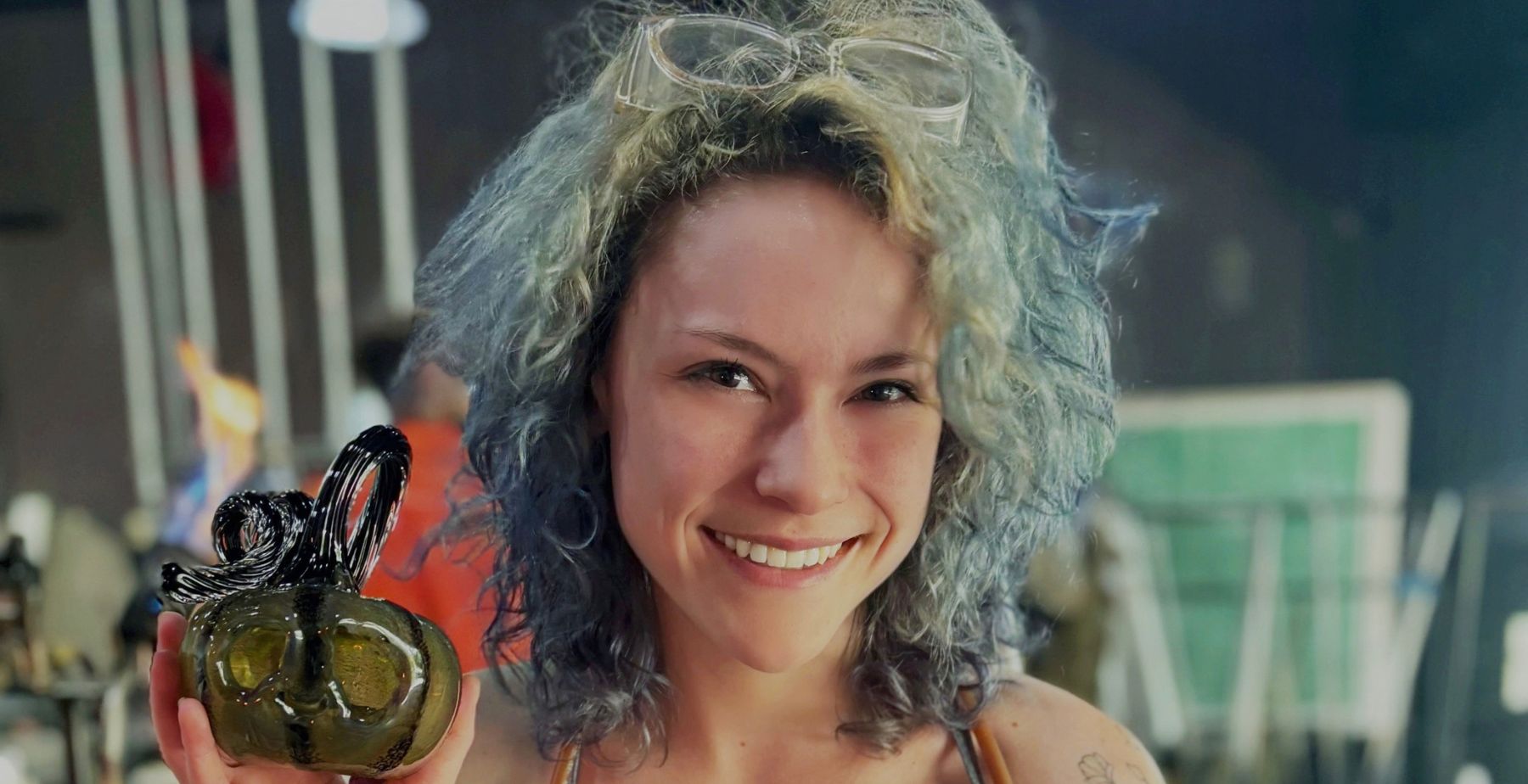
At 2,000 degrees, molten glass begins to take shape. Inside the glass lab, music is playing in the background, and you see students move between the furnace and the workbench, carefully shaping hot glass into a pumpkin. For Ocean Springs, Mississippi native Pia Culver, the process is as much about overcoming fear as it is about creating art. She’s a ceramics major in the art and art history department, planning to pursue a concentration in glassblowing.
What initially drew Pia Culver to glassblowing was the work itself. “I was seeing everything that people were creating. And I was like, wow, that’s insane!” When asked what drew her to the glassblowing concentration, Culver shared that seeing the art firsthand at the annual Glass Pumpkin Patch Festival, along with hearing about the program's professors, inspired her to pursue the art she loved. “Seeing what people were making, I thought, ‘I'd love to be an artist and do what I love,’” she said. Culver also praises the department faculty for being the “chillest, sweetest people.”
While the finished pieces on sale at the Festival are beautiful, each one requires a demanding process. "We start creating pumpkins during the summer,” explained Culver, amounting to up to 1,000 pumpkins. Culver explained that the creation of the glass pumpkins starts with students gathering the molten glass and heating it up in the furnace at 2,000 degrees, applying color, carefully blowing and shaping the body of the pumpkin, and crafting a distinctive handmade stem. The glass pumpkins take about 10 - 15 minutes to create.“The atmosphere is exciting,” said Culver, “there is always music playing; everyone's having fun.”
Even though there’s only one process for creating pumpkins, no two pumpkins are exactly alike. “It's not just whoop pumpkin," Culver said. “There's so much that goes into it.” She wants people to notice the individuality of each pumpkin and the hard work that goes into making each one unique. “Even if it's the same color, same size, or the same mold, it's still a different pumpkin,” Culver said. “The artist was having different thoughts when they made that pumpkin.” Culver expressed that although the process can seem like trial and error and can be frustrating at times, it is a very rewarding experience. Culver hopes that when people go to the Glass Pumpkin Patch Festival they become curious about glassblowing. “We love having an audience. It's really fun to share that knowledge with people because I love it, and I feel like if people took this class they'd love it too,” explained Culver.
For Culver, the biggest transformation happened in the glass lab, not just in the finished pumpkins. She said the glassblowing program at the University of South Alabama has helped her grow as an artist while also shaping her goals and confidence. Culver, who struggles with anxiety, said those challenges often carried over into her art, making her hesitant to push herself into getting the results she wanted. Culver says her professor, Matthew Patterson, is an important source of support and encouragement.
“Matthew is the most supportive, understanding, and motivating professor I've ever had.” She explained that his critiques are honest but encouraging and have shown her what she needs to improve without making her feel discouraged. “My anxiety is so much better,” she said. “It's helped me become more motivated and ambitious. Now, instead of saying ‘I don't think I can do that,’ I say, 'Let me try it, or at least prove that I can't do it before I just say it without trying.”
The 2026 Glass Pumpkin Patch Festival will take place Friday, October 2 from 8 a.m. to noon in the Marx Library Courtyard at the University of South Alabama.