Alumni Success: Making a Way
Posted on October 20, 2026
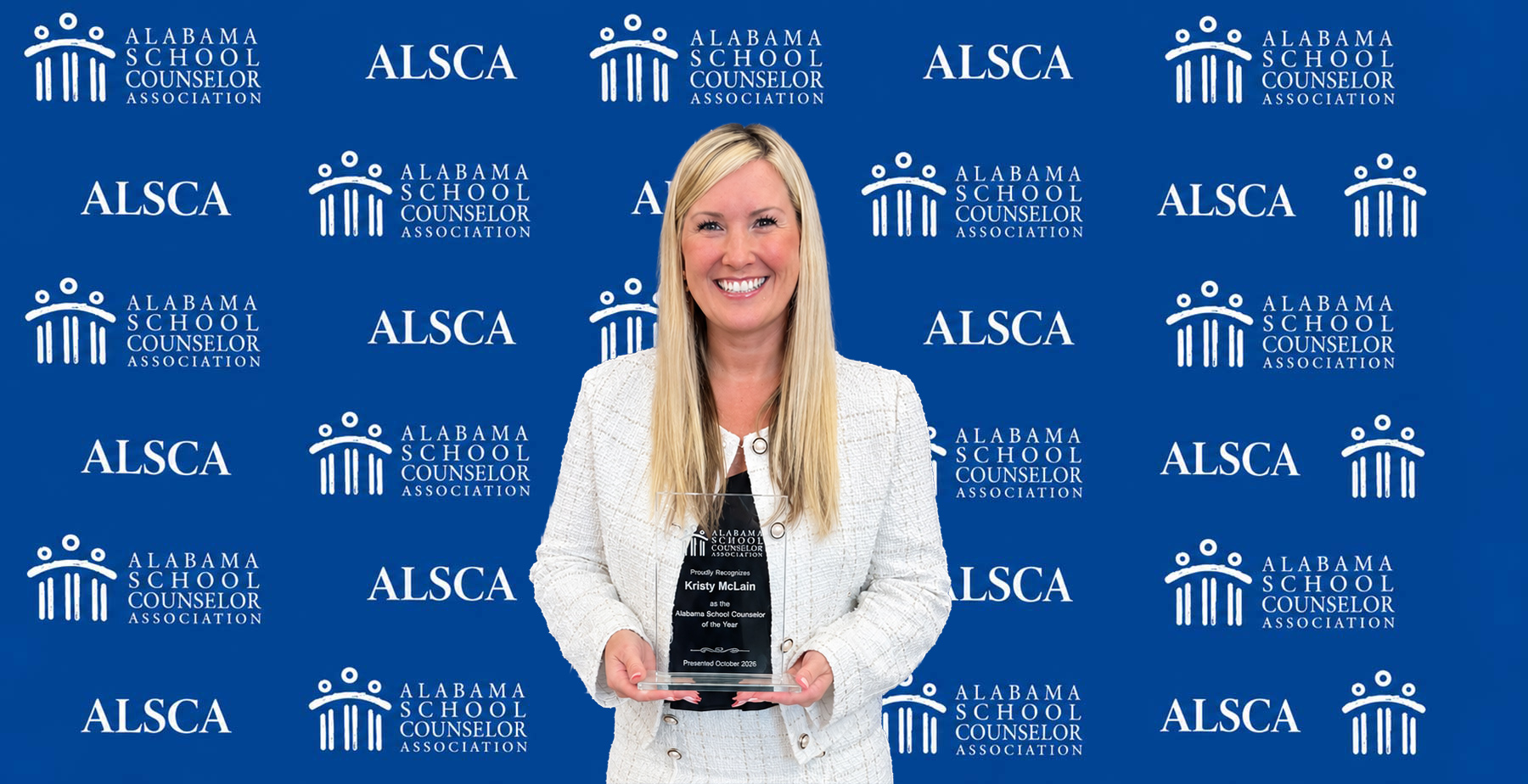
Kristy McLain, South Alumna and school counselor at Peter F. Alba Middle School in
Bayou La Batre has been named the 2026 Alabama School Counselor of the Year by the
Alabama School Counselor Association.
Kristy McLain’s path through college didn’t always look traditional. There were late-afternoon
classes, evening classes and Saturday classes, all scheduled around work and raising
her children. Sometimes, with her professors’ permission, her children came to class
with her.
Earning her degrees took time. McLain kept going. Her children were watching.
“I hope it taught my children those same lessons,” McLain said. “You keep working,
you ask for help when you need it, and you keep moving toward your goals.”
More than a decade after earning her master’s degree in school counseling from South’s
College of Education and Professional Studies, McLain is helping another generation
of students find their path. Now a counselor at Peter F. Alba Middle School in Bayou
La Batre, she has been named the 2026 Alabama School Counselor of the Year by the
Alabama School Counselor Association. She will represent Alabama as its nominee for
the American School Counselor Association’s national School Counselor of the Year
award.
For McLain, the recognition acknowledges work that often happens quietly, one student
at a time, while giving her a platform to advocate for students and highlight the
role of school counselors.
Finding Her Place
McLain knew by age 12 that she wanted a career in psychology. She earned a bachelor’s
degree in psychology from South in 2011 and initially enrolled in South’s clinical
mental health counseling graduate program.
Because students in that program shared early courses with those studying school counseling,
conversations with classmates introduced her to another possibility. The more McLain
learned, the more she recognized a place where her interest in psychology and desire
to help young people could come together.
Once South’s school counseling program earned accreditation from the Council for Accreditation
of Counseling and Related Educational Programs, McLain made the switch, earning her
master’s degree in school counseling in 2015.
Today, she is the only counselor at Alba Middle School, serving approximately 400
students. Her work ranges from individual and small-group counseling and classroom
lessons to academic advising and collaboration with families, teachers and administrators.
Sometimes it means connecting families with food, clothing or other necessities.
For McLain, all of it begins with seeing the whole student.
“We never know what a student may be carrying with them when they walk through the
school doors,” she said. “Sometimes just knowing that someone cares about them can
make all the difference.”
Someone in Their Corner
That philosophy shapes how McLain approaches everything from academics to behavior.
Rather than focusing only on a student’s behavior, she tries to understand what may
be behind it and what support could help the student move forward.
One student showed McLain how far that kind of support can reach. After experiencing
bullying, the student came to McLain with their confidence shaken. She worked with
the student to recognize their strengths and eventually helped them turn a difficult
experience into an opportunity to educate their peers and help others.
A student who had struggled with confidence began to see themselves differently and
discover the ability to make a difference.
“Every child has the ability to succeed, and sometimes they just needsomeone to believe in them,” McLain said.
McLain’s experience at South helped shape that perspective. As a first-generation
student, she remembers navigating unfamiliar college processes and appreciating the
faculty and staff who answered her questions with patience. Among them was Dr. Amy
Upton, an associate professor of instruction in counselor education, an important
influence during McLain’s preparation and a mentor who continues to support her career
today.
McLain hopes being named School Counselor of the Year brings greater attention to
work that often happens behind the scenes and to the school counselors across the
state doing it every day.
For her, that work still comes back to the individual student.
“I hope they remember that they were seen, heard, valued, loved and supported,” McLain
said. “I want them to remember that they always had someone in their corner.”
McLain found her path at South. Today, she spends her career helping students believe
they can find theirs.
“Every child has the ability to succeed, and sometimes they just need someone to believe
in them.”
School Counseling | At a Glance
More Than Academic Advising
Today’s school counselors support the whole student, addressing academic, personal
and social needs while preparing students for what comes next.
Student Wellness
Counselors provide short-term support, teach coping skills, identify concerns and
connect students and families with resources.
Academic Success
They identify barriers to learning, set goals, advocate for support and connect students
with opportunities that fit their interests and abilities.
College and Career Readiness
They explore career pathways, postsecondary education and financial aid opportunities,
workforce options, and skills for life after school.
Access and Opportunity
They identify and eliminate barriers to advanced courses, extracurricular activities,
postsecondary opportunities and other resources.
Prevention and Schoolwide Support
They partner with teachers, administrators, families and community organizations on
bullying, attendance, school climate, conflict resolution and student engagement.
Share on Social Media