Whiddon College of Medicine leaders share accreditation and quality improvement strategies
Posted on October 21, 2026
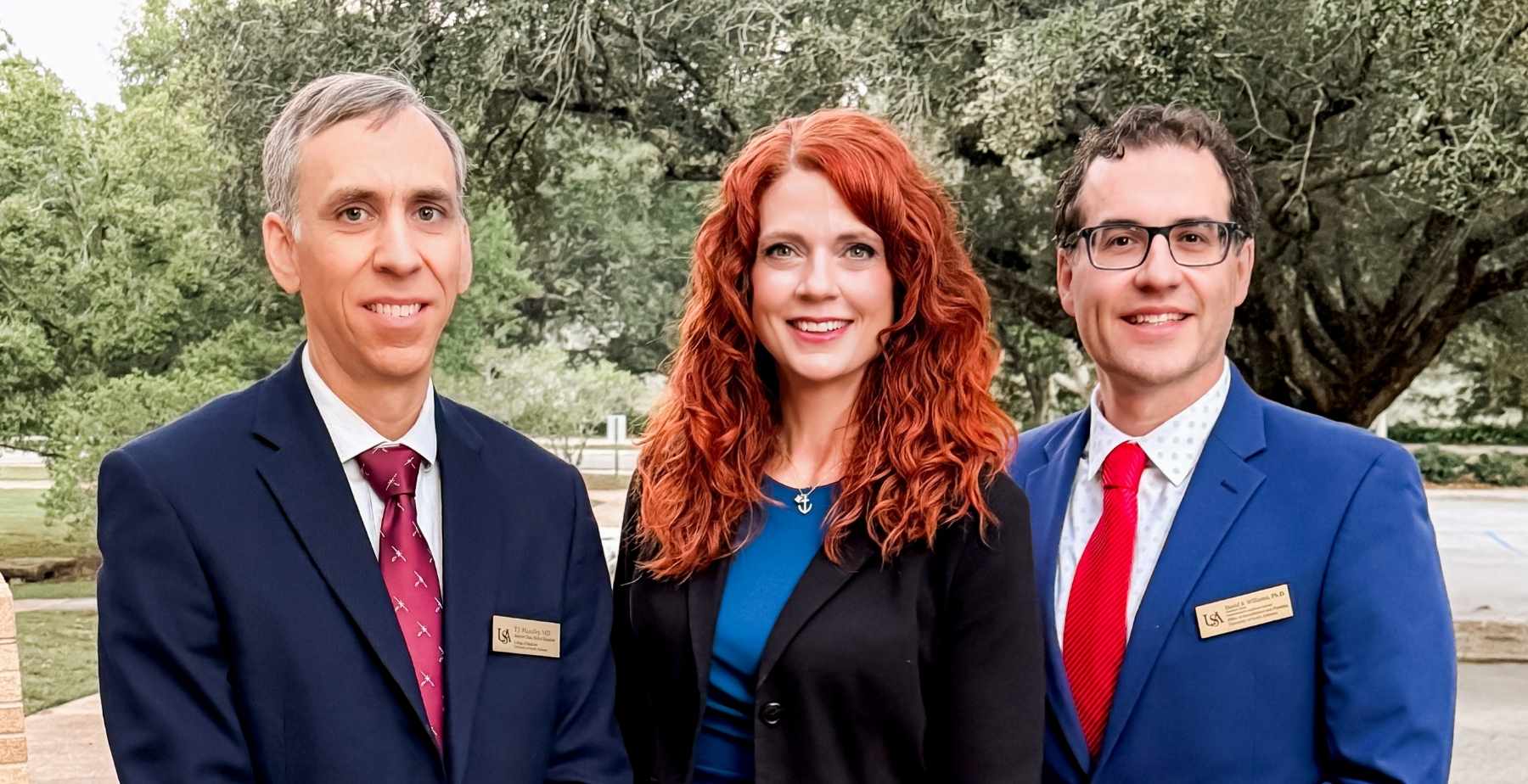
Three representatives from the Frederick P. Whiddon College of Medicine shared strategies for strengthening medical education assessment and accreditation readiness during the 2026 Accreditation Preparation and Quality Improvement Annual Conference, held virtually Sept. 22–23.
T.J. Hundley, M.D., associate dean for medical education; Melisa Pierce, Ed.D., executive director of accreditation and continuous quality improvement; and David S. Williams, Ph.D., assistant dean for institutional and academic success, presented sessions focused on faculty engagement, data-driven program evaluation and continuous quality improvement.
Hundley, Pierce and Williams presented “Faculty-Driven Program Evaluation Enhanced by A.I. for Quality Improvement,” highlighting a structured process that engaged faculty across the medical education program in reviewing curriculum assessment data and external outcome benchmarks.
The process incorporated artificial intelligence for thematic analysis to help identify patterns and inform recommendations related to program objective attainment, institutional strengths and priorities for improvement.
The presentation emphasized the importance of meaningful faculty engagement and data-informed decision-making in program evaluation, moving beyond assessment as a compliance exercise to make it a tool for improving medical education.
Pierce and Williams also presented “Orchestrating Accreditation Readiness: A Collaborative CQI Approach to Managing the LCME DCI.”
The session explored how the Liaison Committee on Medical Education’s Data Collection Instrument (DCI), which medical schools use to document compliance with accreditation standards, can serve as more than a reporting requirement. When integrated into continuous quality improvement processes, the DCI can support institutional learning, strengthen accountability and promote ongoing accreditation readiness.
Pierce and Williams shared a framework for managing the DCI through a multidisciplinary continuous quality improvement committee, incorporating student feedback, project management software and accreditation readiness heat maps to support action planning and track progress.
The presentation highlighted strategies for moving beyond periodic accreditation preparation toward a year-round approach that promotes stakeholder engagement, transparency and meaningful institutional improvement.