Breast cancer survivor champions research, advocacy and compassionate care
Posted on October 22, 2026
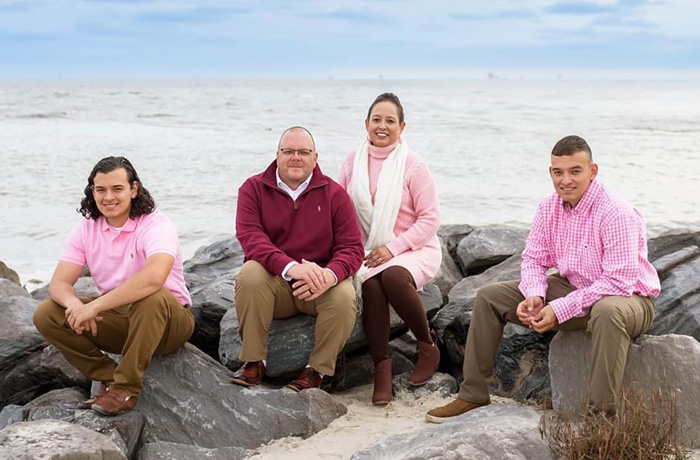 Alani Rodgers, Ed.D., with her family in 2023.
When Alani Rodgers, Ed.D., felt a lump in her breast in November 2022, she knew she needed to get it checked, even though a routine mammogram just months earlier had raised no concerns.
Her doctor initially thought the lump might be hormone-related, but Rodgers pushed for additional testing. She had dense breast tissue and a family history of breast cancer, as her mother had also been diagnosed with the disease. An MRI revealed an area of concern, and a biopsy confirmed she had ER/PR-positive, HER2-negative breast cancer.
At 48, Rodgers faced a diagnosis that would change her life. She was also working full time, supporting her family, and pursuing a doctoral degree at the University of South Alabama.
In recognition of Breast Cancer Awareness Month, Rodgers, associate director of the Office of Research Education and Training at the Whiddon College of Medicine, shared her cancer journey with the college community. During her presentation, she reminded future doctors and healthcare professionals that their patients are more than a diagnosis
“Your knowledge and expertise will be important, but so will your compassion and willingness to listen,” she said. “Patients will remember when you listened, encouraged them, and took the time to care about their lives.”
Facing treatment with determination
It was Jan. 16, 2023 – her 25th wedding anniversary – and Rodgers was preparing dinner when her breast surgeon, Lynn Dyess, M.D., called with the news.
The following weeks brought additional tests and appointments at the USA Health Mitchell Cancer Institute as her medical team developed a plan. Her oncologist, Pranitha Proddutuvar, M.D., explained that Rodgers had stage 2 breast cancer that had spread to some of her lymph nodes. Her treatment included 16 chemotherapy treatments, followed by surgery and radiation.
“Dr. Pro and Dr. Dyess really got to know me and treated me as a person,” she said, “not just the person with breast cancer.”
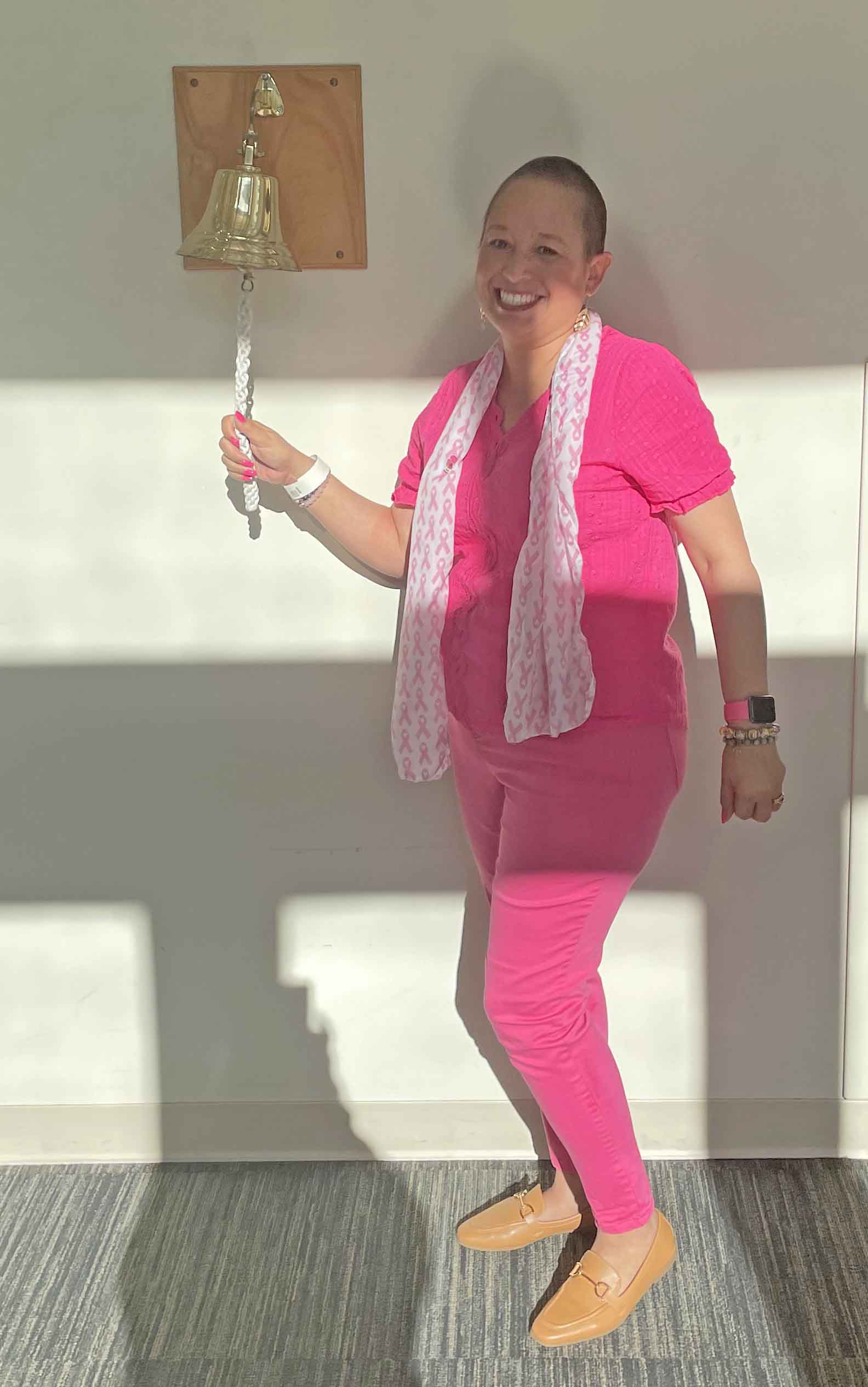 Alani Rodgers, Ed.D., rings the bell, signifying the end of her treatment.
Rodgers began chemotherapy in March 2023, starting with 12 weekly treatments followed by four more intensive treatments known as AC, or the “red devil,” administered every other week.
The treatment took a physical toll. Steroids caused swelling, and she began losing her hair after the first few treatments. During the final rounds, Rodgers became so ill that she had to call in sick from work for the first time during treatment.
“After I started losing my hair, I knew I couldn't just hide it anymore,” she recalled. “I had to let people know what was happening, and that was difficult because I'm not someone who shares a lot.”
Her husband, AJ, was a constant source of support, along with their two adult sons, family members and friends. Rodgers also leaned on her faith and the encouragement of her church community.
“Faith was the number one thing that got me through the whole process,” she said. “I knew I had wonderful friends at church praying for me, and when the emotions became overwhelming, I would go sit in church and pray.”
She also wanted her sons to see that even when life brings difficult challenges, it is possible to keep moving forward. “I wanted them to know that Mom was fighting. It was hard, but we were going to get through it,” she said.
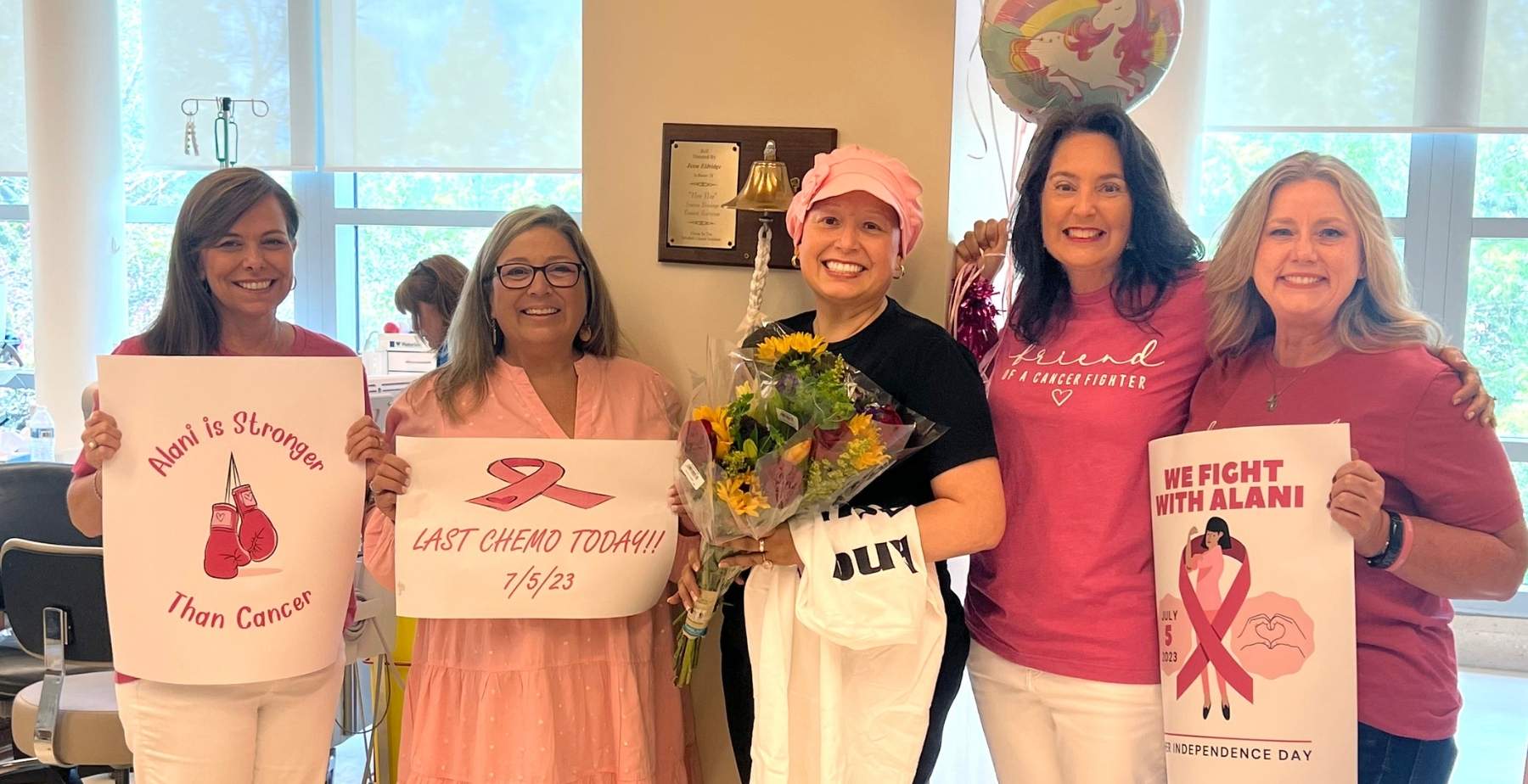
As Rodgers approached her final chemotherapy treatment, she watched other patients ring the bell to mark the milestone. On July 5, 2023, it was finally her turn.
“It really was a celebration,” she said. “My husband brought my friends into the chemotherapy room, and they were holding signs and balloons. They had been through this journey with me, too, and they were so excited to reach that point.”
Finishing chemotherapy was a major milestone, but treatment continued. Rodgers later underwent surgery to remove the remaining cancerous tissue and six lymph nodes, three of which still contained cancer. She then completed radiation.
“People think you're done after chemo and surgery, but it's a long process,” she said. “There are still ups and downs, and you have to learn to navigate them.”
Rodgers credits her care team at MCI with helping her navigate treatment, from answering questions to making sure she understood what to expect. That support extended beyond her physicians to everyone she encountered at the institute.
“The people who checked me in were so great, and the nurses who took my blood were and still are so kind to me,” she said. “All the nurses in the chemo room are amazing.”
Finding purpose in research
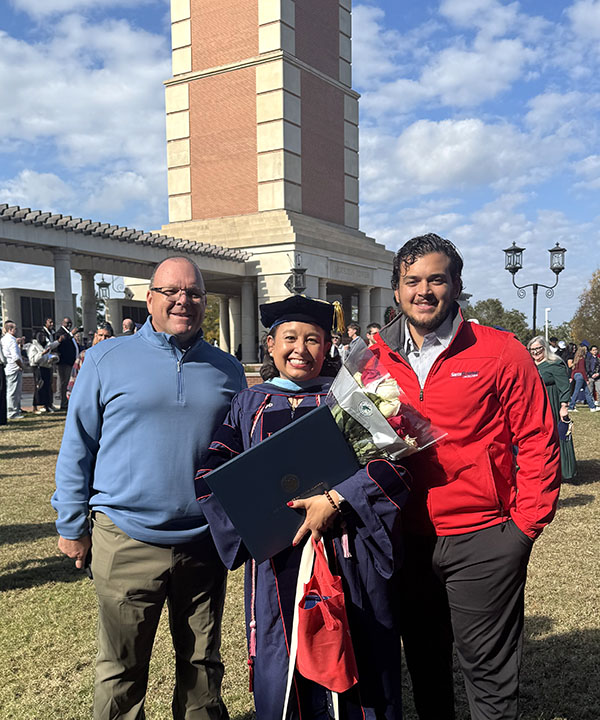 Alani Rodgers, Ed.D., graduated with her doctorate in 2025.
Throughout treatment, Rodgers continued working and pursuing her Doctor of Education degree at South. When she received her diagnosis at the start of the program's second semester, faculty members offered options in case she needed to step away. She chose to persevere.
Her doctoral cohort became an important source of encouragement, and her coursework provided a welcome distraction from cancer. Although she later struggled with lingering effects of chemotherapy, including difficulty concentrating, she remained committed to completing her degree and graduated in August 2025.
In her role at the Whiddon College of Medicine, Rodgers helps students in the Basic Medical Sciences Graduate Program navigate their doctoral studies, connect with resources, and complete their degrees.
During treatment, she often walked past research laboratories at MCI and wondered what scientists were learning about cancer and other diseases. Today, as a three-year cancer survivor, her work gives her a deeper appreciation for the connection between scientific discovery and the patients whose lives may depend on it.
“Although they may never meet the patients and families who benefit from their research and discoveries, that doesn't mean they haven't changed lives,” Rodgers said. “Their work has purpose beyond the laboratory. There are patients like me, and families like mine, who are counting on advances in medical research. The treatments available to me were possible because researchers before them dedicated their careers to asking questions, finding answers, and refusing to give up.”
Advocating for herself and others
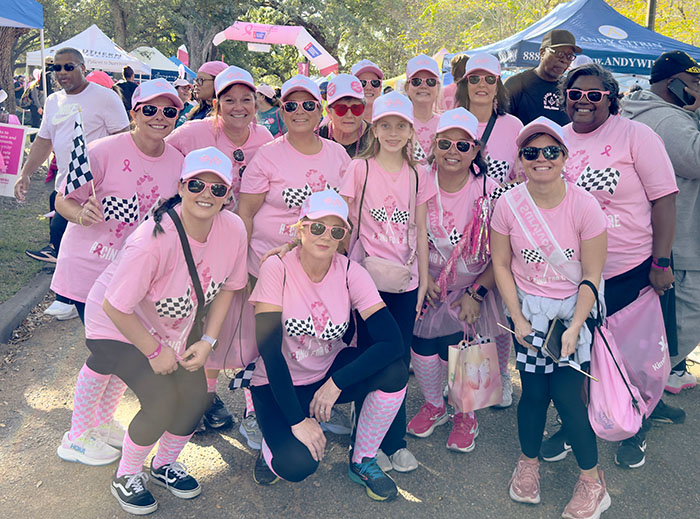 Alani Rodgers, Ed.D., and supporters participate in Making Strides Against Breast
Cancer Walk in October 2025.
Rodgers hopes sharing her experience will encourage women to take their breast health seriously.
“It's important to get your mammograms and do self-examinations, but it's also important to be your own advocate,” she said. “If something doesn't feel right, don't ignore it. It's scary, but it's better to know what's going on.”
Rodgers also encourages people facing a cancer diagnosis to accept support. Accustomed to handling challenges independently, she learned during treatment to lean on others. Colleagues at the College of Medicine helped her understand scans and test results, while friends and others who had experienced cancer offered reassurance and practical advice.
“It's OK to have weak moments when everything feels overwhelming,” she said. “You just have to keep going, have a positive attitude, and surround yourself with people who support you.”