Medical students practice Spanish to strengthen patient communication
Posted on October 22, 2026
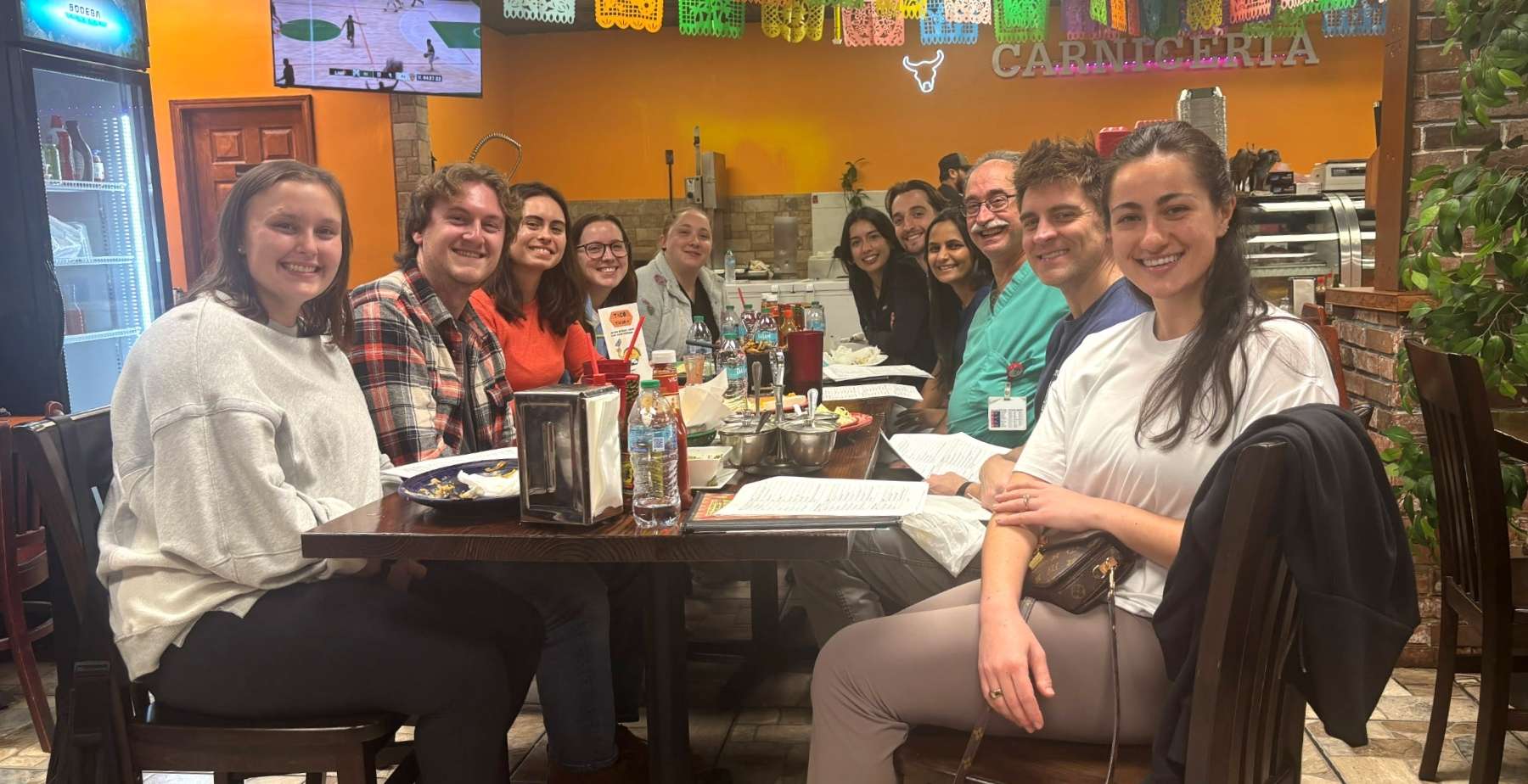
Medical students in the Whiddon College of Medicine’s Obstetrics and Gynecology Student Interest Group teamed up with members of the Medical Spanish Interest Group for a Taco Tuesday event Oct. 20, combining a shared meal with an opportunity to practice Spanish phrases that could help them better communicate with patients.
The event, led by the OB-GYN group’s Megan Kirby and the Spanish interest group’s Marianna Boutwell, featured discussions with Craig Sherman, M.D., an associate professor in the Department of Obstetrics and Gynecology at USA Health who is fluent in Spanish.
The gathering highlighted an important skill for future physicians: communicating effectively with patients who speak a language other than English.
Language barriers can impact a patients’ understanding of diagnoses, treatment options and medication instructions, potentially compromising the safety and quality of care. Research from the Agency for Healthcare Research and Quality shows that patients with limited English proficiency face a greater risk of adverse events related to communication problems, and those events are more likely to result in harm.
For Spanish-speaking patients, even basic Spanish phrases can help medical students begin building rapport, demonstrate cultural sensitivity and make patients feel more comfortable discussing their concerns. These skills can be particularly valuable in obstetrics and gynecology, where patients may need to discuss sensitive topics related to pregnancy, reproductive health, and personal medical histories.
Learning another language does not replace the need for qualified medical interpreters when a patient and provider cannot communicate effectively. However, developing language skills alongside training in interpreter use can help future physicians provide more responsive, patient-centered care.
By bringing the two student groups together, the event offered an informal way for future physicians to practice communication skills that can help strengthen the patient-physician relationship throughout their careers.