Questions With Purpose: Students Share Undergraduate Research
Posted on October 27, 2026
What shapes a marching band member’s performance? How can teachers make learning more inclusive? Can recreational activities help veterans reconnect with their communities?
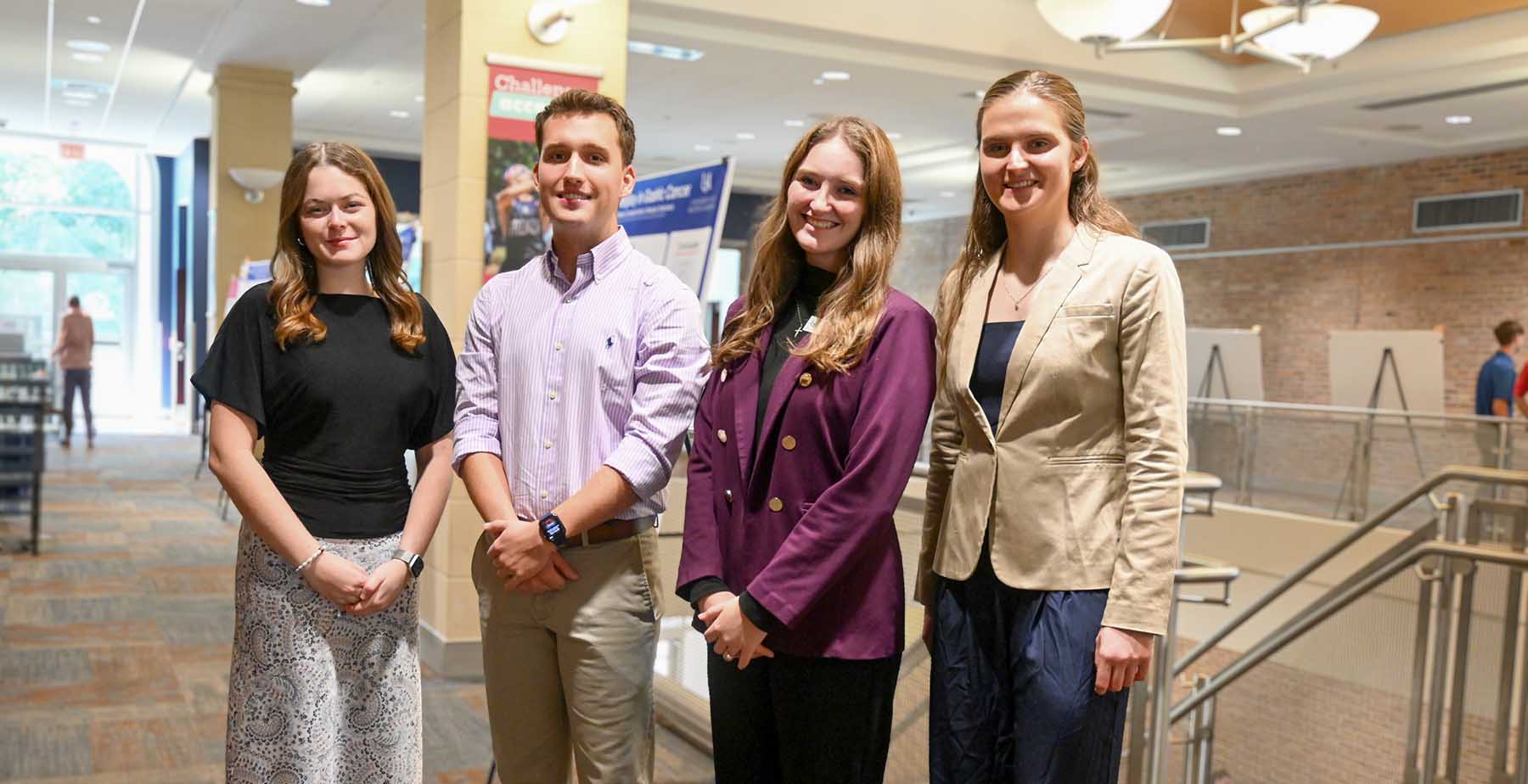
Seven undergraduate researchers working with the College of Education and Professional Studies faculty explored these and other questions at the University of South Alabama’s 28th Annual Undergraduate Research Symposium on Oct. 22 in the Student Center. Their projects connected interests in education, science, health and recreation with questions about how people learn, perform and thrive.
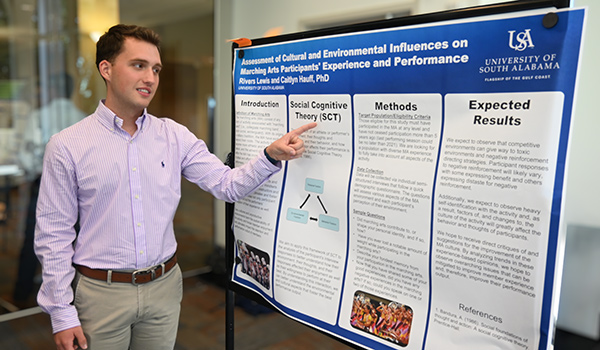
For Rivers Lewis, an exercise science student, the inspiration came from experiences in marching band. Working with Dr. Caitlyn Hauff, associate professor in the Department of Health, Kinesiology and Sport, Lewis is applying sports psychology concepts to examine how ensemble culture and performance demands affect marching arts participants.
“I am a lifelong marching band participant and have personally been affected by negative reinforcement tactics,” Lewis said.
The positive environment in South’s Jaguar Marching Band inspired Lewis to investigate those experiences more closely. The study is recruiting adult marching arts participants, and Lewis hopes to publish the findings.
While Rivers is examining the performance experience, Genevieve Batman is studying the physical demands of Drum Corps International, a competitive marching arts circuit. Her interest grew from her own experience participating in 2022, when she saw fellow performers face weight loss, overuse injuries and menstrual changes. Batman is analyzing her findings and plans to defend her thesis on Nov. 20.
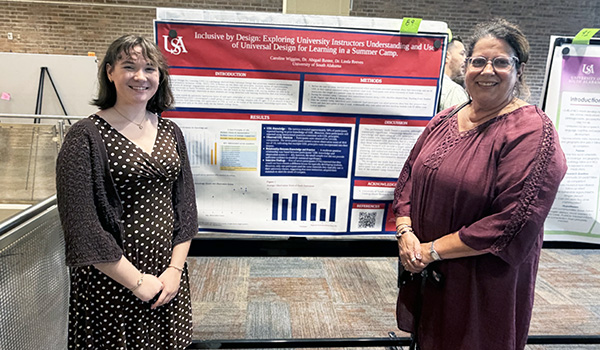
Special education student Caroline Wiggins’ commitment to inclusion grew partly from her brother’s experiences receiving special education services. With guidance from Dr. Abbie Baxter, professor, and Dr. Linda Reeves, associate professor, both in the Department of Leadership and Teacher Education, she examined university instructors’ understanding and use of Universal Design for Learning at a summer camp for students with intellectual disabilities.
Universal Design for Learning emphasizes designing lessons with support and options that reduce barriers to learning. Wiggins found that instructors with greater knowledge of the approach used its principles more, suggesting the value of additional training.
“Going through this process with the incredible guidance of Dr. Baxter and Dr. Reeves has opened my eyes to how important research-informed teaching practices are,” Wiggins said.
For recreational therapy student Elizabeth McClendon, research offered an opportunity to explore how recreational activities could support veterans transitioning to civilian life, particularly those experiencing post-traumatic stress disorder and obsessive-compulsive disorder.
Working with Dr. Shelly Bates, assistant professor in the Department of Health, Kinesiology and Sport, McClendon examined veterans’ health care services and the potential benefits of incorporating recreational therapy into routine rehabilitation.
Her interest grew from a grant-funded pilot fishing program led by Bates for veterans in the Gulf Coast Veterans Affairs system. McClendon identified differences in recreational therapy services between VA facilities in Biloxi, Mississippi, and Mobile. Although the program was not specifically designed to address those diagnoses, early observations showed consistent engagement across four fishing trips and opportunities for veterans to build connections.
“I loved my opportunity to work with the veterans participating in our program and to hear them open up more after each trip,” McClendon said.
The experience strengthened her commitment to recreational therapy and inspired her to pursue a master’s degree in human movement and rehabilitation.
Lucy Orr, a chemistry student, drew on research experiences that strengthened her confidence as a student and teaching assistant. Working with Dr. David Forbes, professor of chemistry, and Dr. Katie McCorrison, associate professor in the Department of Leadership and Teacher Education, Orr explored whether authentic research experiences could similarly support future science teachers.
Orr reported that honors undergraduates and graduate-level preservice science teachers rated their confidence and subject understanding higher after participating in research.
“This experience has motivated me to continue pursuing research and to encourage others to do so as well,” Orr said.
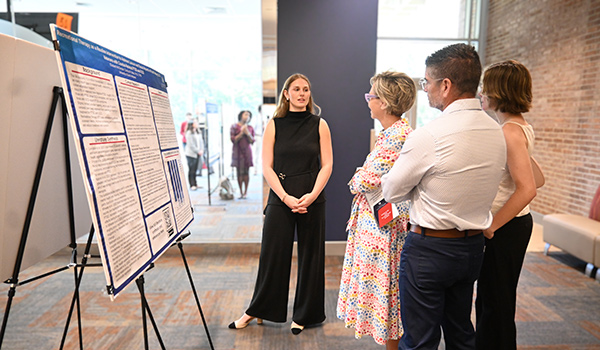
Student Researchers and Faculty Mentors
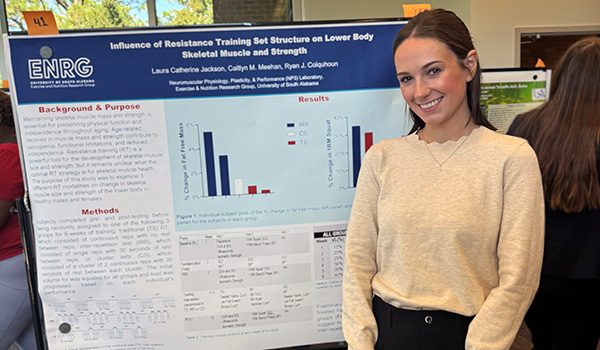
Laura Catherine Jackson, biomedical sciences: Resistance training set structure and lower-body muscle and
strength. Mentor: Dr. Ryan Colquhoun, associate professor in the Department of Health,
Kinesiology and Sport.
Rivers Lewis, exercise science: Cultural and environmental influences on marching arts experiences and performance. Mentor: Dr. Caitlyn Hauff, associate professor in the Department of Health, Kinesiology and Sport.
Elizabeth McClendon, recreational therapy: Recreational therapy to support leisure and social health among U.S. veterans with combat-related post-traumatic stress disorder and obsessive-compulsive disorder. Mentor: Dr. Shelly Bates, assistant professor in the Department of Health, Kinesiology and Sport.
Caroline Wiggins, special education: Instructors’ understanding and use of Universal Design for Learning in a summer camp. Mentors: Dr. Abbie Baxter, professor, and Dr. Linda Reeves, associate professor, both in the Department of Leadership and Teacher Education.
Genevieve Batman, exercise science: Body composition, musculoskeletal injury and menstrual health among Drum Corps International participants. Mentors: Dr. Neil Schwarz and Dr. Shelley Holden, professor in the Department of Health Kinesiology, and Sport.
Lucy Orr, chemistry: Scientific identity through authentic research. Mentors: Dr. David Forbes, professor of chemistry, and Dr. Katie McCorrison, associate professor in the Department of Leadership and Teacher Education.
Morgan Taylor, secondary education, mathematics: Artificial intelligence support to address mathematics learning gaps and encourage task engagement. Mentor: Dr. Christopher Parrish, associate professor in the Department of Leadership and Teacher Education.