The Courage to Click ‘Submit’
Posted on November 3, 2026
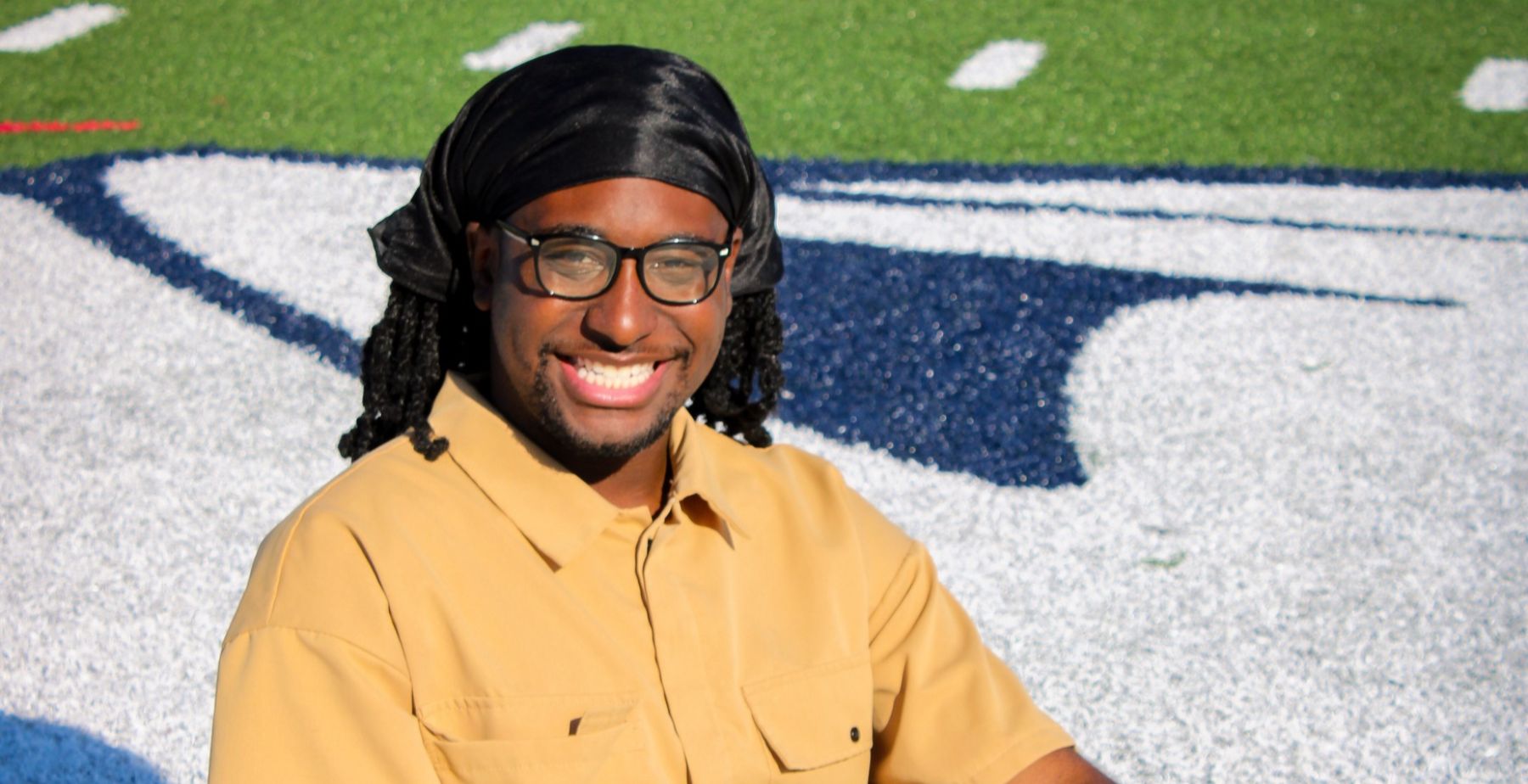
Fayette, Alabama native Micah (Wesley) Grant, a senior here at South, turned a whim into an award-winning short story. An English major with a concentration in creative writing and a minor in music, Grant grew up surrounded by music in a family full of singers. He began playing piano at the age of five and picked up several other instruments throughout high school. Though he originally planned to pursue music at South, and later nursing, Grant eventually discovered his true passion for creative writing.
Grant recently received the Five Guys Fiction Award for his short story When I Ate God, published in the inaugural issue of LongLeaf: New Writing from Alabama. The story was selected by guest judge Daniel Wallace, the Alabama-raised author of Big Fish. Grant also received last year's Angelia and Steven Stokes Creative Writing Scholarship through the English department.
While taking an introductory creative writing course during his sophomore year, Grant decided to challenge himself creatively and move beyond his usual genre of fiction. “I had been playing it safe, and I wanted to do something that I had never done before and expand my limits,” he mused. “I thought to myself, what could I do that was the opposite of what I would normally write?”
Originally a short poem titled Adam, the piece developed into a short story with feedback from peers in his creative writing workshop.
Grant was shocked when he learned his story had been selected by Wallace for Longleaf. He never submitted his work for publication before, and his expectations were low. His creative writing professor, Jocelyn Cullity, encouraged him. “She told me to submit my work no matter what; even if they don't accept it, just submit it,” Grant said. “It was shocking at first. This was my first submission ever, so I was not expecting anything. I just wanted to see what would happen, and then I received the acceptance letter. And I was thinking: oh my goodness.”
Although the publication’s reach hadn’t been on Grant's mind, that changed when classmates and faculty began approaching him on campus to congratulate him, and share their reactions to his story. “I remember everybody passing me in the halls stopping me, saying, ‘I read your piece, and it was so good,’” Grant said. “I was kind of taken aback because I was not expecting this much.”
For Grant, the tight-knit writing community is what makes South's creative writing concentration special. He recalled taking his first writing course with Dr. Cullity in a class of just three students. This small group setting helped him build lasting friendships and a close connection with his professor. “Having that small group of people who all shared a connection to writing – it had such an impact on my life.”
Beyond the classroom, visiting writers have given Grant opportunities to experience different approaches to his craft. Among the events sponsored by the English department and the Stokes Center for Creative Writing, a poetry reading by Mobile native Huggy Bear Da Poet stands out to him. Grant explained that the performance gave him the push he needed to test the boundaries with his own writing.
“It was something I never experienced before,” he said. “It hinted at me to always take risks, and that you never know how what you say might affect someone. And to always take that leap of faith and see if it works.”
Dr. Jocelyn Cullity, associate professor of English, director of creative writing and director of South’s Stokes Center for Creative Writing, has made the biggest impact on Grant’s journey as a creative writer at South. Not only has she encouraged him to publish his writing, but also to plan for his future.
Grant shared that her guidance has also shaped how he approaches his writing. She encourages her students to seek out publication, and to not leave their work unfinished or set aside for too long. “She always told us to never keep your work on a shelf for a long time; always go and try to publish it in a [literary] journal or something,” Grant said. “I feel like there's so much I've learned from her. Most of my writing – I always go back to her words and what she would think. She doesn't deter you; she helps take your writing to the next level.” This encouragement goes beyond fiction. Grant also recalled Cullity giving him advice on a screenwriting assignment, reminding him to remain open to how different forms of writing might influence his work.
As graduation approaches, Grant is considering a potential career as a professor. His experience in South's creative writing program, particularly its writing workshops, has helped him appreciate teaching, and how to provide constructive criticism. “During workshops I like to think to myself, ‘if I were a teacher, what feedback would I give to this student?’ I'm always listening to the professors' comments and imitating them.”
As Grant considers graduate school and a possible career in teaching, Cullity helps him explore his options, and continues to encourage him to aim high. “She told me, ‘Always make a big reach. In grad school, you'll be able to figure out if you want to teach.’ She sat me down and said, ‘Give me a list of all the grad schools you might want to attend; I will help you.’ I feel like a lot of people don't go out of their way to do that.”