The Art of Becoming
Posted on November 11, 2026
Two University of South Alabama exercise science seniors discover how classroom learning and Army ROTC training shape their leadership and commitment to service.
For Thomas Nelson, leadership began as a challenge. For Riley Hatfield, it was a family tradition. Their paths to Army ROTC were different, but both discovered that becoming an officer required more than physical endurance and military discipline.
At the University of South Alabama, their journeys brought together academic achievement, personal growth and a commitment to serving others.
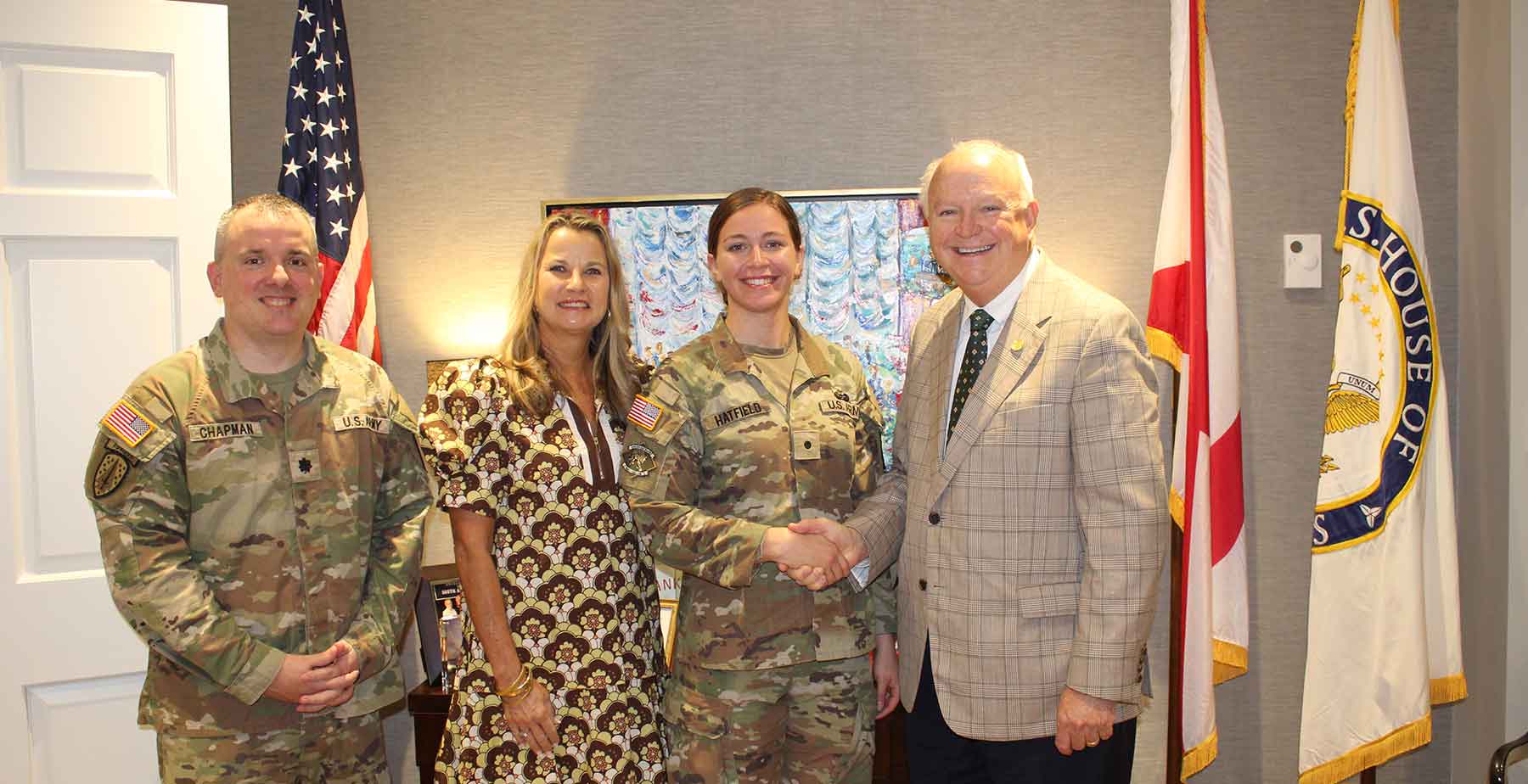
Nelson and Hatfield, both exercise science students in the Department of Health, Kinesiology and Sport within the College of Education and Professional Studies, earned recognition as Distinguished Military Graduates, placing them among the top 20% of more than 5,200 Army ROTC cadets nationwide.
For Nelson, a Thomasville, Alabama, native, joining Army ROTC was an opportunity to discover whether he could meet the demands of military leadership.
"I've been told all my life that I am a leader, but Army ROTC would put that claim to the test," he said.
The test often began at 5:25 a.m. with physical training. During his junior year, Nelson balanced coursework, military responsibilities, exercise and studying. He came to believe that success was less about finding perfect balance and more about approaching each responsibility with purpose.
His exercise science education reinforced that philosophy. Demanding coursework strengthened his discipline, while an internship with graduate students taught him how to motivate others and help them reach their goals.
In a strength and conditioning class, instructor Austin Massengale offered another lesson in leadership. Nelson admired the enthusiasm and humility Massengale brought to teaching.
"Austin taught me how to lead with enthusiasm and passion," Nelson said.
For Hatfield, a Fairhope, Alabama, native, military service was familiar long before she arrived at South. Both parents were Army officers. Her father continues to serve, and her mother is a retired Army nurse.
Their example inspired her to follow a similar path, but her experiences at South helped her develop her own leadership philosophy.
As her ROTC responsibilities grew, Hatfield learned to balance academic commitments with leadership duties. Leading fellow cadets taught her the importance of listening, understanding different perspectives and building trust.
"The best way to build trust and camaraderie with your peers is to listen to them and work with them to get the job done," she said.
Her exercise science coursework strengthened those skills through group activities, public speaking and practical knowledge of physical training and nutrition. What she learned in the classroom carried into her responsibilities as a cadet.
For both students, the Distinguished Military Graduate recognition represents years of preparation, but their experiences at South have shaped something less easily measured: how they approach challenges, connect with others and lead with purpose.
Nelson, who will commission as a second lieutenant in the U.S. Army, sees the recognition as part of a continuing journey.
"Being a Distinguished Military Graduate is my book cover to hundreds of pages of an ordinary person chasing extraordinary opportunities," he said. "The art of becoming."