
ECMC Foundation
We are excited to announce the official launch of ECMC Foundation-funded project, Enhancing Advising Technology Integration: Building Capacity for Holistic, Student-Centered Success, on August 5, 2026!
The Center for Innovation in Postsecondary Education (CIPE) at the University of South Alabama, in collaboration with our consulting partners—Dr. Lisa Dunning (Kaizen Education Group) and Dr. Teresa Thompson-Pinkney (Vision Shift Catalyst)—is honored to partner with six outstanding Historically Black Colleges and Universities (HBCUs) to explore one of the most important questions facing higher education today:
How can artificial intelligence (AI) strengthen student success while preserving the human relationships that are at the heart of effective advising?
Over the next two years, our institutional partners will examine how AI can be thoughtfully integrated into existing advising and student success technologies—including EAB Navigate, Starfish, and other campus systems—to create more holistic, equitable, and student-centered advising ecosystems.
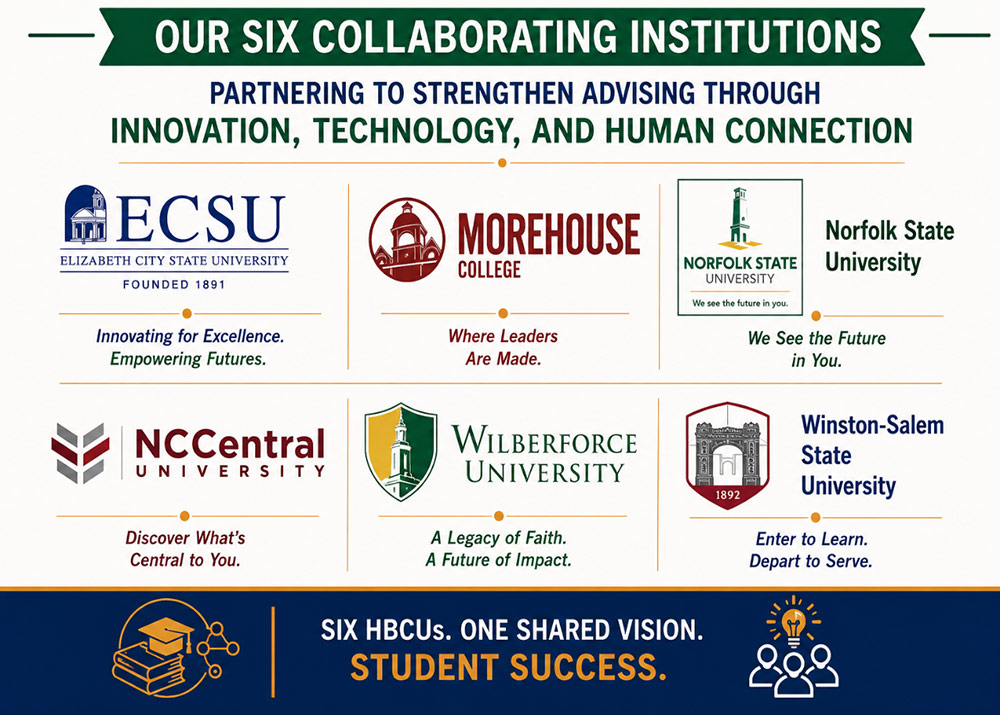
Together, these institutions will:
- Assess their current advising technology ecosystem and AI readiness.
- Examine advising workflows through institutional process mapping.
- Identify opportunities to responsibly integrate AI into advising and student support.
- Participate in Communities of Practice and capacity-building activities.
- Develop implementation strategies that align technology innovation with each institution's mission, values, and commitment to student success.
Rather than asking whether institutions should adopt AI, this project asks a more important question:
How can AI empower advisors, faculty, and staff to provide more personalized, proactive, and meaningful support for students?
Through institutional assessments, collaborative learning, technical assistance, and shared resources, this initiative will generate practical strategies that can inform the future of AI-enabled advising across higher education.
We are deeply grateful to ECMC Foundation for its investment in this important work and to each participating institution for its leadership, commitment, and willingness to innovate on behalf of students.