You have returned to the top of the page and may restart browsing.
Skip Main Navigation
You have skipped the global top navigation and may now begin browsing the page.

LevelUP Fellows

2023-2024 LevelUP Fellows
▼   Amy Sprinkle, Ph.D.
Early Career Exploration: Major-Specific Canvas Modules for Informed Career Pathways
Early career services focus on providing guidance and support to individuals who are in the early stages of their professional journey. These services aim to assist individuals, often students or recent graduates, in making informed decisions about their careers, developing essential skills, and successfully transitioning into the workforce.  Creating a canvas module for early career exploration that is major specific can be an engaging and informative way to help individuals explore and plan their careers. Canvas modules are versatile tools that allow for visual representation and organization of information.
Amy Sprinkle portrait
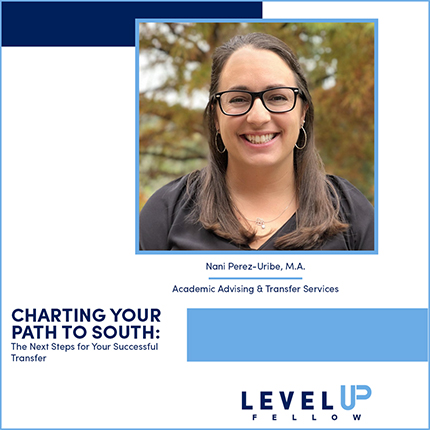
▼   Nani Young Perez-Uribe, M.A.
Charting Your Path to South: The Next Steps for Your Successful Transfer

A set of guidelines will be accessible to transfer students prior to their intended transfer date providing them information on exploring majors, career services access, scholarships, and more. The purpose of these guidelines is to provide information to transfer students in advance so that they are more prepared upon transferring, but also familiar with the resources and opportunities available to them at the University of South Alabama.
Nan Young-Perez portrait
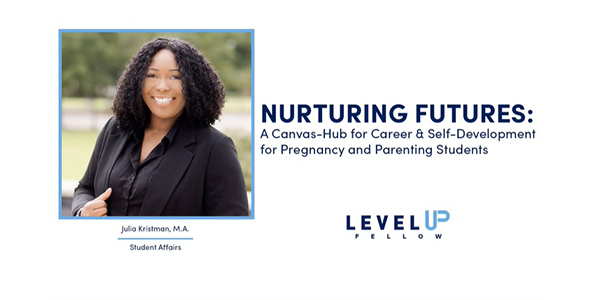
▼   Julia Kristman, M.A.
Nurturing Futures: A Canvas-based Hub for Career and Self-Development for Pregnancy and Parenting Students
This project introduces an innovative Canvas hub tailored to meet the specific needs of pregnancy and parenting students in the student affairs domain. Focused on Career & Self-Development, the hub empowers students to proactively manage and relate their academic and personal journeys. It emphasizes continual learning, self-awareness, navigating career opportunities, and building meaningful networks. The hub encourages effective communication, emphasizing information exchange within and outside the academic environment. A core objective is to equip students with communication skills for self-advocacy, fostering engagement through discussions, collaborative projects, and activities. The hub integrates a resource-centric approach, connecting students with community and campus resources for academic and parenting responsibilities. Ultimately, the Canvas-based hub aims to provide essential skills and tools for navigating challenges, fostering a supportive community, and serving as a model for similar courses in Student Affairs.
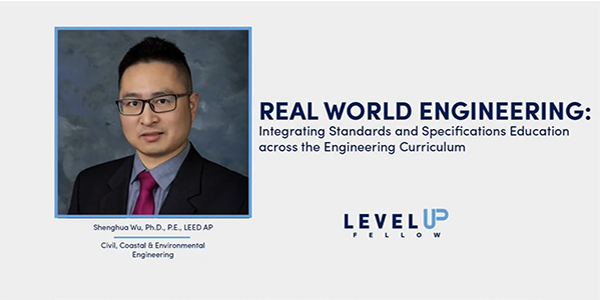
▼   Shenghua Wu, Ph.D., P.E., LEED AP
Real World Engineering: Integrating Standards and Specifications Education across the Engineering Curriculum
This project aims to design and integrate standards and specifications education into the civil engineering curricula across different levels within the Department of Civil, Coastal, and Environmental Engineering. To achieve this, we will develop five standalone learning modules tailored for freshman, sophomore, junior, senior, and graduate levels. These modules are designed to seamlessly integrate into existing courses. For lower-level courses, our approach includes hands-on activities that establish meaningful connections with industry, inspiring and introducing students to the world of standards and specifications. Additionally, team-based learning modules will be incorporated into the Civil Engineering Materials Lab course, enhancing student engagement and mastery of standards related to materials. As students progress to higher-level courses, they will actively participate in mock standards development activities. This hands-on experience is intended to further refine their skills, ensuring they are well-prepared for industry standards and specifications, thus bridging the gap between academic learning and real-world application.


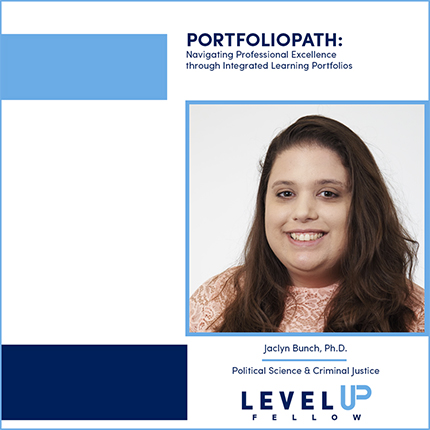
▼   Jaclyn Bunch, Ph.D.
PortfolioPath: Navigating Professional Excellence through Integrated Learning Portfolios

This project aims to revolutionize our Masters in Public Administration (MPA) program by implementing a Portfolium project across the curriculum. The initiative involves integrating all major courses to create a cohesive assignment, requiring students to identify objectives, learning goals, and professional outcomes. Throughout their studies, students will build a comprehensive portfolio, highlighting acquired skills, knowledge, abilities, and professional development from each course. This holistic approach not only helps students recognize the MPA program's unique contributions to their career preparation but also empowers them to confidently communicate their experiences to the community and prospective employers. The Portfolium project acts as a transformative tool, bridging academic learning with practical applications and enhancing students' preparedness for success in their professional pursuits.
Jaclyn Bunch portrait
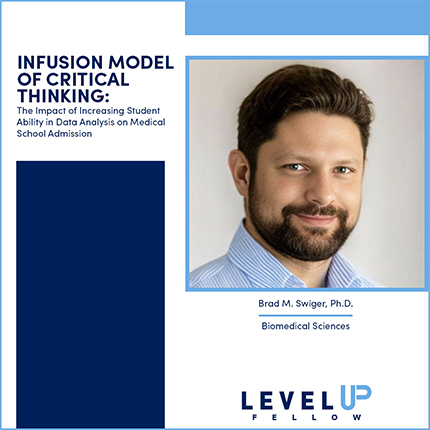
▼   Brad M. Swiger, Ph.D.
Infusion Model of Critical Thinking: The Impact of Increasing Student Ability in Data Analysis on Medical School Admission
Application to medical school is a highly competitive process.  The applicant must meet several minimum criteria but, more often than not, the applicant must exceed the minimum criteria to be considered by the admissions committee.  A competitive score on the Medical College Admission Test (MCAT) is a major hurdle for most students.  According to a recent report by the Association of American Medical Colleges, the current average MCAT score is a 501.3 for all test-takers, yet 511.7 was the average score of matriculants for 2022-2023.  Given the scientific literacy required to do well on the MCAT, an increased focus on critical analysis and reading comprehension could help students achieve better scores.  The purpose of this project is to examine the relationship between explicit instruction of critical analysis in a Graduate Seminar course and MCAT scores, with an ultimate goal of tracking medical school acceptance rates.
Brad Swiger portrait
▼   Laura Powell, Ph.D.
Empowering Psychology Majors: Increasing Career Readiness Factors in Psychology Majors

Psychology is often thought of as a major in which students have few career options unless they attend graduate school. A sophomore level “Careers for Psychology Majors” course was created to help psychology majors explore careers options with a bachelor's degree in psychology as well as careers that require graduate study. This course is purposely placed during the sophomore year in order to expose students to this information at a time when they can use this knowledge to influence their own degree progress. This project is being conducted to show that the course is effective in increasing career decision self-efficacy, academic motivation, psychology career information, and major satisfaction in students taking the careers course over psychology majors who have not taken the careers course. 

Students in the course this semester for the first time will also complete the LevelUp “Set” Activity. They will be compared to students who have taken the careers course in past semesters without the “Set” activity to see if the “Set” activity also further increases the same measures.
Laura Powell portrait
▼   Jeff Landry, Ph.D.
Technology Integration Toolkit: Enhancing Student Career Readiness Across Disciplines
Technology is the major disruptor and source of value, driving innovation and change in organizations and across industries. Today's college graduates need to be prepared with the these technology skills, both the universally important and discipline-specific. These skills span areas such as data analysis, team communication, project management, artificial intelligence, and more. This project proposes to develop a career readiness technology toolkit for instructors to guide their efforts at infusing technologies and developing student competencies in the technology domain.
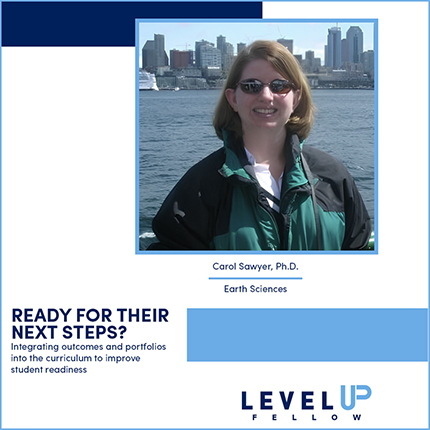
▼   Carol Sawyer, Ph.D.
Ready For Their Next Steps? Integrating Outcomes and Portfolios Into the Curriculum to Improve Student Readiness

The Geography Program at the University of South Alabama has had a program-level outcome that has been used for over a decade. It seeks to measure student’s readiness to transition to their next step. The outcome's success was measured with a single question asked the graduating majors on their perception of preparedness. This project seeks to increase the number of measures used by incorporating students and faculty identifying the Knowledge, Skills, and Activities (KSA) students should acquire from the upper-level Geography courses classified in the Curriculum Map as being at the Mastery/Assessment level. Course instructors will identify an assignment or project to be measured for the outcome. A rubric will be developed, and the Outcomes function in Canvas will be used to streamline the process.
Carol Sawyer portrait
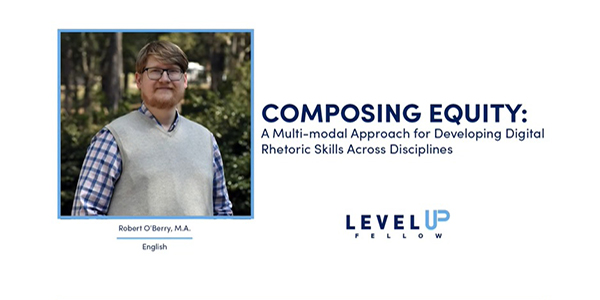
▼   Robert O'Berry, M.A.
Composing Equity: A Multi-modal Approach for Developing Digital Rhetoric Skills Across Disciplines
Instructors will be given a small lesson to promote more digital media in the classroom to provide students with more ownership and confidence in their work. Students are arriving at the University of South Alabama with little to no experience with the current formats needed for the traditional academic essay. By using multimodal approaches of digital rhetoric (YouTube, TikTok, Twitter/X, etc.), students will be more apt to participate and excel in composing arguments without the obstacles of learning new forms of argumentation. Instructors will be given a small exercise to promote new technologies and digital rhetoric in the classroom to promote equity and the NACE competencies needed to prepare students for an academic career. This small video exercise can be completed within a week and provides immediate results regarding comprehension of argumentative genres.

2024-2025 LevelUP Fellows

▼   Melissa R. Walter, M.A., M.S.
InfoFusion: Quick Thinking in Action

This project emphasizes collaboration, critical thinking, and real-time synthesis of ideas. Each week, we will explore key topics through lectures and interactive workshops created by students. For these workshops, students will choose a case to analyze. This could be a news story, video, article, or other type of media that illustrates the week’s topics. Before class, they’ll prepare a written description of the case and its relevance to the topic as an entrance ticket to class. 

During class, they’ll collaborate with their assigned group to share and analyze cases, identifying connections and contradictions. Together, they’ll summarize these insights and consider how they can deepen their understanding of the concepts. A group representative will present the findings to the class, practicing quick thinking and presentation skills. 

These workshops foster a dynamic, hands-on learning environment, helping students apply course materials to real-world issues while building teamwork, critical thinking, and public speaking skills.
Melissa R. Walter portrait
▼   Angela Doucet Rand, Ph.D.
Research in the Age of AI
I am developing a framework/model for conducting research in the age of AI. This instructional framework is a guide for higher education researchers (students and faculty) on conducting research effectively using AI tools and developing critical thinking skills. This project incorporates strategies that emphasize the importance of critical evaluation with research sources, understanding the cultural impact of AI technology, and using AI tools responsibly and strategically.
▼   Delisa P. Johnson, Ed.D.
Levelling UP in Leadership
NACE cited Casner-Lotto, Rosenblum, and Wright (2009) in Development and Validation of the NACE Career Readiness Competencies, highlighting that one-fifth of employers report college graduates are inadequately prepared for the workforce and require additional readiness training. College students develop leadership skills and career readiness through campus jobs, assistantships, clubs, and community programs. Additionally, higher education professionals who have implemented formal leadership courses for student staff have reported transformative outcomes, including improved team dynamics, enhanced leader confidence, and stronger performance evaluations.
Leveling UP in Leadership is a proposed leadership program that aims to help college students increase proficiency in NACE competencies and additional key areas such as emotional intelligence, citizenship and service, and authenticity. With the potential to expand campus-wide, this program could benefit leaders in Greek Life, Student Government Association, and similar organizations, as well as expand to a micro-credential or credit bearing course. The goal is to empower students to cultivate essential skills, demonstrate career readiness through tangible achievements, and seamlessly transition into successful careers.
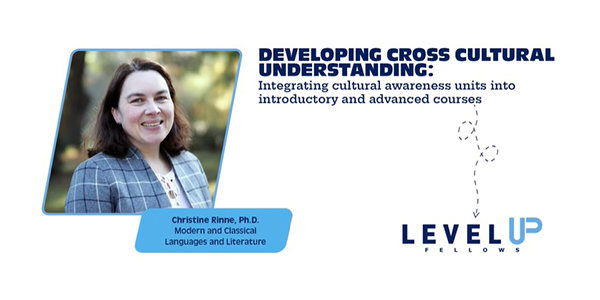
▼   Christine Rinne, Ph.D.
Developing Cross-Cultural Understanding
This project seeks to further develop students’ cross-cultural understanding and communication skills, which are vital to the success of our graduates, regardless of major. I will develop units to be used in canvas courses for both introductory level courses (IS 100: Global Issues and CAS 100: First Year Experience), as well as more advanced courses, such as the International Studies and Global Engagement Certificate capstones. In these introductory units, students will explore central questions like what makes up a culture, and how cultural norms and expectations impact our interactions with others. In the more advanced units, students will consider a variety of situations, and think about how they would react and why. Ultimately students will be better prepared to live and work in our complex society.
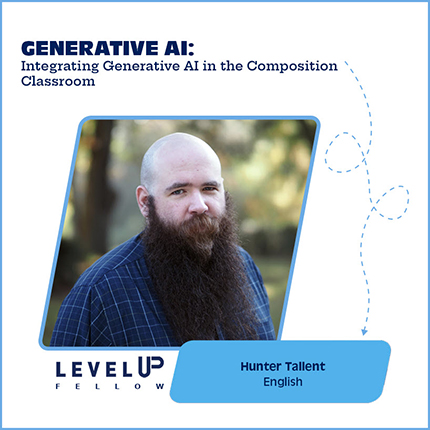
▼   Hunter Tallent
Generative AI in the Composition Classroom
The goal of this project is to integrate the use of generative AI into English composition courses as a means to familiarize and develop the students' professional knowledge of this new tool while also offering creative opportunities for them to practice and model composition using multi-modal approaches. By allowing the students to use generative AI in the planning, outlining, and construction phases of their writing assignments, along with detailed instruction of use, the students will receive an extra layer of scaffolding that can help them develop and cement their writing ability. Additionally, these assignments and activities will be designed to be able to be dropped into any composition classroom or any class that involves large amounts of writing.
Hunter Tallent portrait
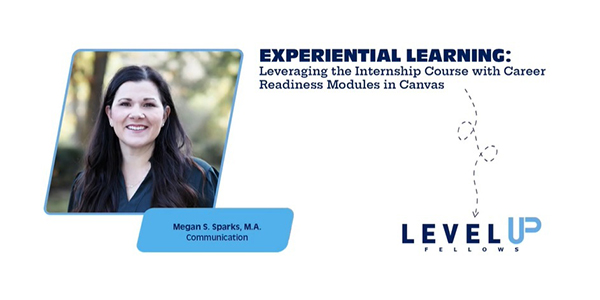
▼   Megan S. Sparks, M.A.
 Experiential Learning: Leveraging the Internship Course with Career Readiness Modules in Canvas
The overall aim of this project is to utilize the internship course (CA 496) for career readiness on a deeper level. The innovation implemented in the course revolves around the NACE competencies valued by employers (career and self-development, communication, critical thinking, leadership, professionalism, teamwork and technology). The creation of these seven career readiness modules connects students’ hands-on experience to relevant skills preparing them more effectively for their internship experience and beyond. Each module contains reading materials, resources and at least one engagement activity or assignment. This innovation will be tested with students in the CA 496 fall 2025 internship course. Course evaluations and supervisor evaluations will gauge if the course is executed effectively. Experiential learning (internship) combined with reflective and substantive course modules centered around career readiness competencies will help “students graduate from South Alabama confidently and uniquely prepared to take their next step” (USA website).
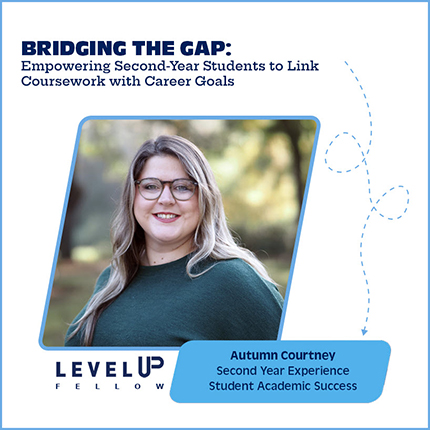
▼   Autumn Courtney
Bridging the Gap: Empowering Second-Year Students to Link Coursework with Career Goals
Second-year college students often face challenges in connecting their coursework to long-term academic and career goals, leading to disengagement and potential attrition. This project addresses this critical gap by incorporating concept-mapping modules into major-specific second-year courses. These modules encourage students to link course objectives with real-world outcomes, fostering clarity, motivation, and a sense of purpose. Grounded in research on retention, learning theory, and institutional trends, the initiative aims to enhance student engagement and persistence by bridging academic experiences with future aspirations. By empowering students to visualize the relevance of their coursework, the project contributes to improved retention and academic success.
Autum Courtney portrait
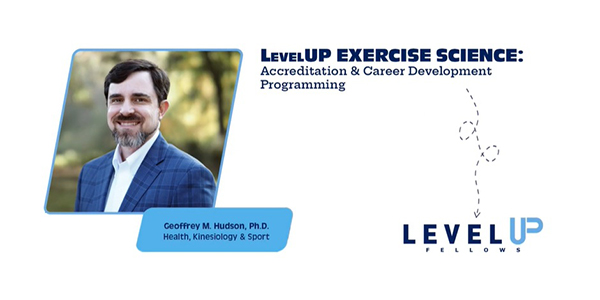
▼   Geoffrey M. Hudson, Ph.D.
LevelUP Exercise Science with Accreditation & Career Development Programming
The Exercise Science faculty aims to LevelUP their program by exploring programmatic accreditation, completing a curriculum map and improving transparency of their program website. The largest professional organizations in Exercise Science have recently limited their respective premium certifications to students that graduate from programs that are accredited with each organization's specific accreditation standards. We intend to survey current and former students as well as local industry professionals to assess our students' needs for these certifications. Faculty will then develop curriculum and career maps to align programmatic outcomes with NACE competencies. We will finally improve the transparency of the Exercise Science webpage by outlining the scaffolding of our prerequisite coursework and demonstrate the development of knowledge and skills throughout the degree that helps LevelUP our students to prepare them for the diverse array of career opportunities upon graduation.
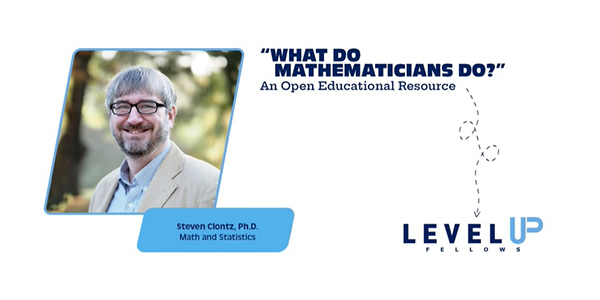
▼   Steven Clontz, Ph.D.
“What Do Mathematicians Do?” - An Open Educational Resource
While mathematicians frequently acclaim the generally applicable skills of abstract problem-solving and quantitative reasoning that are developed in a mathematics degree, there are minimal resources offering practical guidance for prospective and current mathematics majors to parlay this degree into specific skills and experiences valued by employers, particularly for those students who are in their first two years of higher education. This project will adapt “Onboarding to Mathematics: A short look at what mathematics majors do”, notes written by Dr. John Estes for his students at Belhaven University, into an Open Educational Resource entitled “What Do Mathematicians Do?”. This new text will be developed to be applicable to a general audience of new and prospective mathematics majors across the country, with a particular focus on supporting students enrolled at the University of South Alabama.
Steven Clontz portrait
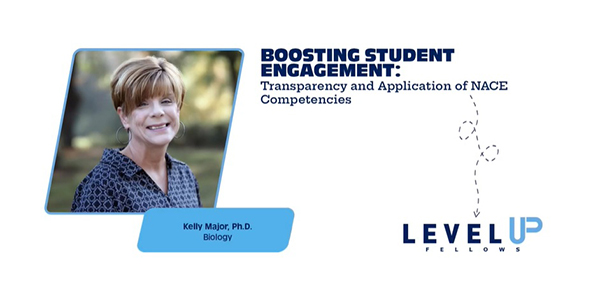
▼   Kelly Major, Ph.D.
LevelUP Exercise Science with Accreditation & Career Development Programming
The Exercise Science faculty aims to LevelUP their program by exploring programmatic accreditation, completing a curriculum map and improving transparency of their program website. The largest professional organizations in Exercise Science have recently limited their respective premium certifications to students that graduate from programs that are accredited with each organization's specific accreditation standards. We intend to survey current and former students as well as local industry professionals to assess our students' needs for these certifications. Faculty will then develop curriculum and career maps to align programmatic outcomes with NACE competencies. We will finally improve the transparency of the Exercise Science webpage by outlining the scaffolding of our prerequisite coursework and demonstrate the development of knowledge and skills throughout the degree that helps LevelUP our students to prepare them for the diverse array of career opportunities upon graduation.

2025-2026 LevelUP Fellows
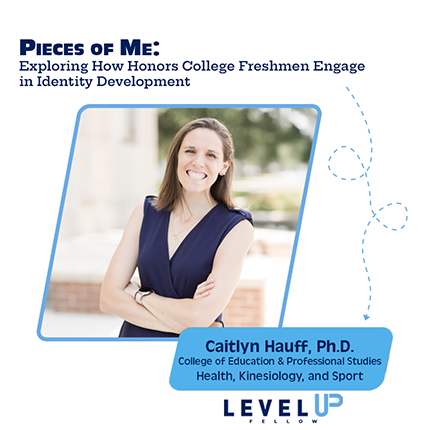
▼   Caitlyn Hauff, Ph.D.
Pieces of Me: Exploring How Honors College Freshman Engage in Identity Development
During the Spring 2026 semester, I implemented a LevelUP project that examined identity exploration and development in Honors College students participating in a First Year Honors Seminar course. The project included an emphasis on how their personal, academic, and professional identities intersect with their values, which in turn, should align with their future Honors Thesis project and/or profession. We focused on developing a “researcher identity” with an understanding that this identity must grow through personal and professional life experiences, mentorship, and passion. Additionally, the students engaged in coursework geared towards developing other identities they hold that fall outside of academia. Too often we find that Honors College students focus all their efforts on academics and forget the other pieces of themselves worth exploring and nurturing. This project gave Honors freshmen tools to assess, develop, and grow their identities through their first year of college and beyond.
Caitlyn Hauff portrait


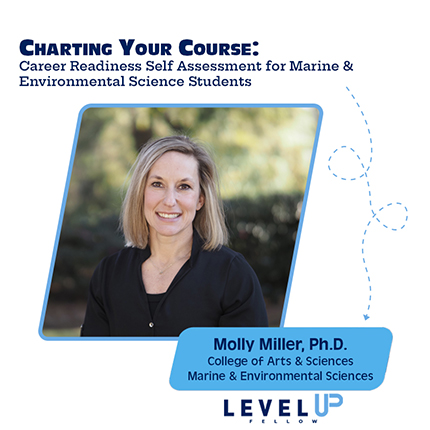
▼   Molly Miller, Ph.D.
Charting Your Course: Career Readiness Self Assessment for Marine & Environmental Science Students
While academic programs provide the scientific foundation, professional success requires an intentional blueprint. This project introduces a longitudinal career readiness self-assessment framework designed specifically for marine and environmental science undergraduates to utilize throughout their four-year journey. The initiative integrates a competency-based questionnaire, aligned with NACE standards, with reflective exercises centered on real-world job advertisements and specialized career maps. By bridging the gap between scientific coursework and industry expectations, the project empowers students to proactively identify skill gaps and align their academic experiences with professional goals early in their education. This iterative approach encourages students to shift from passive learners to proactive architects of their own professional trajectories. Ultimately, this framework ensures that graduates are not just academically proficient, but strategically prepared to enter the workforce as intentional, career-ready professionals.
Molly Miller portrait
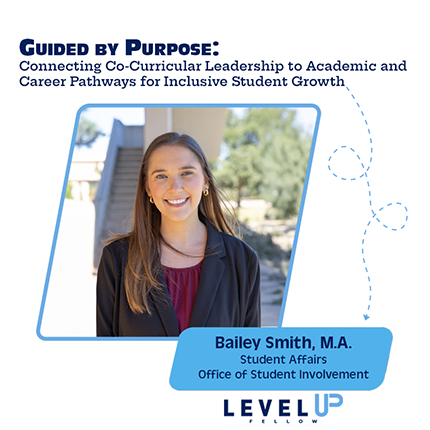
▼   Bailey Smith, M.A.
Guided by Purpose: Connecting Co-Curricular Leadership to Academic and Career Pathways for Inclusive Student Growth
This project advances an integrated, equity-centered model that connects co-curricular engagement with intentional academic and career planning to promote holistic student success. Designed with a focus on first-generation college students and historically underrepresented learners, the initiative aligns leadership development, campus involvement, and experiential learning opportunities with structured academic advising and long-term career exploration. By intentionally bridging students’ lived experiences with their educational pathways, the project fosters stronger identity development, a clearer sense of purpose, and greater ownership of academic choices. The model emphasizes reflection, goal setting, and mentorship to help students translate leadership experiences into tangible academic and professional outcomes. Ultimately, this approach seeks to strengthen belonging, increase intrinsic motivation, improve persistence and progression, and create sustainable pathways toward graduation and post-graduate success.
Baily Smith portrait
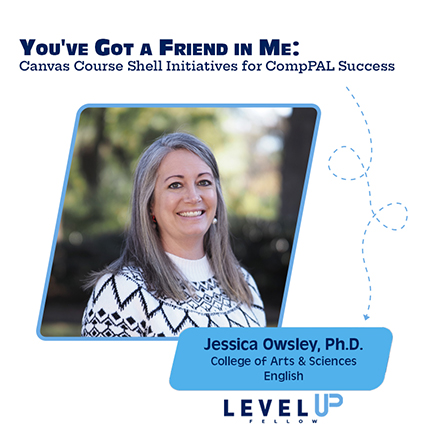
▼   Jessica Owsley, Ph.D.
"You've Got a Friend in Me: Canvas Course Shell Initiatives for CompPAL Success"
My project aims to ensure students’ success in the composition classroom through the synchronization of technology and in-person workshop instruction in the Department of English’s CompPAL program. The implementation of a CompPAL Canvas Course Shell provides continuity and coherence of all sections with the department’s Composition 101 classes by providing each CompPAL leader with a weekly workshop framework that aligns with the faculty’s pedagogy. The Course Shell aims to serve students as well by providing a resource to guide them through their weekly responsibilities both within the classroom and the thirty-minute workshops with their CompPAL leader. I envision the Course Shell benefiting students’ professional development by reinforcing the necessity of scaffolded learning and transfer as students learn accountability, responsibility, organization, and time management
Jessica Owsley portrait
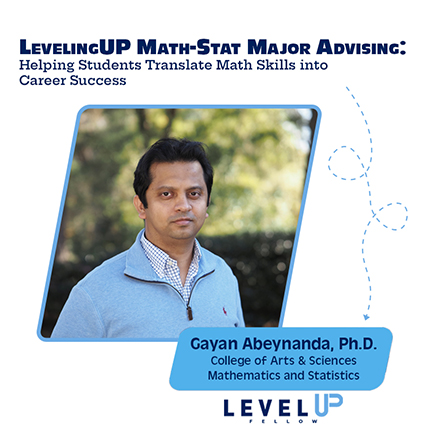
▼   Gayan Abeynanda, Ph.D.
LevelingUP Math-Stat Major Advising: Helping Students Translate Math Skills into Career Success
This LevelUP project aims to enhance Mathematics and Statistics major advising at the University of South Alabama by integrating the ‘LevelUP: Uniquely Prepared for What Comes Next’ framework into a centralized Canvas advising site. Despite strong disciplinary preparation, many Math-Stat graduates struggle to articulate and demonstrate career-ready competencies aligned with workforce expectations. To address this issue, the project will develop structured career pathway guides (for several prospective careers), including recommended minors, career-pathway-specific four-year course plans, advice on how to hone required skills, and curated external resources. A dedicated resume and ePortfolio module will guide students in documenting projects, competencies, and professional growth aligned with NACE career readiness competencies, facilitating strong articulation of their career readiness. By streamlining advising and explicitly mapping coursework to career readiness competencies, this initiative seeks to strengthen student awareness, intentional planning, and workforce preparedness while supporting departmental recruitment, retention, and alignment with LevelUP QEP goals.
Gayan Abeynanda portrait
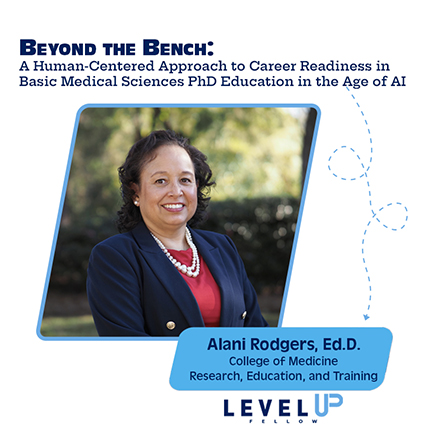
▼   Alani Rodgers, Ed.D.
Beyond the Bench: A Human-Centered Approach to Career Readiness in Basic Medical Sciences PhD Education in the Age of AI
As artificial intelligence reshapes the higher education landscape, preparing graduate students for careers beyond traditional academic pathways requires intentional attention to human-centered skills such as critical thinking, self-reflection, and ethical decision-making. This presentation examines Beyond the Bench: Mapping Your Career DNA, a professional development series designed for PhD students in the Basic Medical Sciences. Developed in collaboration with the university’s Career Development office and a current PhD student, the series integrates the NACE career readiness competencies to help students identify transferable skills and explore diverse career pathways. Through alumni engagement, interactive workshops, and discussions of emerging technologies, including the role of AI in hiring and research environments, the program encourages thoughtful and responsible use of these tools. This session demonstrates how the series supports reflection, professional identity development, and human connection while preparing students for an evolving workforce. The adaptable structure also offers a model that can be implemented across disciplines and educational levels.
Alani Rodgers portrait
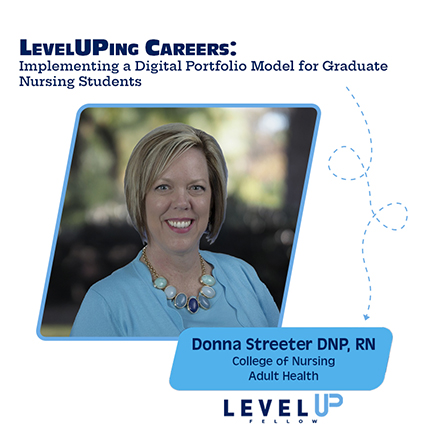
▼   Donna Streeter DNP, RN
LevelUPing Careers: Implementing a Digital Portfolio Model for Graduate Nursing Students
As artificial intelligence reshapes the higher education landscape, preparing graduate students for careers beyond traditional academic pathways requires intentional attention to human-centered skills such as critical thinking, self-reflection, and ethical decision-making. This presentation examines Beyond the Bench: Mapping Your Career DNA, a professional development series designed for PhD students in the Basic Medical Sciences. Developed in collaboration with the university’s Career Development office and a current PhD student, the series integrates the NACE career readiness competencies to help students identify transferable skills and explore diverse career pathways. Through alumni engagement, interactive workshops, and discussions of emerging technologies, including the role of AI in hiring and research environments, the program encourages thoughtful and responsible use of these tools. This session demonstrates how the series supports reflection, professional identity development, and human connection while preparing students for an evolving workforce. The adaptable structure also offers a model that can be implemented across disciplines and educational levels.
Donna Streeter portrait
▼   Sohee Kim, Ph.D.
Enhancing Graduate Student Readiness and Academic Program Assessment through e-Portfolio Integration
This project is a needs-based research study designed to expand the University of South Alabama’s LevelUP initiative by centering graduate students’ perspectives on ePortfolio use. While LevelUP has primarily focused on undergraduate populations, limited empirical evidence exists regarding how graduate students perceive and utilize ePortfolios for academic development and career readiness. This study quantitatively examines current master’s-level students’ and recent alumni’s perceptions of ePortfolios, including perceived usefulness, challenges, and needed institutional support. Using survey data, the project aims to identify key factors influencing effective ePortfolio engagement, such as perceived relevance, technical barriers, and availability of guidance. Findings will provide data-driven recommendations for adapting LevelUP resources to better align with graduate students’ academic trajectories and professional goals. Ultimately, this project seeks to inform targeted ePortfolio support strategies that enhance graduate student readiness, reflective learning, and program-level assessment within the LevelUP Quality Enhancement Plan.
Sohee Kim portrait
▼   Heather Sprinkle
LevelUP with SGA: Empowering SGA Leaders to Articulate Career Readiness Competencies
This project will focus on 12-15 members of the Student Government Association's Key Players, which is made up of elected officers and appointed cabinet members. Through an SGA-centered Canvas course, Ready Set Go student learning outcomes, and working with campus partners, members will have a better understanding of the LevelUP career readiness competencies and will be able to articulate to others specific examples of the competencies and reference situations that lead to growth in those areas.
Heather Sprinkle portrait