
After the Crisis
Posted on January 8, 2026 by Teri Greene
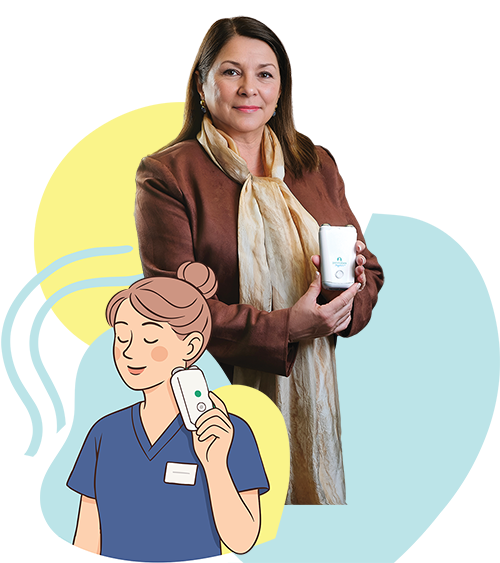 Dr. Paula Levi, assistant professor of nursing, joined South’s faculty in 2023. Her
connection to the University reaches back further. Her family moved to Mobile from
Boston in 1977 when her father, Drayton Miller, joined basketball Coach Cliff Ellis’
staff. Her mother, Hannelore DuBose, was hired at the USA Biomedical Library before
being promoted to head of cataloging at Marx Library, where she remained until retiring
in 2003. Levi earned her undergraduate nursing degree from South in 2014.
Dr. Paula Levi, assistant professor of nursing, joined South’s faculty in 2023. Her
connection to the University reaches back further. Her family moved to Mobile from
Boston in 1977 when her father, Drayton Miller, joined basketball Coach Cliff Ellis’
staff. Her mother, Hannelore DuBose, was hired at the USA Biomedical Library before
being promoted to head of cataloging at Marx Library, where she remained until retiring
in 2003. Levi earned her undergraduate nursing degree from South in 2014.
South research explores how technology can help ICU nurses recover from the toll of trauma-filled shifts.
In the intensive care unit, calm can be scarce. Monitors hum, alarms blare and every sound signals urgency. Through the constant noise and motion, nurses keep going, shift after shift. The cost to their well-being can be significant, even if it is invisible.
A new study led by Dr. Paula Levi, assistant professor of nursing, aims to help ICU nurses recover some of what that work takes away. The study combines scientific precision with human care, exploring how technology can make nursing more sustainable.
“ICU nurses have among the highest rates of post-traumatic stress symptoms of any clinical group,” says Levi, who was awarded $24,300 as part of the 2025 Research and Scholarly Development Grant program for a new project. They’re trained to respond in emergencies, but the body doesn’t always return to a calm, balanced state afterward. Chronic stress can place ICU nurses at risk for long-term adverse physiological and psychological health problems, such as cardiovascular disease, mental health disorders and a weakened immune system.
That matters not only to nurses but also to the hospitals that rely on them. In 2024, the turnover rate for registered nurses in the U.S. was approximately 16.4%, according to a 2025 report by NSI Nursing Solutions, a national recruiting agency that issues an annual look at trends in the industry.
A meta-analysis in the journal Nursing in Critical Care found that, globally, about 27.7% of ICU nurses intend to leave their jobs. Job stress is one of the main causes of ICU nurses making that decision.
Some signs of post-traumatic stress disorder in ICU nurses, including irritability,
are easy to spot. But much remains hidden: nightmares, intrusive thoughts, dissociation,
and even avoidance of family and friends.
Levi’s team is testing a small device — one currently used to alleviate migraines
— that delivers mild electrical stimulation through the neck to the vagus nerve, which
is a critical pathway that helps regulate heart rate, digestion and the body’s stress
response. Fifteen USA Health ICU nurses will be the first group to use the devices.
Participants will use the device twice a day for two minutes at a time. They will document stressful events during their workdays and wear Fitbits to measure their heart rate variability, which can be a key indicator of stress and/or post-traumatic stress disorder.
“When a person gets stressed, their heart rate will go up. After the stressor is over, the normal reaction is for the heart rate to come back down,” Levi says. “When a person has PTSD or chronic stress, the heart rate tends to stay high and not come back down.”
The device uses gentle neuromodulation to “remind” the nervous system that the crisis is over, helping the heart rate variability and cortisol levels return to balance after long, stressful shifts.
By tracking biometric data, the study aims to explore how noninvasive technology can promote measurable recovery from stress.
Making Time to Breathe
The U.S. military knows a lot about staying ready under pressure. Now, a South researcher is adapting its strategy to support nurses through the everyday demands of the job.
Dr. Amy Campbell, assistant professor in the School of Computing, worked with her co-principal investigator, Dr. Kristen Noles, director of quality and performance improvement for USA Health, to lead a well-being initiative funded by the American Nurses Foundation. They adapted a military-developed model called Stress First Aid for use in hospitals.
The program uses a color scale of green, yellow, orange and red to train nurses to recognize, express and address early signs of stress and burnout in themselves and their peers before exhaustion hampers their ability to perform their jobs. What began as a pilot in six University Hospital units has expanded throughout the hospital.
The support structure pairs short training sessions with access to “decompression spaces” that give nurses permission to pause, breathe and reset. The rooms offer an oasis of peace and quiet, with massage chairs, TV monitors streaming calming images of nature and, most importantly, alone time — something nurses find in short supply.
“Nurses are great at identifying the needs of others,” says Campbell, who taught informatics in the College of Nursing for six years before switching to Information Systems and Technology. “We’re not always great at identifying our own.”
Click here to view the current issue of South Magazine
-
The Art of Medicine
Dr. Jeffery S. La Rochelle, the new dean of the Frederick P. Whiddon C...
June 17, 2026 -
Base Camp
South to scale up support with new military services home....
June 17, 2026 -
Flagship Futures
One of the newest scholarship programs at the University of South Alab...
June 17, 2026 -

Estuary of Innovation
The Frederick P. Whiddon College of Medicine building, opening in spri...
June 17, 2026