
In Her First Year, She's Giving Oysters a Start, Too
Posted on January 8, 2026 by Alumni Department
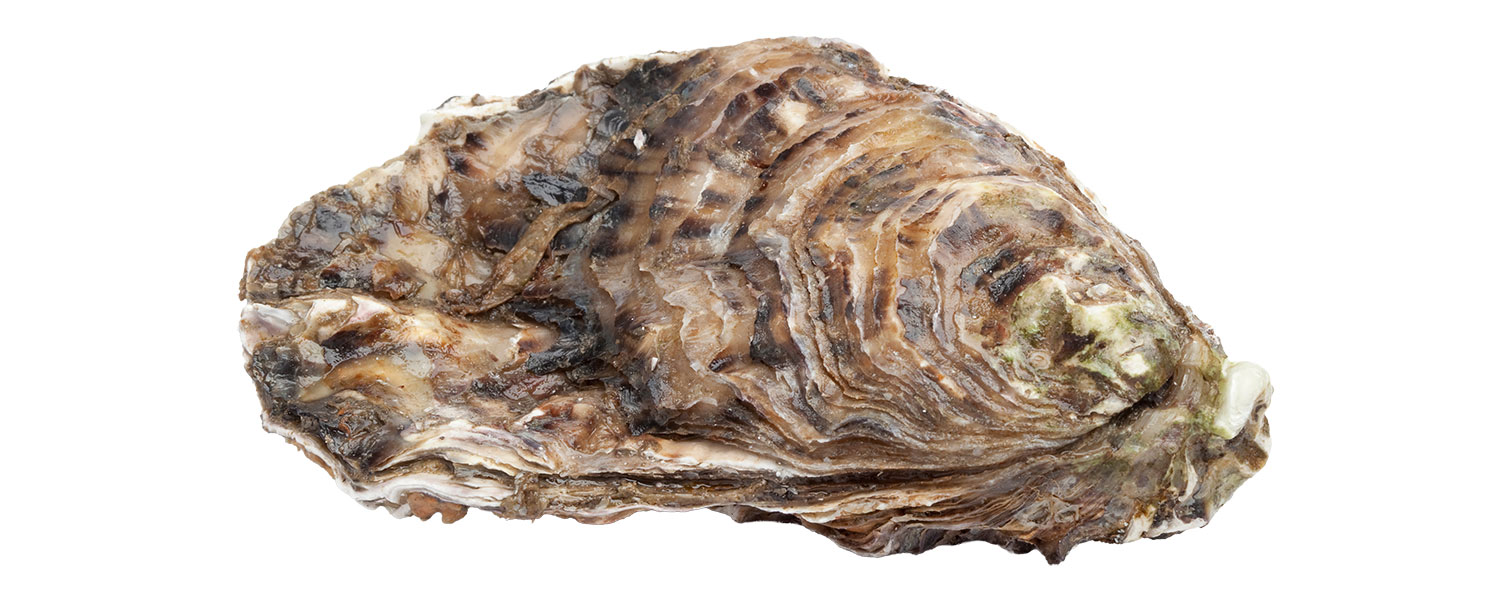
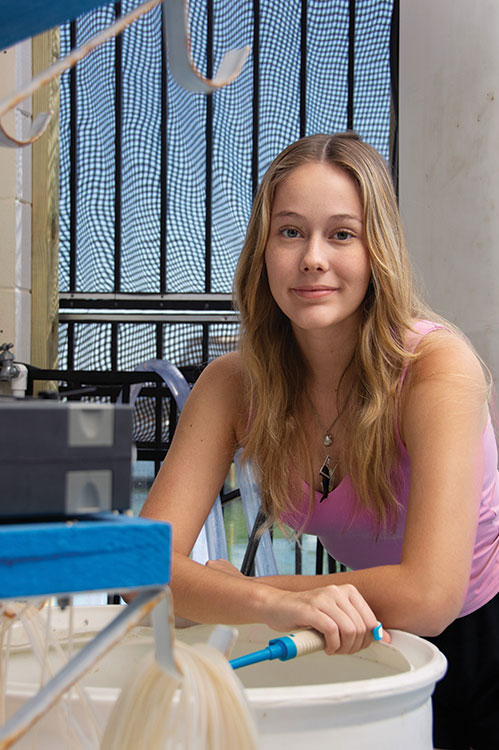
Two years ago, Lilli Moore’s dad, Michael, set up an oyster hatchery business for her: Biloxi Oyster Co. in downtown Biloxi, Mississippi.
Now, the first-year marine sciences major is fully immersed. Her words tumble over each other as she dives into such oyster arcana as the merits of Gulf water versus lab-made seawater and the spawning-tank color that indicates success: “It looks like pink lemonade.”
She keeps a quarter of the larvae for her family’s oyster farm. She sells the rest to Spat-Tech, a Mississippi company that specializes in oyster reef restoration.
Oysters can be finicky about water quality, temperature and salinity. Even the rumbling of classic cars parading nearby during an annual tourism event bothered them. Larvae are usually ready to ship out on day 11, at about 200 microns in size. (A grain of table salt is 120 microns.) Moore looks for the tiny black dot that indicates the imminent emergence of the foot that the oyster will use to attach itself to its permanent home.
Enrolling at South was never in doubt. “Uncle Jimmy is an alumnus,” she says. That’s former National Alumni Association President Jim Moore ’90. “All three of his children have gone here. My brother (Bradley Brimmer ’19) is still here, getting his Ph.D. in chemical engineering.”
Lilli, who is minoring in business, plans to get a master’s degree and then return full time to her beloved hatchery. “Oysters are where my heart is at.”
In Pursuit of the Perfect Oyster
At Isle Dauphine Oyster Co. in south Mobile County, Doug Ankersen ’81 and his team have engineered their way into cultivating boutique Gulf oysters.
“The perfect oyster,” he says, “comes down to balance: about 3 inches long, 2 inches wide and 1 inch deep, with a salinity between 20 and 28 (parts per thousand).”
Ankersen first launched a commercial oyster nursery in 2014 from the pier of his family’s Mobile Bay home; it was a part-time venture during his career as a mechanical engineer. He purchased Isle Dauphine in 2021.
The oysters, grown in floating cages where tides and saltwater sculpt their flavor, develop deep cups, plump meat and a clean, briny finish before they make their way to restaurants across the Gulf Coast.
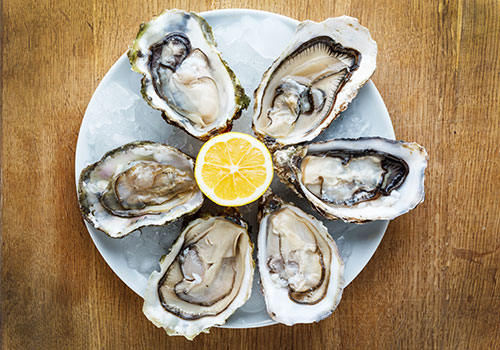
ALABAMA OYSTERS get their mild, buttery flavor from the region’s uniquely balanced mix of fresh and salt water.
Click here to view the current issue of South Magazine
-
The Art of Medicine
Dr. Jeffery S. La Rochelle, the new dean of the Frederick P. Whiddon C...
June 17, 2026 -
Base Camp
South to scale up support with new military services home....
June 17, 2026 -
Flagship Futures
One of the newest scholarship programs at the University of South Alab...
June 17, 2026 -

Estuary of Innovation
The Frederick P. Whiddon College of Medicine building, opening in spri...
June 17, 2026