South Grad Partners with Full-Time Facility Dog on Her First Job
Posted on September 3, 2026
#MyFirstJob is a series focused on recent graduates of the University of South Alabama.
Emma Bryson spends a lot of time with her new coworker. They live together, ride to work together and visit patients together. On Friday morning coffee runs, Bryson even treats her to a pup cup.
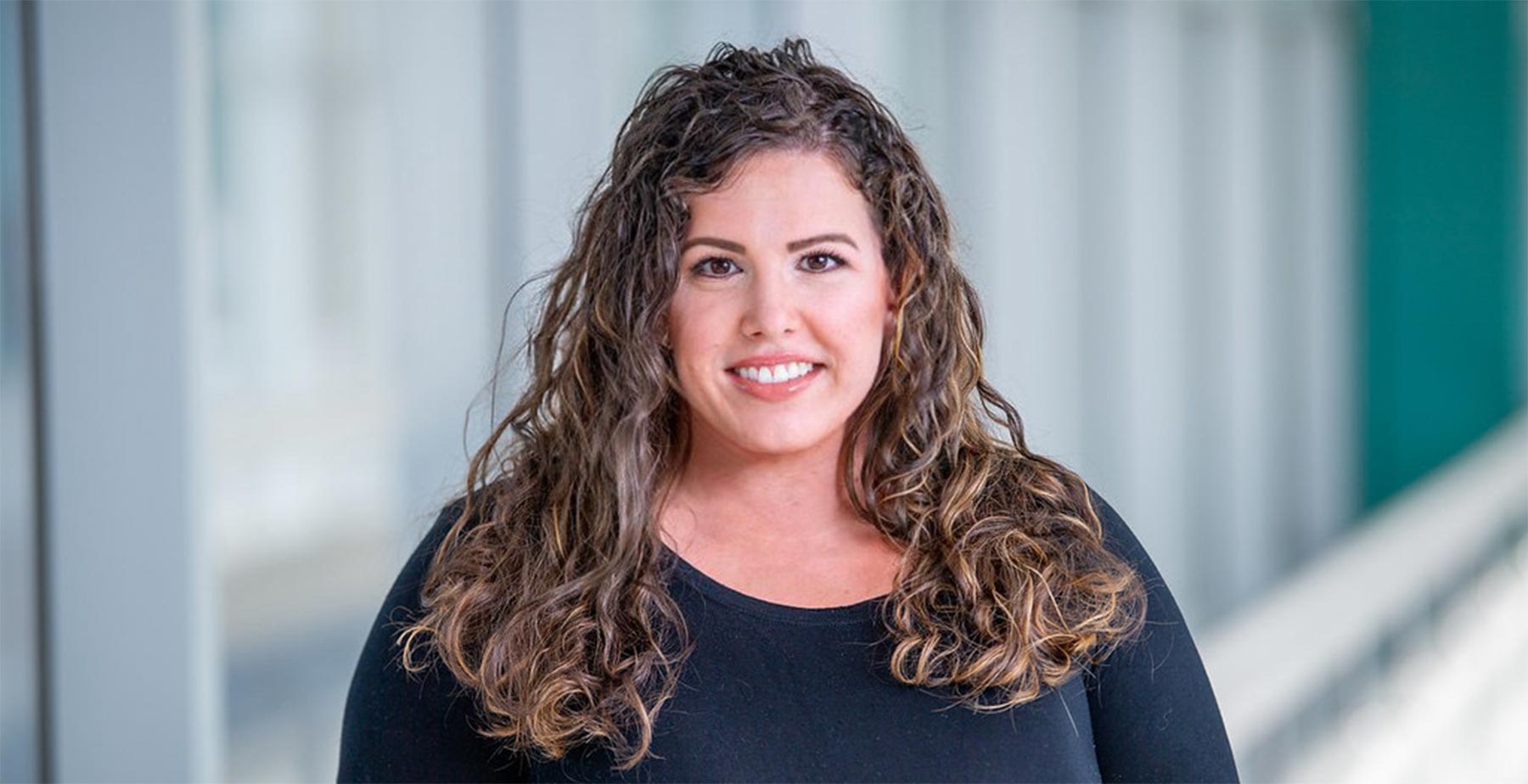
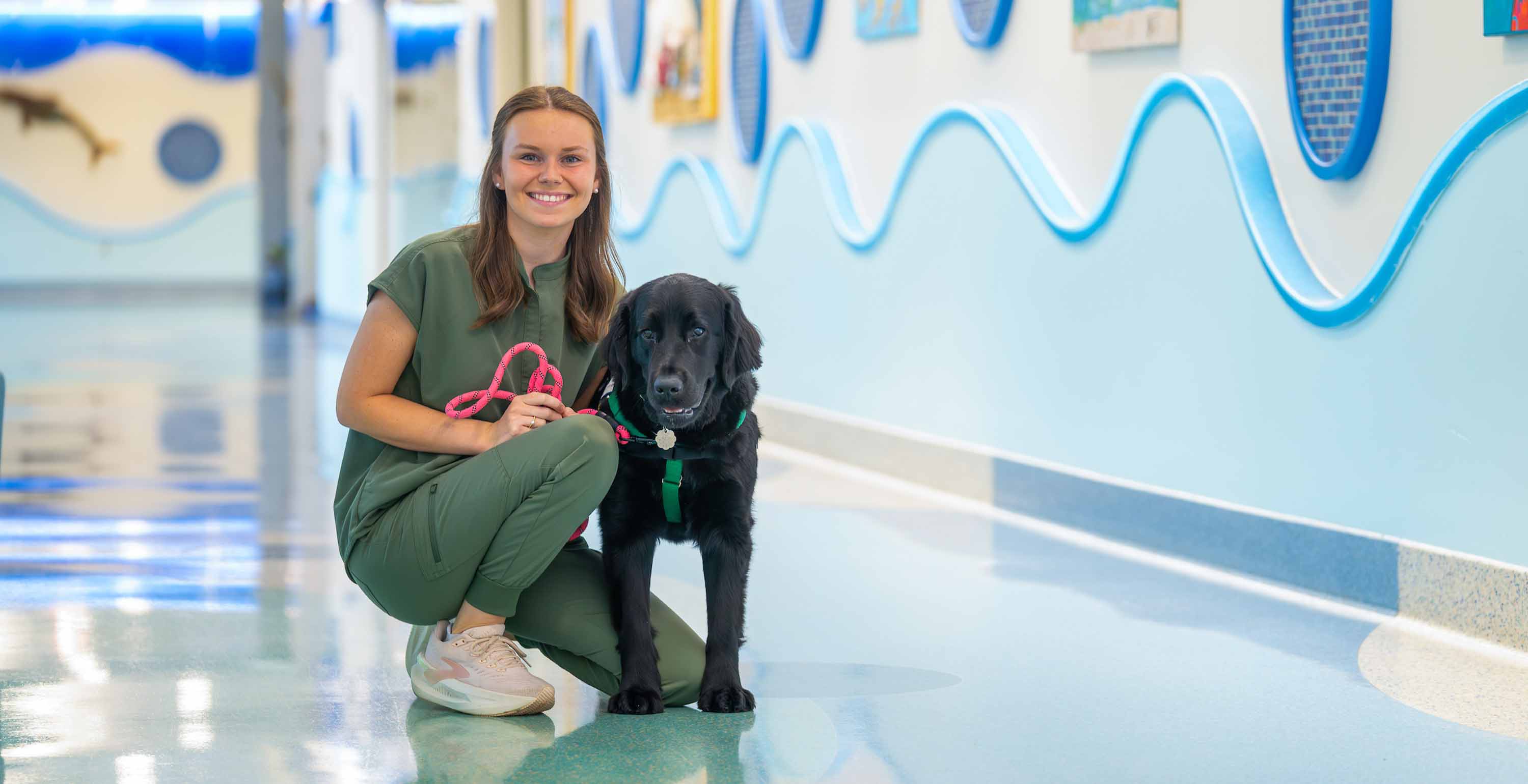
Bryson is a certified therapeutic recreation specialist at USA Health Children’s & Women’s Hospital and the primary handler for Rainier, the hospital’s first full-time facility dog.
At the hospital, when you see Bryson, you see Rainier, a very chill black Lab/retriever/poodle mix with soulful eyes and a green work vest.
But Bryson’s path to this job was decidedly human-centered. It began on the shores of Lake Martin, home of Camp ASCCA, a summer camp for children and adults with disabilities, where over three summers she worked her way from counselor-in-training to counselor and lifeguard. She also volunteered with an adaptive skiing program in Colorado, where she helped people test the limits of their disabilities by navigating ski slopes and completed an internship at Children’s Healthcare of Atlanta helping individuals with traumatic brain injuries face their next challenges.
“I knew I wanted to help people reach goals and experience life in a way they didn’t think they could,” she said
Bryson watched people conquer fears, try activities they never imagined possible and discover abilities they didn’t know they had.
“The whole reason for recreational therapy is helping people accomplish goals they didn’t think they could,” Bryson said. “I wanted to have experience with as many people as possible. Whether it was disabilities or illnesses, I wanted to understand how to help people go beyond what they think they are capable of.”
She volunteered and interned at Children’s & Women’s before accepting a full-time position after she graduated from the University of South Alabama in May 2026 with a degree in recreational therapy.
At work, she is surrounded by family: Her mother, Lea Bryson, is a respiratory therapist who has worked at Children’s & Women’s for 32 years; her sister Courtney Vick is a NICU nurse there; and another sister, Catherine Woodruff, is a physical therapist at the same hospital. All four of the women are South grads, and another sister, Elizabeth Bryson, earned an accounting degree at South.
Bryson is a third-generation South Alabama graduate: her grandmother, Margaret Bryson, graduated from the University with a master’s degree in counseling.
Unlike volunteer therapy dogs, Rainier — who’s also known by staff as Rain or Rainy — is integrated into patient care every day. Having completed more than a year of specialized training through Canine Assistants in Georgia, Rainier helps children cope with anxiety before procedures, encourages patients during rehabilitation and comforts families during difficult conversations.
Rainier and Bryson often walk beside young patients learning to move again after surgery; Rainier often leads them toward the frozen pop room.
Bryson has adapted to the way her partner works. It’s not centered on common commands like “sit” or “stay.” Instead, Rainier was trained to bond with handlers and read the emotions of patients. If a child wants to play, Rainier becomes playful. If a family receives difficult news, she quietly climbs onto a bed or rests beside a patient. At the training facility, she was selected for her exceptional ability to bond with pediatric patients and other patients who need a steady, comforting presence.
For Bryson, Rainier is a colleague, partner — and roommate and family dog. At the end of the workday, Rainier’s green vest comes off and, along with it, so does much of her professional composure.
“She knows when she’s at work and when she’s not,” Bryson said. “When we get home, she gets to be a little wild girl.”
One interaction this summer reinforced exactly why Bryson chose recreational therapy and the unique benefits of landing this position.
She invited a young patient who was anxious around medical staff to become Rainier’s “doctor.” Together, they listened to the dog’s heartbeat with a toy stethoscope, checked her reflexes, pretended to administer medicine and rewarded Rainier with treats. The patient gradually relaxed and laughed as, for once, she took charge of caring for the patient instead of being one herself.
When medical staff entered to perform many of those same examinations on the child, she was much calmer.
“Sometimes, all you need is someone who isn’t talking,” Bryson said.
For Bryson, those moments reflect the heart of recreational therapy. She centers work on possibility rather than limitation.
“It’s not about what someone can’t do,” she said. “It’s about asking, ‘How can we adapt this so you can reach your goals?’ The reward comes from witnessing those breakthroughs firsthand. You get to see that moment when someone realizes, ‘I can do this.’ Being part of that never gets old.”