South Students Help Shelter the Homeless
Posted on October 22, 2026
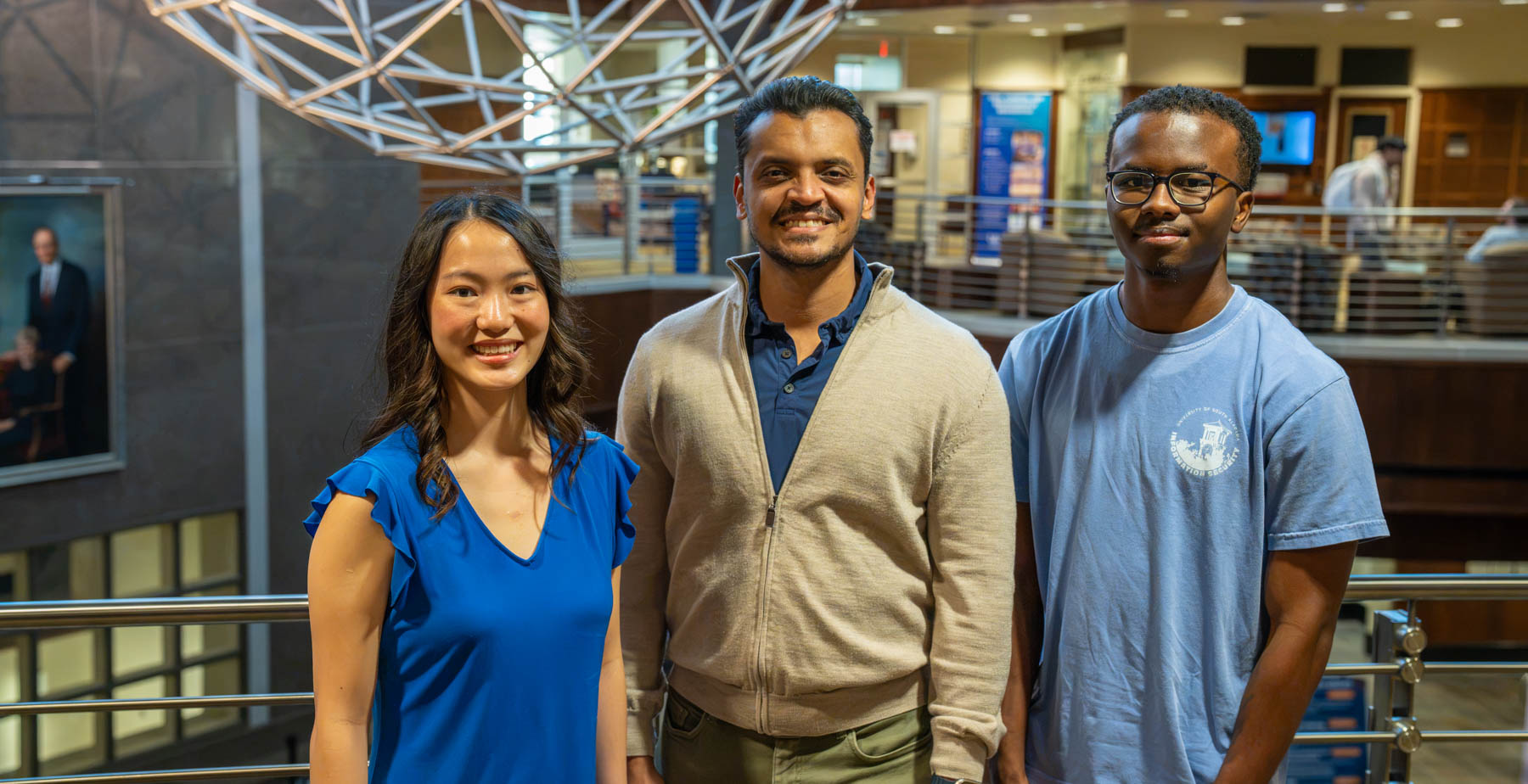
University of South Alabama School of Computing students working on their senior capstone project teamed up with an alumnus to help create a better way to match unhouse residents with available shelters across Mobile.
The project was spearheaded by two-time South alumnus Jay Maru ’14, ’21, founder of technology firm Beyond AI, in partnership with First Steps, a Mobile-based homeless outreach ministry. The result is a web application that allows outreach workers in the field to instantly search, vet and secure open housing opportunities directly from their mobile devices.
That connection is what Kevin Lazarus was looking for. As the director of First Steps, he works to find reliable housing for those in need.
Lazarus says there are individuals who receive fixed incomes such as Social Security, Veteran’s Administration benefits or a pension, but don’t know where to find permanent housing.
The problem was efficiently connecting the two.
“I watched a caseworker trying to find housing for someone one day,” Lazarus said. “He had a notebook filled with names and phone numbers for boarding houses, and for nearly an hour he just went down the list making calls. I started thinking, what if we could put all of that in one place and could find available housing without spending an hour making phone calls?”
In December 2025, Lazarus was introduced to Maru and hoped that he could develop a database for homeless agencies.
“He just started mapping everything out, asking a lot of questions — how the agencies worked, where the breakdowns were, what the caseworkers needed and how we could make those connections easier,” Lazarus said.
Maru, who earned his bachelor’s degree in information systems and MBA from South, immediately committed to working pro bono on the project.
“The more we talked, the clearer it became that the problem was bigger than a database, and that we could build a real platform to solve it,” Maru said.
Lazarus came away from that initial meeting believing that the project wasn’t just business for Maru, it was also personal.
“I didn't just feel like Jay had a viable solution,” he said. “I felt like we had found someone who genuinely cared about the problem and wanted to help us solve it.”
A few weeks later, Maru received an inquiry from South’s School of Computing searching for potential senior capstone projects. The timing was perfect.
“I had a real client, a real problem and a real deadline. The students would get to build something permanent instead of just completing a class exercise. At the same time, the community would get a working solution to a problem that has been sitting there for years,” he said.
One of those students was Kaleb Patrick, who jumped at the opportunity.
“We were given a selection of maybe 10 or so projects, and I specifically chose this one because I felt like it had real purpose behind it,” Patrick said
The experience was eye-opening. Patrick admitted he didn’t fully understand the barriers someone experiencing homelessness faces when trying to find shelter and other resources.
“It's easy to think finding a place to stay is as simple as looking up a shelter, but there are so many other factors involved,” he said. “Knowing where to go, understanding eligibility requirements, transportation and availability. It made me realize that sometimes the problem isn't that resources don't exist, but it can be difficult finding them.”
The team went to work developing a website that would allow caseworkers in the field to immediately connect individuals with suitable housing opportunities from their phones.
AI dramatically reduced the time necessary to complete the website.
“AI made the technology easy. The hard part was judgement,” Maru said. “Deciding what not to build while remembering that this is a tool used on behalf of vulnerable people and not a tech demo.”
Since the website launched in early September, more agencies have partnered with First Steps, more housing is being vetted and becoming available and, most importantly, people who were once unhoused now have a place to call home.
“A website isn’t going to solve homelessness,” Lazarus said. “But a housing opportunity shouldn't go unused simply because the person who needs it and the person who has it don't know each other. If we can make that connection, it can be the moment their life begins moving in a completely different direction.”