Exploring Alaska With Marine Sciences Undergraduates
Posted on August 25, 2026
This past July, students from the Stokes School of Marine and Environmental Sciences traded the traditional classroom for the mountains, glaciers, forests and coastal waters of Alaska during a 12-day study-away experience with Dr. Amy Sprinkle, assistant professor of marine sciences. Traveling through Anchorage, Seward and Homer, students brought their spring course, Coastal Ecology of Alaska, to life through immersive field experiences across some of the Kenai Peninsula's most spectacular landscapes.
From Anchorage to Seward, students explored Alaska’s diverse ecosystems through wildlife observation, hiking, cultural experiences and hands-on field learning. At the Alaska Zoo, students observed native and Arctic wildlife up close, while a visit to Potter Marsh provided opportunities for bird watching and exploring an important coastal wetland. At Beluga Point, students learned about the dynamic tidal systems of Turnagain Arm while watching for whales along the coast. Students also visited the Alaska Native Heritage Center, where they learned about Alaska Native cultures and traditions and participated in traditional dance, adding an important cultural dimension to their experience of the region.
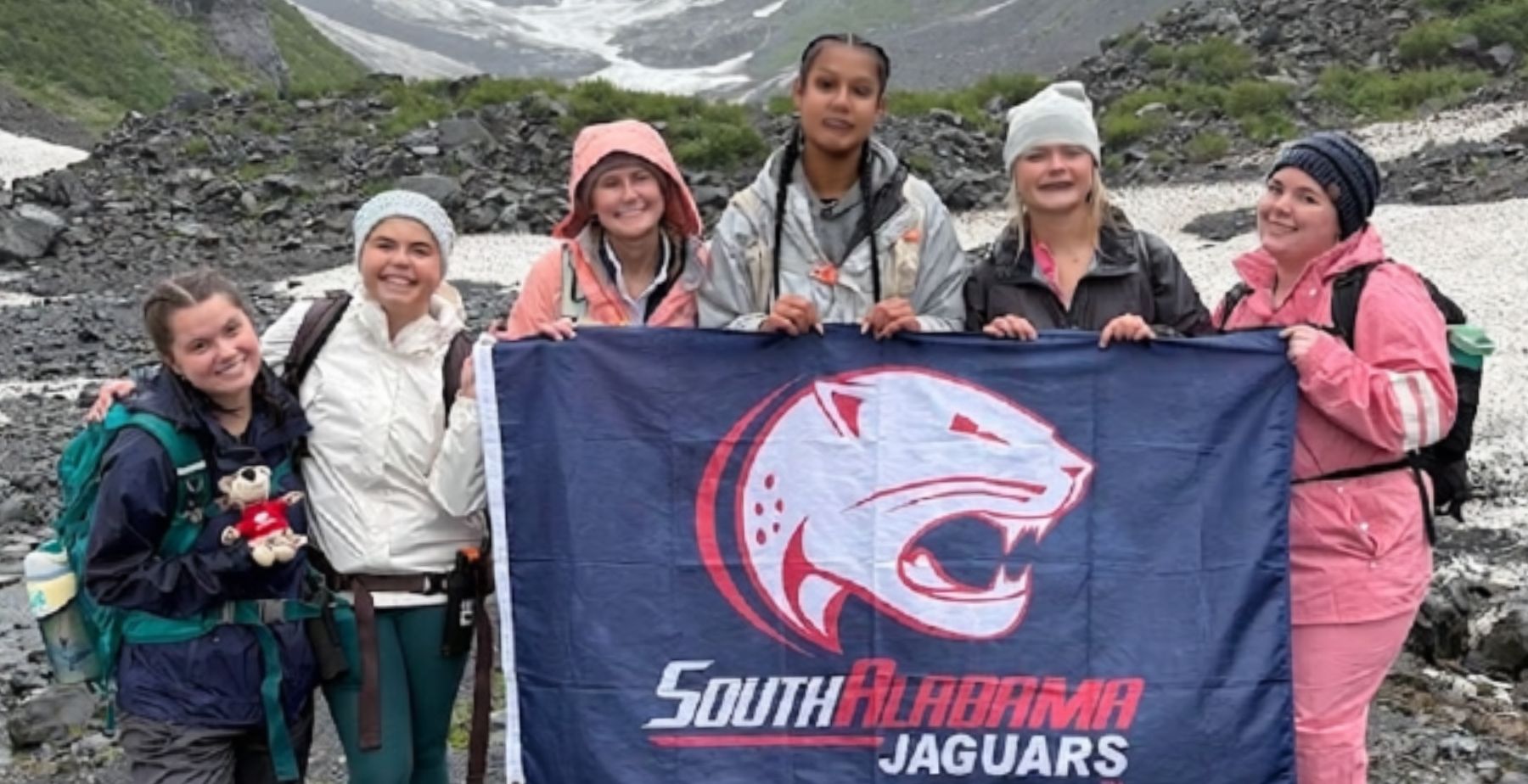
The group ventured into the field on hikes to Marmot Meadows in Kenai Fjords National Park and Tonsina Point in Caines Head Recreation Area, experiencing firsthand the forests, mountains, coastal habitats and glacial landscapes they had studied in the classroom. Visits to Exit Glacier and Byron Glacier provided additional opportunities to explore the powerful role glaciers play in shaping Alaska’s coastal environment.
The marine environment provided some of the trip’s most remarkable experiences. During a Major Marine boat tour through Kenai Fjords, students witnessed humpback whales bubble-net feeding, a spectacular cooperative behavior in which whales work together to concentrate and capture schools of fish. The excursion also brought students alongside sea otters, seals, sea lions, puffins and other marine wildlife, while offering breathtaking views of Holgate Glacier from the water.
In Homer, the students explored Alaska’s remarkably diverse intertidal ecosystems through tide pooling with the Center for Alaskan Coastal Studies at the Peterson Bay Field Station. Getting hands-on with organisms living between the tides allowed students to connect ecological concepts from the classroom with a living, dynamic coastal environment.
Throughout the journey, students encountered an extraordinary diversity of Alaska’s wildlife – from marine mammals and seabirds to salmon and moose – while exploring the plants, habitats, and ecological relationships that connect Alaska’s terrestrial and coastal systems. Just as importantly, they gained a deeper appreciation for the people, cultures, and communities connected to these landscapes.
Adventure Alaska demonstrated the power of field-based learning to transform a course from something students study into something they experience. From watching humpback whales bubble-net feed and observing birds in coastal wetlands to exploring tide pools, hiking beneath glaciers, learning about Alaska Native cultures and encountering wildlife in its natural habitat, students experienced the science, culture, beauty and complexity of Alaska firsthand.
Adventure Alaska is more than a study-away experience – it is an opportunity to explore, discover, and experience marine and coastal science where it happens. For students interested in coastal ecology, marine science, wildlife and field-based learning, the next adventure could be theirs.
Pictured, left to right at Byron Glacier: Emma Pasquale, Macie Murtaugh, Olivia McGurie, Kaia Jones, Lily Morgan and Kali Johnston.