South To Lead $5 Million Study of Two Gulf Fish Species
Posted on February 9, 2026
The University of South Alabama’s Stokes School of Marine and Environmental Sciences will lead a $5 million research project on two finfish species in the Gulf of America that are becoming increasingly popular to fish.
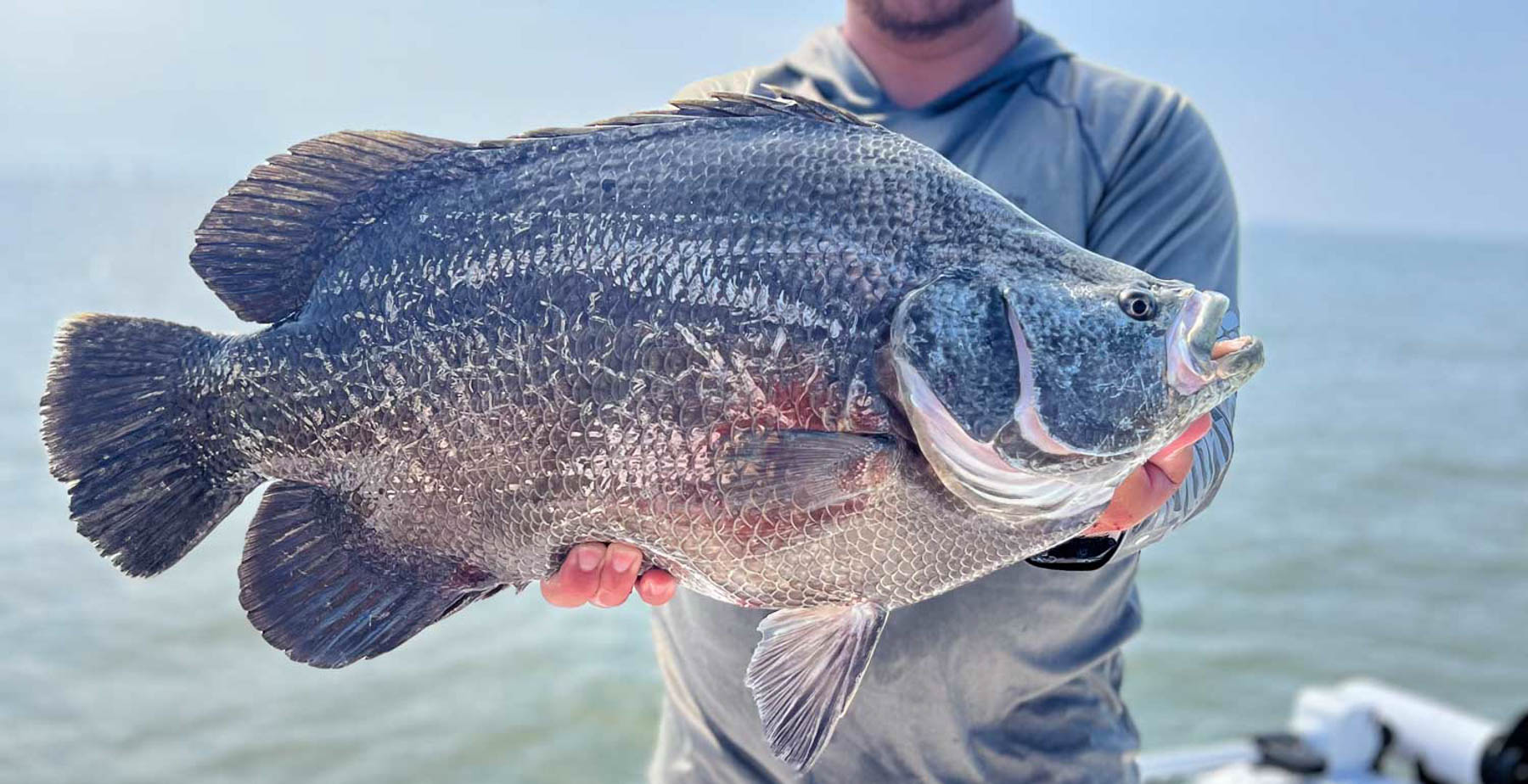
Dr. Sean Powers, director of the Stokes School of Marine and Environmental Sciences, will head up a multistate consortium including eight other universities that will help manage the populations of cobia and Atlantic tripletail, also known as blackfish. As recreational anglers increasingly target these species, it is critical to understand how fish stocks will respond to increased fishing pressure.
The Gulf States Marine Fisheries Commission worked with the U.S. Senate Appropriations Committee staff and U.S. Sen. Katie Britt, R-Alabama, to secure funding for the project.
“Even though both species are increasingly popular in the Gulf, the interjurisdictional nature of the fish makes it difficult to find large-scale funding to address critical questions,” Powers said. “That’s why we are so grateful that Sen. Britt has led the charge to identify funds that can be used to address Gulfwide problems affecting these locally managed species.”
The two species require further study to be managed effectively because they fall between state and federal jurisdictions. Cobia is managed by the federal government, but most of the fishery occurs within three miles of the coast, which is state-controlled waters. Tripletail spend most of their time offshore in sargassum — large floating masses of algae — in federal waters, except during the summer, when some enter coastal bays. That population is managed by individual states.
“The health of our fisheries and the marine environment are vitally important to the Gulf Coast region,” Britt said. “I am proud to have led efforts to fund this independent research, and I am excited that the University of South Alabama will spearhead this multistate consortium.”
South has a legacy of innovative approaches to the study of marine fisheries. The University has conducted cutting-edge research counting red snapper and greater amberjack in the Gulf and South Atlantic that has changed the way scientists estimate fish populations. This project will employ some of the latest fish-tracking technology to study large- and small-scale movements of the species, along with a large-scale tagging program to help estimate exploitation rates.
Alabama Department of Conservation and Natural Resources Commissioner Chris Blankenship, the state’s representative on the Gulf States Marine Fisheries Commission, said South is well suited to lead the project.
“I am glad to see the University of South Alabama, and particularly Sean Powers, leading this important work,” Blankenship said. “It builds on the groundbreaking research he and his lab have done on red snapper and amberjack and reflects the quality of his work and South’s leadership in fisheries research and education in the Gulf.”