
Faculty Spotlight | Leigh Delaney-Tucker
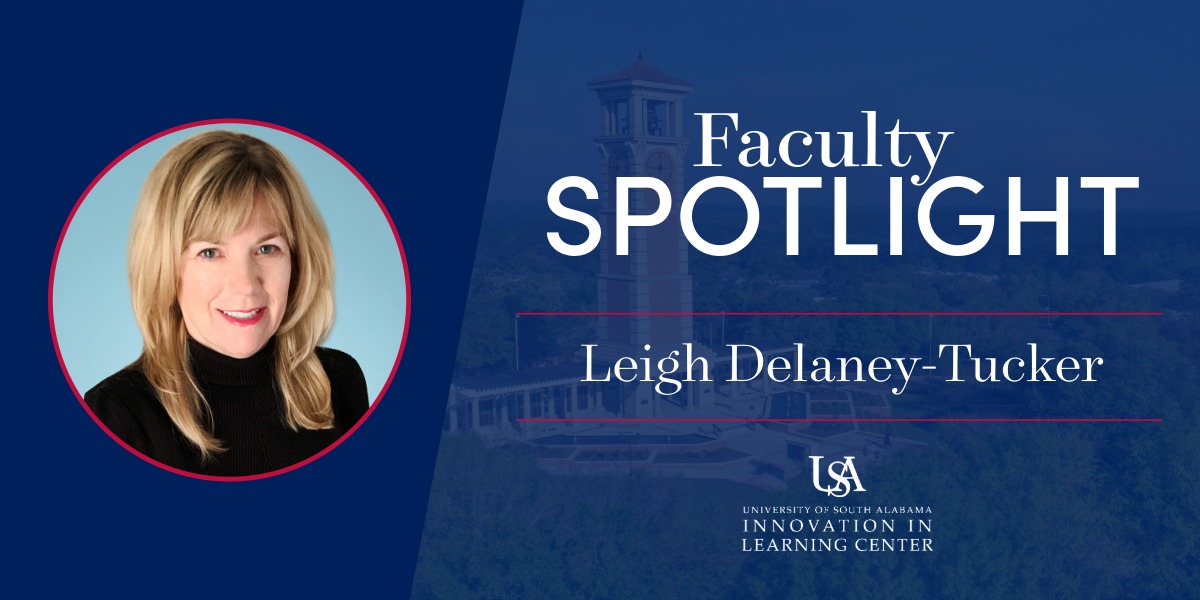
Interactive Lab Design with the "Enthusiastic Science Geek"
For Ms. Leigh Delaney-Tucker, Senior Instructor in the Department of Biology, the most motivating moments in teaching are when students truly connect the dots, when they link science to their everyday lives, and the course becomes more meaningful than simply checking a box for graduation.
“I love hearing that something we discussed helped a student make a more informed decision about their health, the environment, or their community,” says Ms. Delaney-Tucker. “I am especially encouraged when students tell me they have started pausing and asking questions about scientific information they encounter on social media. That is when I know learning has extended beyond the classroom.”
Seeing students recognize their own potential, overcome barriers, and work through challenges continues to push Ms. Delaney-Tucker to rethink how learning happens and how she can better support that process.
Shaped by her participation in the Faculty Learning Community, What’s the Next Step? Lab Instructor Best Practices, Ms. Delaney-Tucker redesigned the Life Science I Laboratory to make the learning experience more engaging and meaningful. Moving away from labs that follow step-by-step instructions to reach a predetermined answer, she developed a more practical approach where students collaborate, evaluate evidence, make decisions, and articulate their reasoning.
Throughout the semester, students engage in role-playing activities and team-based problem solving, using concept maps and data visualizations on whiteboards. With the help of structured pre-lab preparation assignments and post-lab reflections, students connect lab activities back to lecture material and the broader scientific method. For instance, students use the Seek app to analyze biodiversity in the environments immediately around them, turning familiar daily spaces into active sites for scientific observation and inquiry. Later in the semester, students investigate global water scarcity and consider how science can contribute to potential solutions. Students revisit osmosis, a concept they encountered earlier in the course, and apply it to understanding its role in addressing freshwater challenges.
Throughout this approach, “students are not just learning scientific content. They are practicing how science works: asking questions, interpreting evidence, collaborating, communicating ideas, making connections, and sometimes revising their thinking,” shares Ms. Delaney-Tucker.
Student feedback and numerous thank you notes have strongly reinforced this interactive lab redesign. One student commented that the lab “encouraged us to think deeper about course material and communicate with classmates about different topics,” while another shared that the connection between lecture and lab “helped reinforce learning.” Students have also specifically praised the collaborative nature of the hands-on environment, mentioning, “I liked that everyone worked together.” Her colleague also shared, “Leigh believes in a proactive, evidence-based approach to curriculum design, refreshing and updating her courses each year to reflect the rapid pace of educational research, biological discovery, and technological advances.”
Ultimately, Ms. Delaney-Tucker’s goal is helping students to understand that true learning is an ongoing process, not a race to a finish line. “Learning takes practice,” Delaney-Tucker emphasizes. “It involves asking questions, making mistakes, revising your thinking, explaining your ideas to someone else, and sometimes trying again.” She wants students to recognize that collaboration, critical thinking, interpreting evidence, and communicating information are not just skills for a biology course, but essential tools they will carry into other courses, their careers, and their everyday lives.
Funfacts!
Known to students as “LDT,” Ms. Delaney-Tucker shares, “'Enthusiastic science geek' is probably also a pretty accurate description. I genuinely get excited when students start asking why, especially when they realize that one good question usually leads to several more." She also believes a little music is a great way to start a meeting. Students might hear anything from Gracie Abrams and Olivia Dean to Ella Langley or Chris Stapleton playing as they walk into class.
Faculty Spotlight is brought to you by a partnership between the Innovation in Learning Center and faculty representatives. Please follow this link to nominate an exceptional faculty member.