
Center for Performance Assessment and Wellness at South (CenPAWS)

Science-Driven Testing to Enhance Your Health & Performance
Welcome to the premier physiological testing hub at the University of South Alabama. Powered by ENRG, our state-of-the-art facility provides athletes, fitness enthusiasts, and health-conscious individuals with the precise data needed to elevate their wellness and training strategies.
Key benefits of our testing and assessments:Optimize Training:
- Discover your exact metabolic thresholds and aerobic capacity.
- Track Body Composition: Gain precise insights into body fat, lean muscle mass, and bone density.
- Science-Backed Results: Leverage the same elite-level, university-validated technology used by professional athletes.
Fitness Assessments
Assessments to be Performed:
- DEXA Scan (Dual-Energy X-ray Absorptiometry)
- BOD POD Test (Air Displacement)
- Resting Metabolic Rate (RMR) Test
- VO₂ Max Test – Maximal Aerobic Capacity
- Wingate Anaerobic Power Test
- Isokinetic Strength and Power Tests (using HUMAC Norm)
Description of Assessments: Below are descriptions of each assessment, including their purpose, procedures, and important considerations or risks. Please read these carefully.
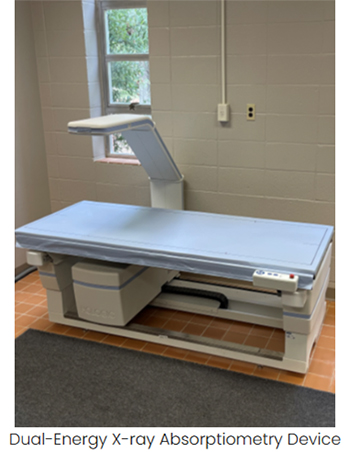
DEXA Scan (Dual-Energy X-ray Absorptiometry): The DEXA scan is a low-dose X-ray test that measures your body composition – including body fat, lean muscle mass, and bone density. You will lie flat on a table while a scanning arm passes over your body; the scan typically takes about 5 to 10 minutes and is painless. Possible Risks: DEXA involves a very small exposure to radiation (much lower than a standard chest X-ray, comparable to everyday background radiation). It is considered very safe for most people but is not recommended if you are pregnant.
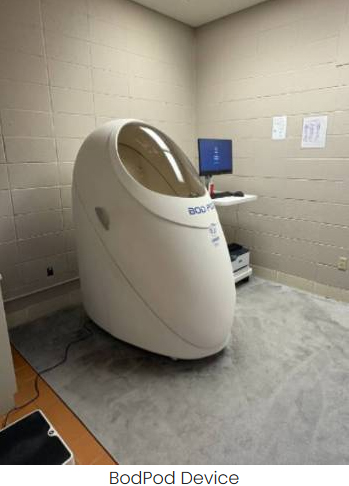
BOD POD Body Composition Test: The BOD POD uses air displacement technology to measure your body fat and lean mass. Purpose: Like the DEXA, it determines your body composition, which can help evaluate health risks and track fitness progress.
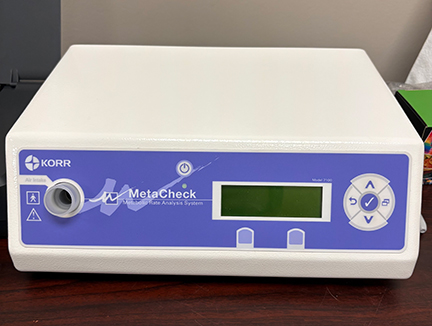
Resting Metabolic Rate (RMR) Test: The RMR test measures how many calories your body burns at rest, which helps determine your daily energy expenditure. Procedure: You will lie down in a relaxed position, breathing into a mouthpiece or under a clear hood that covers your head. The test typically lasts about 10–20 minutes. It is important that you remain as still and relaxed as possible (but stay awake) so that an accurate measurement can be taken. A technician will be present to supervise and ensure your comfort.
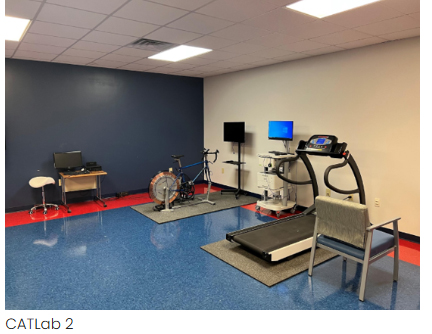
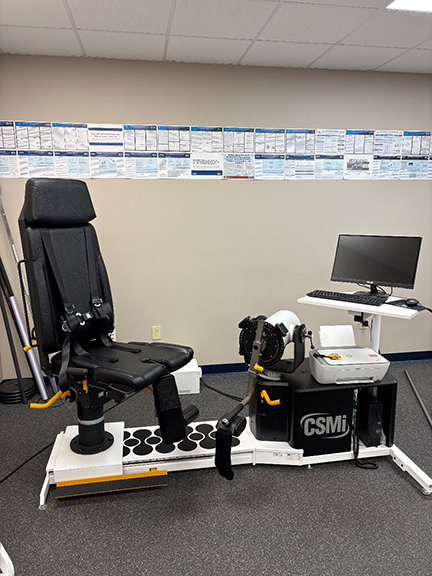
Strength and Power Tests: This category includes a set of tests designed to assess your muscular strength and explosive power. Purpose: To evaluate how strong your muscles are and how quickly you can generate force at a fixed speed. These results can help in identifying muscle imbalances and side-to-side comparisons for an injured limb against a healthy limb. This can be used to determine if an athlete is safely ready to return to sport following ACL surgery.
Pricing of Assessments
| Test | Short Description | Public Rate | USA Student/Employee/Alumni Rate |
|---|---|---|---|
| Resting Metabolic Rate | RMR | $125.00 | $100.00 |
| VO2max | Bike or Treadmill | $135.00 | $110.00 |
| DEXA Scan | Body Composition | $125.00 | $100.00 |
| BodPOD Scan | Body Composition | $65.00 | $50.00 |
| Fit 3D Scan | Body Composition | $50.00 | $45.00 |
| Isokinetic Testing | HUMACNorm | $100/hr | $90/hr |
Contact Information
Angela Berry, M.S.
Laboratory Coordinator
Department of Health, Kinesiology, and Sport
P: (251) 460-7396
E: angela.berry@southalabama.edu