
Graduate students share cancer immunotherapy research at regional symposium
Posted on July 14, 2026 by Lindsay Hughes
Two doctoral students from the Whiddon College of Medicine showcased their research at the 2026 Southeastern Immunology Symposium (SIS), held in Asheville, North Carolina.
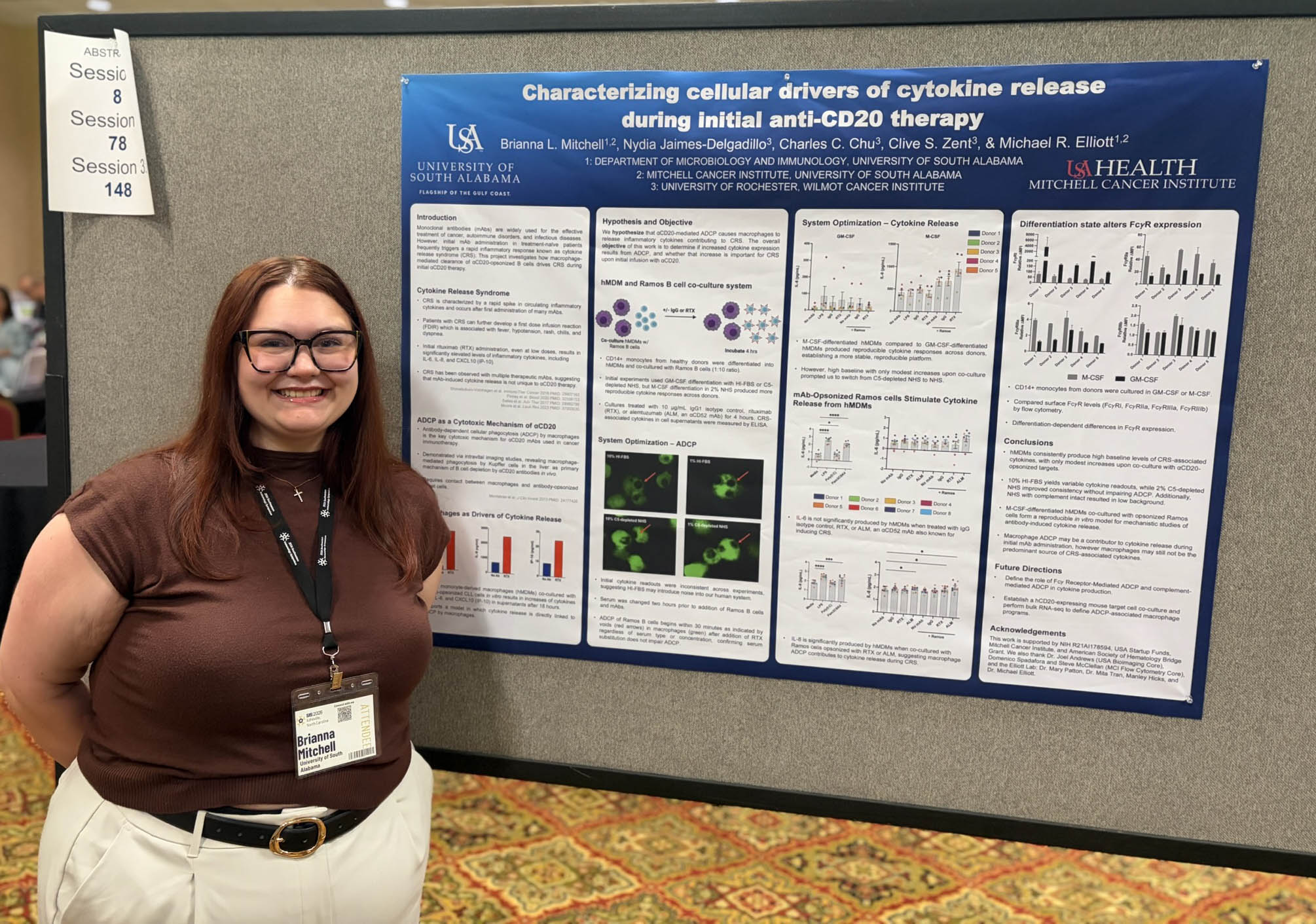 Brianna Mitchell and Manley Hicks, students in the Basic Medical Sciences Graduate
Program's Infectious Disease and Host Defense (IDHD) Track, presented research focused
on improving the effectiveness and safety of monoclonal antibody therapies for cancer
patients. Both conduct their research in the laboratory of Michael R. Elliott, Ph.D.,
associate professor of microbiology and immunology, at the USA Health Mitchell Cancer
Institute.
Brianna Mitchell and Manley Hicks, students in the Basic Medical Sciences Graduate
Program's Infectious Disease and Host Defense (IDHD) Track, presented research focused
on improving the effectiveness and safety of monoclonal antibody therapies for cancer
patients. Both conduct their research in the laboratory of Michael R. Elliott, Ph.D.,
associate professor of microbiology and immunology, at the USA Health Mitchell Cancer
Institute.
Mitchell presented a poster titled “Characterizing cellular drivers of cytokine release during initial anti-CD20 therapy.” Her research examines how immune cells known as macrophages may contribute to cytokine release syndrome (CRS), a potentially serious inflammatory response that can occur when patients receive their first monoclonal antibody treatment.
“Monoclonal antibody therapies have revolutionized cancer treatment, but initial administration in treatment-naive patients can trigger a rapid spike in circulating cytokines, termed cytokine release syndrome,” Mitchell said. “By better understanding how this response occurs, we hope to guide strategies that make initial monoclonal antibody infusions safer and more widely accessible.”
Mitchell, who received the 2026 Samuel J. Strada Travel and Enhancement Award to support her travel to SIS, said presenting her work provided valuable opportunities to receive feedback from fellow trainees and established researchers.
“Sharing my work and talking with other students, faculty and postdocs in the field helped me see gaps in my current research and gave me new ideas for strengthening my project,” she said. “The feedback I received is directly shaping the next steps in my research.”
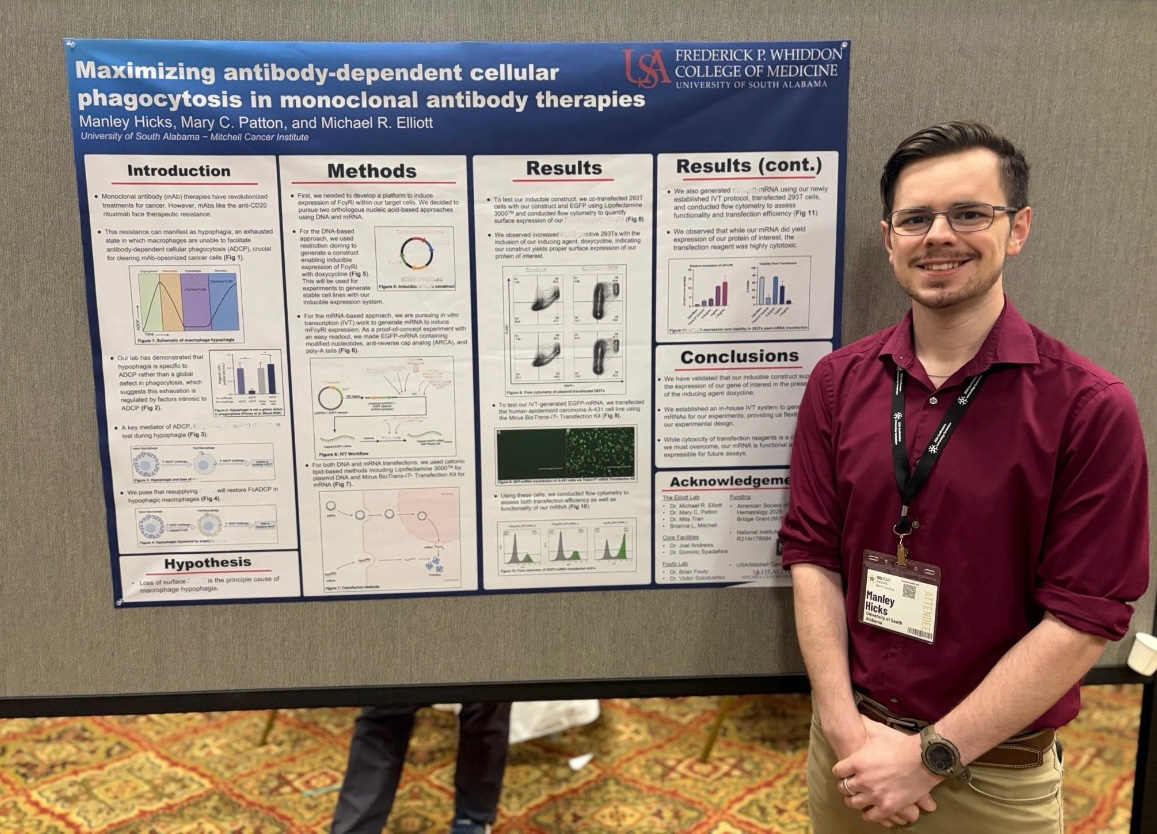 Hicks presented a poster titled “Maximizing antibody-dependent cellular phagocytosis
in monoclonal antibody therapies.” His research investigates macrophage hypophagia,
a state in which immune cells become exhausted and lose their ability to eliminate
cancer cells, contributing to resistance to monoclonal antibody therapies.
Hicks presented a poster titled “Maximizing antibody-dependent cellular phagocytosis
in monoclonal antibody therapies.” His research investigates macrophage hypophagia,
a state in which immune cells become exhausted and lose their ability to eliminate
cancer cells, contributing to resistance to monoclonal antibody therapies.
Using nucleic acid-based approaches, Hicks is studying the mechanisms that drive hypophagia with the goal of developing strategies to minimize treatment resistance and improve the effectiveness of monoclonal antibody therapies.
“SIS 2026 was an excellent opportunity for me to broaden my immunological perspective and get a better grasp of the work presently being done in the field,” he said. “Keeping current with the scientific literature is certainly helpful, but interacting with immunologists actively doing that work is an entirely different experience. Presenting my work also provided encouragement and insight that will help propel my research forward.”
According to Elliott, participation in scientific meetings such as SIS plays an important role in preparing graduate students for careers in research.
“Participation in the Southeastern Immunology Symposium enabled the students to present their research, receive expert feedback, and build professional networks,” he said. “Attending this meeting strengthens their development as future independent scientists.”