
Laboratory of Infectious Disease (LID)
About the LID
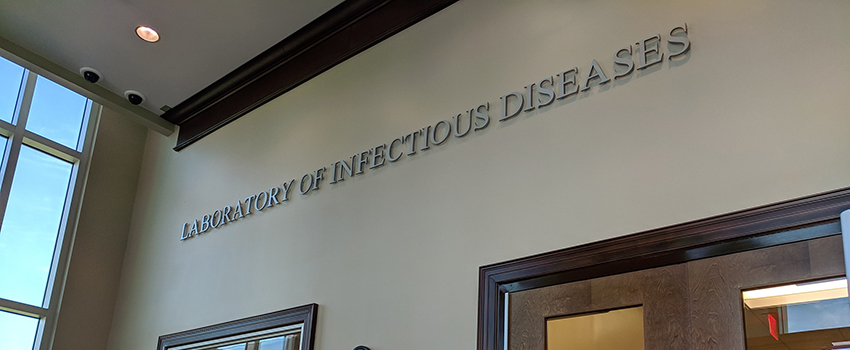
The Laboratory of Infectious Diseases (LID) at the University of South Alabama, located on campus at 610 Clinic Drive, was funded by a National Institutes of Health Construction grant and became functionally active in February 2015. The LID is designed to provide state-of-the-art research facilities dedicated to the study of microbial pathogens of importance in public health and biodefense.
The facility includes biosafety level (BSL) 2 and 3 research laboratories, an animal BSL-3 suite, and an arthropod containment level (ACL) 3 unit for work with risk group (RG) 3 pathogens. The facility's design and associated laboratory practices include enhanced biosafety and biosecurity features to support work with Tier 1 Select Agents should it be necessary.
Current research efforts at the LID are aimed at understanding the molecular pathogenesis of emerging and re-emerging infectious diseases and the development of animal models and assays to support early stage drug discovery and development. Immunological assays developed in support of these preclinical studies are being further developed and validated to support human clinical trials of new candidate vaccines.
In collaboration with the Biology Department in the College of Arts and Sciences, researchers at the LID are also supporting mosquito and tick-borne infectious disease surveillance efforts in the state of Alabama to better inform public health departments and clinicians on the risk of human exposure to arthropod-borne infectious diseases. Pools of mosquitoes and ticks from these programs serve as a valuable resource for environmental isolates of important human and animal pathogens and also for future research efforts focused on the development and validation of molecular methods and whole genome approaches to improve emerging infectious disease surveillance efforts.
BSL-2
In support of research activities, the BSL-2 laboratories include five rooms of approximately 1,000 square feet each, along with two tissue culture rooms and multiple shared rooms for microscopy and molecular biology support. Major equipment includes:
- Air Clean PCR Work Station
- Beckman Coulter Avanti J15R refrigerated benchtop centrifuge
- Beckman Coulter 22R refrigerated microcentrifuge
- BioRad ChemiDoc gel documentation system
- BioTek Synergy 2 plate reader
- Class II, Type A2 Biological Safety Cabinets (BSCs)
- CO2 incubators (air & water jacketed)
- CTL Immunospot Analyzer
- Eclipse Ts2 inverted tissue culture scope
- Elga deionized water system
- Eppendorf BioPhotometer Plus
- Eppendorf centrifuge (5417R, 5424, and 5425)
- Eppendorf vacufuge
- Eppendorf 96 well MasterCycler gradient thermocyclers
- Freezers (-20oC, -80oC)
- Illumina iSeq 100 Sequencing System
- Laxco LMI6000 LED fluorescent inverted microscope with SeBaView Software
- Mystaire PCR Work Station
- NanoDrop 1000 spectrophotometer
- New Brunswich gyratory incubators (Excella E24 table top and C25 floor)
- Nikon Eclipse 90i microscope with NIS elements software
- Qiagen TissueLyser II
- QuantStudio 5 and StepOne real-time PCR systems
- Refrigerators (4oC)
BSL-3
The BSL-3 Laboratory Space includes six labs of approximately 300 sq. ft. that can be dedicated to individual researchers working with different pathogens and a seventh laboratory of 600 sq. ft. containing a 180 sq. ft. BioBubble for arthropod containment. Major equipment for the BSL-3 laboratories includes:
- Beckman Coulter Avanti JE refrigerated high speed centrifuge
- BTX electroporation system
- Class II, Type A2 Biological Safety Cabinets
- Class II, Type B1 Biological Safety Cabinet
- CO2 incubators (water jacketed)
- Dissecting microscope with LCD Screen OptiCam attachment
- Drummond Scientific Nanoject II auto microinjector
- Elements software and Z-axis capability
- Eppendorf microfuges with safety rotors/cups (5804, 5702, and 5430)
- Fisherbrand Beadmill 4 bead beater
- Helios plate reader
- Inverted tissue culture scopes
- Mettler Toledo ML54T analytical balance
- Nikon Eclipse TE2000-U fluorescent microscope with Nikon
- Qiagen TissueLyser II
- Refrigerators
- Thermo Barnstead MaxQ 4000 gyratory tabletop incubator
- Ultralow freezers
Additionally, the ABSL-3 suite housed within the BSL-3 research area is approximately 551 sq. ft. total and consists of two animal holding labs, a procedure room, and an anteroom for staging equipment and supplies. The suite includes two Class II, Type A2 Biological Safety Cabinets (BSCs); a Class II, Type B1 Biological Safety Cabinet; and two ventilated cage racks with micro-isolator caging to house small vertebrates.