
Medical student presents MS research at national neurology meeting
Posted on April 30, 2026 by Lindsay Hughes
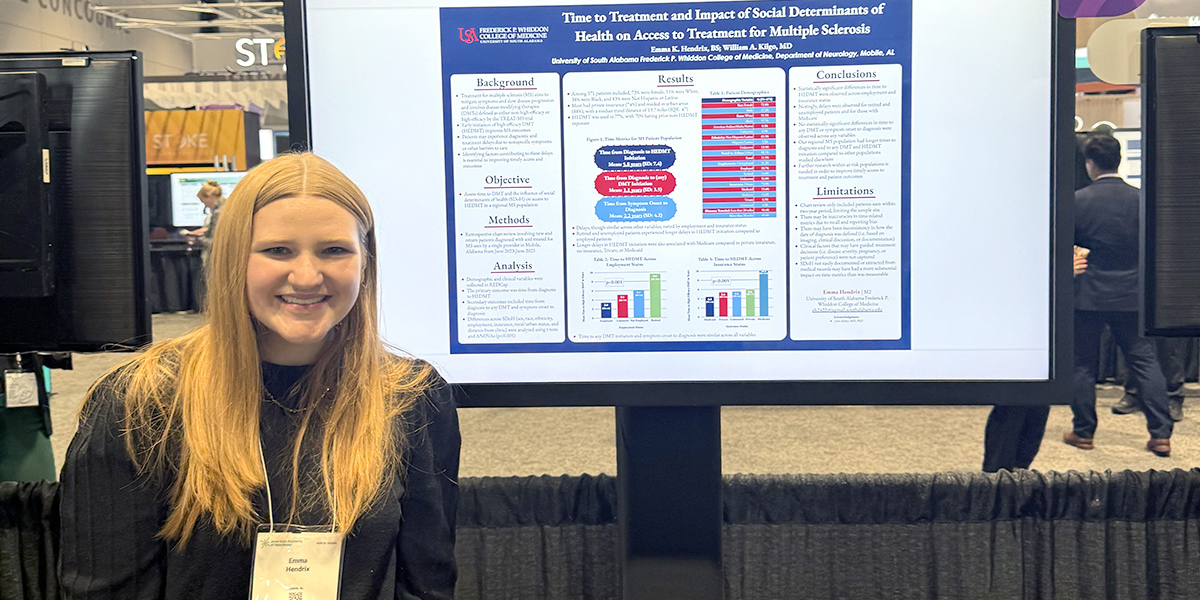
Emma Hendrix, a second-year medical student at the Frederick P. Whiddon College of Medicine, presented research examining delays in multiple sclerosis (MS) diagnosis and treatment at the American Academy of Neurology Annual Meeting, held April 18–22 in Chicago.
Hendrix conducted the study with William Kilgo, M.D., an associate professor of neurology, through the college’s 2025 Summer Research Program.
Kilgo, a neurologist with USA Health who specializes in MS treatment, said there has been a “therapeutic revolution” in the disease in the last 30 years. “In MS, early recognition of the disease and treatment is the one most important thing we can do to make a difference with disease-modifying therapies that fundamentally alter the course of the disease,” he said.
In the past, Kilgo explained, physicians often used an “escalation” approach, beginning with milder treatments and only moving to stronger medications if the disease progressed. However, new research supports starting with more effective therapies earlier, which may better slow disease progression and improve long-term outcomes.
Hendrix’s research focused on how long it takes patients to receive an MS diagnosis and begin treatment, as well as how social determinants of health may influence access to care. The findings revealed that, compared to other geographic areas, patients in the Gulf Coast region experience longer delays at multiple stages:
- Time from symptom onset to diagnosis
- Time from diagnosis to starting disease-modifying treatment
- Time to starting highly effective disease-modifying therapies
“This is important,” Kilgo noted, “because it highlights health disparities in our region compared to other populations and presents an opportunity for interventions to improve patient outcomes.”
Hendrix said presenting at the annual meeting “was a great opportunity to be surrounded by and network with others who are actively pushing the field of medicine forward.”