
Prepared to lead: Senior medical students selected for AAMC leadership program
Posted on April 3, 2026 by Lindsay Hughes
 Before stepping into their roles as resident physicians, two fourth-year students
from the Frederick P. Whiddon College of Medicine had the opportunity to strengthen
the leadership skills they will carry into residency and beyond.
Before stepping into their roles as resident physicians, two fourth-year students
from the Frederick P. Whiddon College of Medicine had the opportunity to strengthen
the leadership skills they will carry into residency and beyond.
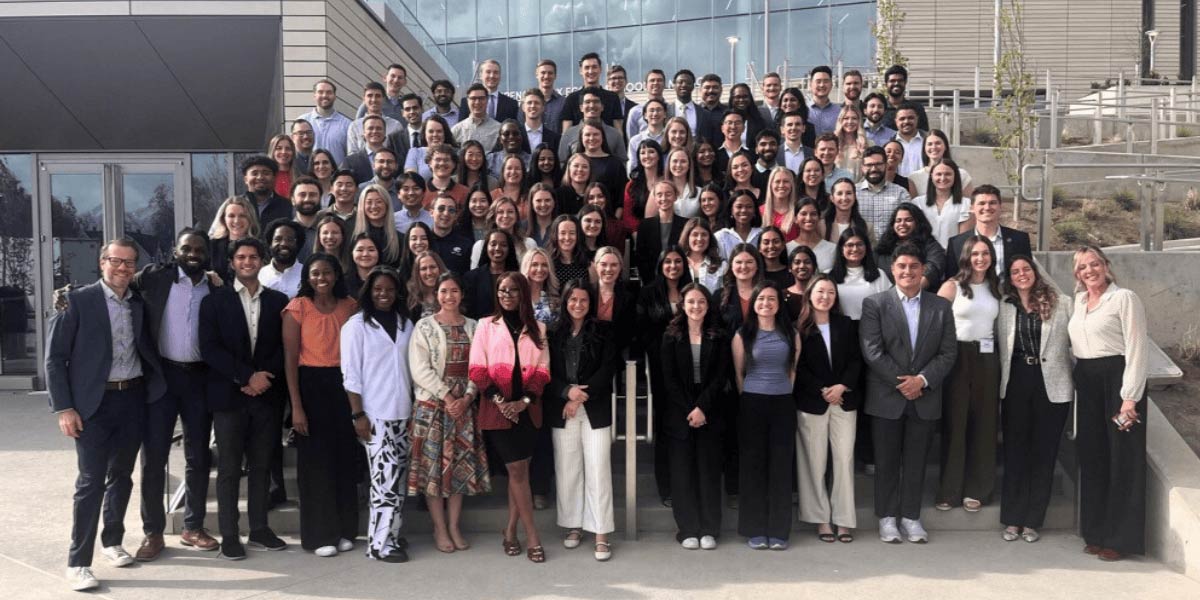
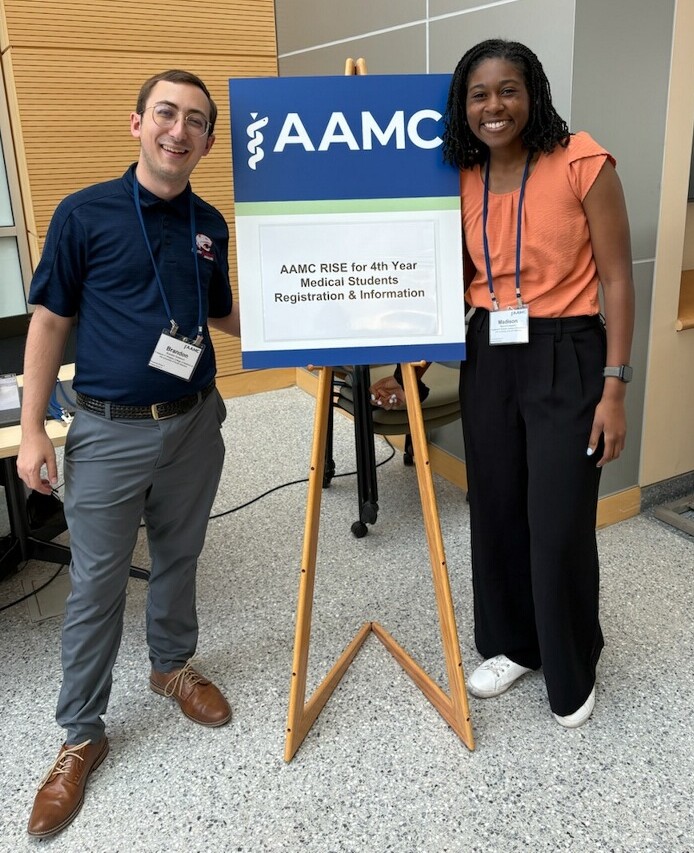
Madison Hogans and Brandon Schonour represented the college at the American Association of Medical Colleges’ RISE: Developing Future Leaders in Academic Medicine & Science seminar, held March 27–29 at the Spencer Fox Eccles School of Medicine at the University of Utah in Salt Lake City.
Designed for graduating medical students preparing to transition into residency, the program focuses on building the leadership skills needed to navigate the challenges and opportunities of the next stage of training. Through interactive sessions and discussions, participants explored key areas such as building professional relationships, developing self-awareness, managing time during residency, and strengthening resilience and wellbeing.
The curriculum centers on four core leadership areas — relationships, influence, self-awareness and effectiveness — helping students better understand their strengths and how they can apply them in clinical and professional settings.
AAMC institutions could nominate up to two students to participate in the program. Laventrice S. Ridgeway, Ed.D., associate dean of student affairs at the Whiddon College of Medicine, said both Hogans and Schonour "have shown a profound dedication to addressing systemic barriers in healthcare and were selected to participate in RISE to further develop the leadership skills and mentorship networks necessary to lead with purpose in their future medical careers."
Ridgeway said Hogans was nominated for her extensive leadership experience, including her role as Speaker of the Medical Association of the State of Alabama student section and her successful advocacy for medical Spanish learning tools to bridge communication gaps in patient care.
Hogans said the program challenged participants to rethink traditional ideas about leadership and encouraged them to embrace collaboration and growth.
“The AAMC RISE program was an impactful experience that taught me that effective leadership extends beyond having the correct answers,” she said. “It requires a growth mindset, one that embraces failure as an opportunity for growth, values collaboration, and is not afraid to challenge and change existing culture to create a better environment for everyone.”
Hogans said she hopes to become a leader who exhibits those qualities as she begins residency.
Schonour's nomination is rooted in his commitment to tribal health equity, Ridgeway said, demonstrated by his leadership of grant-funded telehealth initiatives, and his excellence in academic radiology research and scholarship.
For Schonour, the conference offered time to reflect on the responsibilities that come with becoming a physician leader.
“Attending the AAMC RISE conference was a valuable opportunity to pause and think intentionally about the transition from medical student to resident and the leadership responsibilities that come with it,” he said. “I especially appreciated how the program emphasized practical skills like navigating conflict constructively, building strong professional relationships, and developing systems that support wellbeing during residency.”
The seminar also affirmed an important insight about leadership, he said.
“The experience reinforced for me that leadership in medicine often happens in small, everyday interactions with patients and colleagues, and that investing in self-awareness and resilience is essential to doing that well,” Schonour said. “I am very grateful to the University of South Alabama Whiddon College of Medicine for supporting my participation in a program that helped me feel more prepared and confident as I begin the next stage of training.”