
Pilot program taps medical students for patient follow-ups
Posted on February 25, 2026 by Carol McPhail
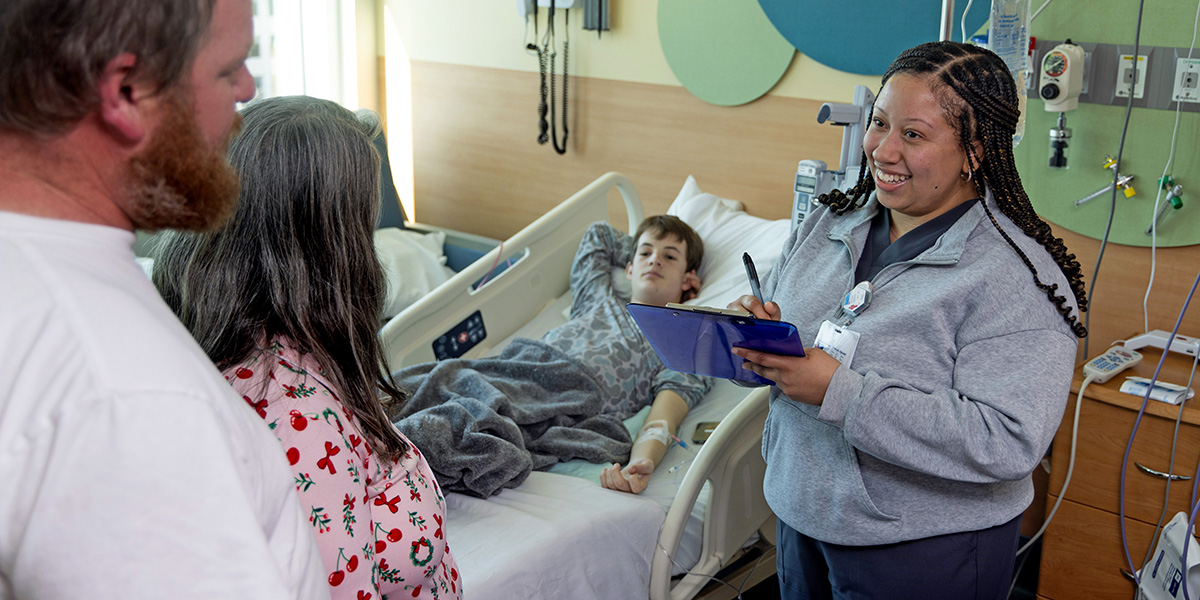
When children are discharged from the hospital, parents can feel overwhelmed by instructions to follow or symptoms to monitor at home. A new pilot program at USA Health provides supportive follow-up for families with the help of trained medical students from the Frederick P. Whiddon College of Medicine at the University of South Alabama.
Under the MedConnect program, patients are identified for follow-up prior to discharge. Medical student volunteers are assigned to patients and call families using software that protects patient health information. The students utilize a script and teach-back method to interact with families, and escalate any concerns to residents or faculty mentors for follow-up. In addition, the conversation is added to the patients’ medical records.
“I think families are excited to have that extra layer of support,” said Rose Farrow, a coordinator in USA Health Performance Improvement and Safety who developed the pilot program. “A team member calls and says, ‘We want to see how you’re doing’ or ‘Do you have any questions about your discharge information?’”
In one instance, parents needed help obtaining adaptive equipment for their child. The medical student working with them discovered they were using an incorrect email address, enabling the family to get the help they needed.
For medical students, MedConnect can provide valuable training in patient and caregiver interaction
“Being a part of MedConnect has opened my eyes to how powerful active listening can be,” said Ashleigh Torrance, a fourth-year medical student at the Whiddon College of Medicine. “Taking the time to truly hear patients and their guardians has helped me better understand their concerns, especially regarding post-discharge care, and has shown me how important clear, compassionate communication is in bridging those gaps.”
In addition, the work can help the students meet the Whiddon College of Medicine requirement for professional development. Medical students are required to complete 20 service hours per year during their first three years of medical school.
So far, MedConnect has focused on patients at Children’s & Women’s Hospital, but organizers hope to expand it to University Hospital.